![[Table Tennis] Understanding Modern Table Tennis Rubbers: Thin Top Sheets, the 4.0mm Rule, and Real Playing Feel](https://tabletennis-lab.com/wp-content/uploads/2026/05/08fcb3ea1b49f1ec785a1970630bb330.jpg)
In Part 1, we explored why rubber hardness numbers often fail to reflect actual playing feel.
In this article, we focus on:
- modern thin-sheet rubber design
- the 4.0mm regulation
- why modern rubbers feel softer
- how to choose the right hardness
4.Behind the Scenes of the “Thin Top Sheet × Thick Sponge” Trend
The Shift Toward Thinner Top Sheets
- Today, the “thin top sheet” trend has become an essential factor when discussing rubber hardness.
- In the past, many manufacturers used relatively similar top sheet thicknesses.
- However, modern high-end rubbers have shifted toward thinner top sheets and thicker sponges.
- This trend has been strongly influenced by the demands of elite players.
- Manufacturers now design top sheets as thin as possible in order to maximize sponge thickness within the allowed limits.
(1)The “4.0mm” Regulatory Barrier
- Under official table tennis rules, the combined thickness of the top sheet, sponge, and adhesive layer cannot exceed 4.0mm.
- Because of this strict limitation, manufacturers try to make the top sheet as thin as possible.
- This allows them to maximize sponge thickness within the allowed space.
- A thicker sponge improves energy transfer and makes it easier to generate speed and power, even with modern plastic balls.
- As a result, many modern high-end rubbers are designed around the concept of a thin top sheet and a thick sponge.
(2)The Risk of “Disqualification”
- A natural question arises:
“Why don’t manufacturers design rubbers right up to the 4.0mm limit?” - If a rubber were manufactured at exactly 4.0mm, the additional thickness of glue could easily push it beyond the legal limit.
- This would increase the risk of equipment violations at official tournaments.
- To avoid this problem, manufacturers intentionally leave a small safety margin in their designs.
- They must carefully balance maximum performance with compliance under official regulations.
- Modern thin-sheet rubbers are the result of this balance between aggressive engineering and rule compliance.
(3)Representative Product Examples
- This modern “thin top sheet × thick sponge” design is mainly found in premium high-end rubbers.
- These products combine advanced engineering, high performance, and increased manufacturing costs.
- As a result, many of them are positioned in a premium price range.
- Butterfly: Xiah 03
- A flagship rubber that combines Butterfly’s latest technologies.
- Designed to transfer the energy of the thick sponge more directly through a thinner top sheet.
- STIGA: DNA Platinum
- Uses an extremely thin top sheet to maximize sponge thickness up to MAX (2.3mm).
- Achieves strong ball bite together with powerful rebound.
- andro: Rasanter Series
- One of the pioneers of the modern thin-sheet trend.
- Known for its “ULTRAMAX” concept, featuring thinner top sheets and thicker sponges.
(4)Why Thin-Sheet Rubbers Often Feel Softer
- The most important change is the shift in “perceived hardness.”
- Even when the sponge hardness number is identical, rubbers with thinner top sheets often feel softer during play.
- This is because the ball can sink into the sponge more quickly and deeply during contact.
- As a result, these rubbers usually provide a stronger sense of “bite” and ball hold.
- “Even though the hardness number looked perfect, the actual feel was completely different…”
- The true reason for this mismatch may come from the balance between top sheet thickness and sponge thickness.
- Modern rubber feel is heavily influenced by the structure itself, not just the hardness number printed in the catalog.
- Understanding this structural difference is an important step toward choosing equipment more logically and confidently.
(5)Reference: Butterfly’s Latest Rubber “Xiah 03”
- Compared with the earlier Rasanter series, Butterfly entered the “thin top sheet × thick sponge” trend relatively late.
- However, Butterfly is globally known for its extremely detailed product development and strict quality control.
- It is reasonable to assume that Butterfly delayed this release until they were fully satisfied with the final performance and consistency.
- Xiah 03 combines Butterfly’s latest technologies into a premium flagship rubber.
- Because of its advanced design and manufacturing costs, it is positioned in a very high price range.
- For many players, the price may feel surprisingly expensive for a single rubber sheet.
- Still, the unique feel created by this modern thin-sheet structure makes the rubber especially interesting from a technical perspective.
If you are interested, please check the latest price using the link below.

Butterfly Zyre 03 Table Tennis Rubber
Butterfly Zyre 03 is composed of ???Ricosheet???, a top sheet with dense, low pimples, and an extremely thick sponge. In…

www.amazon.com
[Column] The “Magic Racket” and the Birth of Modern Regulations
- Today, it may sound unbelievable, but in the 1950s there was a period when rackets covered only with sponge dominated the sport.
- These rackets did not use the rubber top sheets found on modern inverted rubbers.
1.The “Explosive Power” That Shocked the World
- The story began at the 1952 World Championships in Bombay.
- Japanese player Hiroji Sato won the world title in his very first appearance using a sponge racket nearly 10mm thick.
- Compared with the hard rubber rackets commonly used at the time, the speed and power were overwhelming.
- Another unusual feature was the almost silent sound at impact.
- Opponents struggled to read the ball’s speed and spin, leading people to call it a true “Magic Racket.”
- The incredible performance of this racket shocked the global table tennis community.
2.Ichiro Ogimura and Japan’s “Golden Age”
- One of the most important figures in the history of sponge rubber was Ichiro Ogimura, later known as “Mr. Table Tennis.”
- Rather than treating sponge rubber as a simple gimmick, Ogimura developed advanced tactics that fully utilized its unique characteristics.
- By winning the Men’s Singles titles at the 1952 and 1956 World Championships, he helped establish Japan’s “Golden Age” in table tennis.
- However, sponge rubber became so dominant that it began to change the nature of the sport itself.
- Its combination of silent impact, extreme speed, and unpredictable ball behavior created major concerns within the table tennis world.
3.Why Was “Sponge Only” Banned?
- In 1959, international table tennis regulations were revised, and sponge-only rackets disappeared from official competition.
- Several major concerns led to this rule change.
- Excessive Power
- With sponge thickness reaching nearly 10mm, rallies became extremely difficult to sustain.
- Changes to the Nature of the Sport
- Because the impact sound was extremely quiet, players could no longer judge spin or speed accurately.
- This was considered harmful to the fairness of competition.
- Impact on Television and Spectators
- As television broadcasting expanded, concerns grew that extremely short rallies would reduce the entertainment value of matches.
4.The Ban on “Sponge-Only” Rackets
- The 1959 rule revision introduced two major regulations that still influence modern table tennis equipment today.
- Sponge Cannot Be Used Alone
- If a sponge layer is used, it must be covered with a rubber top sheet.
- This applies to both inverted and pips-out rubbers.
- The “4.0mm” Thickness Limit
- For sandwich rubbers (top sheet + sponge), the total combined thickness must remain within 4.0mm.
- This regulation continues to shape modern rubber design today.
- Hard rubber sheets without sponge are treated differently.
- Their maximum thickness is limited to 2.0mm.
- In simple terms, the rules were redesigned so that powerful sponge technology could only be used under strict thickness limitations.
- Modern “thin top sheet × thick sponge” designs are ultimately built within this regulatory framework.
My Favorite Book: Ping Pong San — The Roots of Passion
- While discussing the history and evolution of table tennis equipment, I would also like to introduce a book that has left a deep impression on me.
- That book is Ping Pong San by Mitsuru Jojima (Kadokawa Bunko).
- The book explores the extraordinary passion and philosophy of Ichiro Ogimura, the legendary figure known as “Mr. Table Tennis.”
- Through this story, I realized that Ogimura was far more than just a world champion.
- He devoted himself not only to winning, but also to spreading friendship and peace through table tennis across national borders.
- Behind every evolution in table tennis equipment lies the passion of players and innovators who constantly pushed the sport forward.
- This book beautifully explains the human passion that exists behind the strict 4.0mm equipment regulations we still follow today.
- For anyone who truly loves table tennis, this is a book I sincerely recommend.
- For me personally, it represents one of the deepest roots of my passion for the sport.
Book Information: Ping Pong San
- Title: Ping Pong San (Mr. Ping Pong)
- Summary: A biographical non-fiction book about Ichiro Ogimura, the legendary “Mr. Table Tennis,” who connected people and nations through the sport.
- Availability: Currently available only in Japanese, but highly recommended for readers interested in the history and philosophy of modern table tennis.
Note to International Readers
- Even for readers outside Japan, it offers a deeper understanding of the culture and passion behind modern table tennis.
- Please note that the link below directs to Amazon Japan.
- The book is currently available only in Japanese.
- However, for table tennis enthusiasts, it remains a valuable book from both a historical and philosophical perspective.
リンク
5.Finding the “Ideal Hardness” for You

- To produce high-quality shots, the ball must sink into the rubber properly during contact.
- A good rubber should help you balance the three key elements of table tennis:
- speed
- spin
- control
The Relationship Between Swing Speed and Ball Sink
- Top players can successfully use extremely hard rubbers because their high swing speed forces the ball deeply into the sponge.
- However, swing speed and physical power vary greatly from player to player.
- Because of this, there is no single “correct” hardness that works for everyone.
- The most important question is whether your own swing can consistently make the ball sink into the rubber.
- If the ball cannot sink properly into the sponge, it becomes difficult to generate stable spin and control.
When in Doubt, Start Slightly Softer
- Instead of immediately choosing an extremely hard rubber, it is often better to begin with a slightly softer one.
- A softer rubber makes it easier to feel the ball sink into the sponge during contact.
- This helps improve consistency, spin generation, and overall control.
- As your technique and swing speed improve, gradually increasing hardness is often the safest path to long-term progress.
My Personal Example: Apollo 5 (Yinhe)
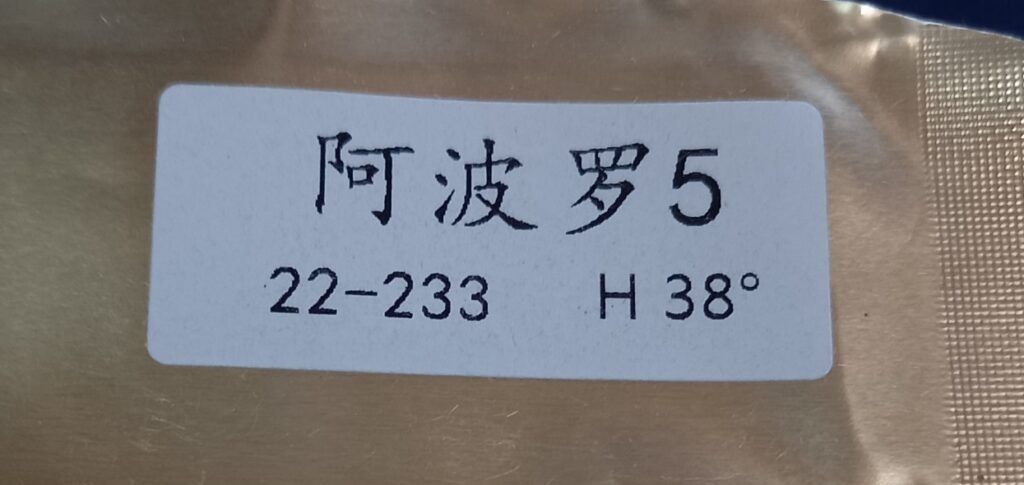
- I personally use the Chinese rubber “Apollo 5” on the forehand side of my Chinese penhold racket.
- This rubber is available in several hardness options, including 36, 38, and 40 degrees.
- 40 Degrees
- For my swing speed, the sponge felt too stiff.
- The ball did not sink deeply enough into the rubber, making spin generation difficult.
- 38 Degrees
- This hardness provided the best balance for my playing style.
- The impact feel was easier to control and more comfortable during play.
- Since the 38-degree version already felt ideal for me, I have not tested the 36-degree version.
6.Summary
- In this article, we explored the often misunderstood reality behind rubber hardness.
- The most important points are summarized below.
- Finding the ideal rubber can sometimes feel difficult. However, experimenting with equipment is also one of the great joys of table tennis.
- Modern rubbers continue to evolve through advanced designs such as “thin top sheet × thick sponge” structures. Because of this, manufacturer specifications should be viewed as general guidelines rather than absolute answers.
- Understanding structural differences and measurement standards can greatly reduce the risk of choosing a rubber that does not suit your playing style.
- In addition to hardness, sponge thickness is also an extremely important factor in rubber selection.
- Please also check the related article below for a detailed explanation of sponge thickness selection.
- I hope your future equipment choices become both more enjoyable and more satisfying.


-320x180.jpg)



コメント