
1. Introduction
For many years, I used a Chinese tacky rubber (ultra-thin type) on the backhand side of my Chinese penhold racket.
I have found ultra-thin rubber to be an excellent choice for developing a feel for the ball when learning the Reverse Penhold Backhand (RPB).
I explain the characteristics of ultra-thin rubber and its suitability for the RPB in detail in the following article.

However, as my RPB technique improved, I gradually became more aware of one of the weaknesses of ultra-thin rubber: its limited ball speed.
About three years ago, I therefore started using Glayzer (Butterfly) as my RPB rubber.
In this article, I will look back on my experience of switching from the Chinese tacky rubber “Apollo 5 (Super Ultra-Thin)” (Galaxy) to Glayzer (Butterfly). I will also consider how my RPB technique has developed since then and explain what characteristics Glayzer offered as an RPB rubber.
2. My Experience Using Glayzer for About Two Years
At the time, I was using Glayzer 09C (Butterfly) on my forehand. To create a different type of ball on the backhand side, I chose Glayzer (Butterfly) from the same series.
Once I put Glayzer on the backhand side, the difference from the ultra-thin rubber was immediately noticeable.
In particular, I was impressed by how the rubber gripped the ball well during RPB drives, produced a stable arc, and allowed me to hit faster balls than with the ultra-thin rubber.
With the increased ball speed, I found more opportunities to attack without giving my opponent much time to react.
After using Glayzer for about two years, I came to feel that, for me, it was the rubber that helped me take the next step after developing the fundamentals of the RPB with ultra-thin rubber.
3. Rubber Weight
As a Chinese penhold player, I pay close attention to the weight of both my racket and rubber. When I switched from super ultra-thin rubber to a tension rubber, one of the first things I noticed was the increase in rubber weight.
The weights of the rubbers I actually used are summarized in the table below.
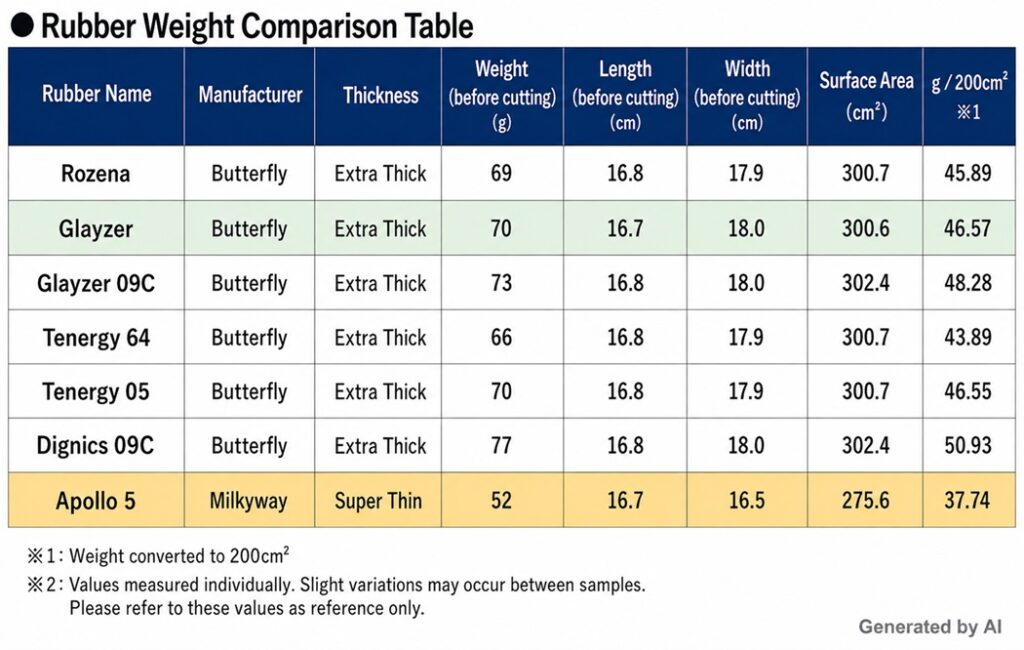
As expected, Glayzer was heavier than the ultra-thin “Apollo 5 (Super Ultra-Thin)” rubber I was using at the time. Based on a 200 cm² comparison, Apollo 5 weighed approximately 38 g, while Glayzer weighed approximately 47 g.
So, is it worth giving up the light weight of ultra-thin rubber in order to switch to Glayzer?
For this test, I deliberately built the racket and rubber combination around a lightweight racket.
4. Equipment Used
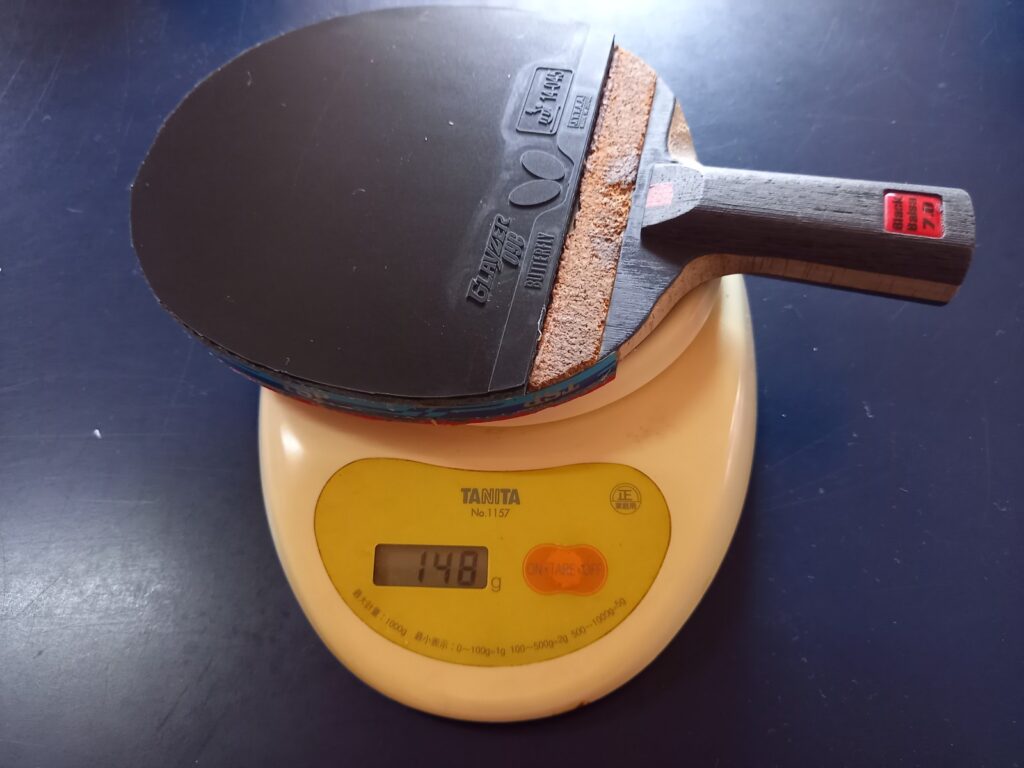

Although the Black Balsa 7.0 (TSP) has been discontinued, VICTAS currently sells a racket with the same specifications. It is a very lightweight racket with good speed and rebound.
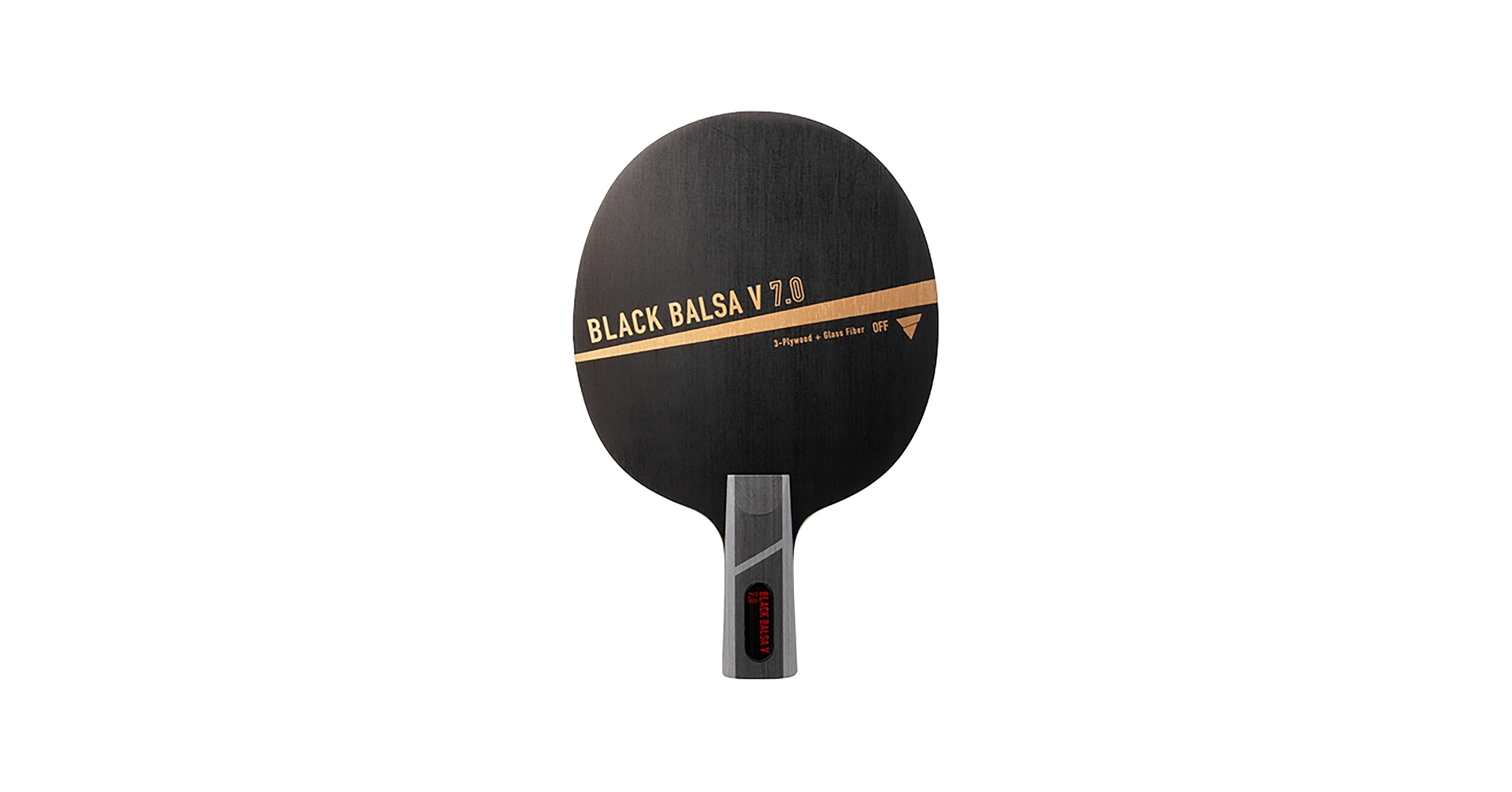

As a result, I was able to build an exceptionally light racket with a total weight of just 148 g, despite using Max-thickness rubbers on both sides.
5. Playing Experience
Here is how I would compare the playing characteristics of Glayzer and Apollo 5 (Super Ultra-Thin).

Overall, I felt that Glayzer produces less spin than the ultra-thin rubber, but offers better speed and stability.
(1) Spin and Speed
Although it does not produce as much heavy spin as Apollo 5 (Super Ultra-Thin), it still generates plenty of spin. During RPB drives, I found that it gripped the ball well and produced a stable arc. At the same time, the ball speed was clearly higher, giving me the impression that I could hit fast balls while still maintaining control.
(2) Chiquita and Short Game
Because the ultra-thin Apollo 5 (Super Ultra-Thin) does not produce much rebound, I could swing aggressively with less risk of overhitting. Its tacky topsheet also allowed me to generate heavy spin. Even from a short distance over the table, I could produce plenty of spin, making a Chiquita with a large curve on the opponent’s side a powerful weapon against players of a similar level.
However, as the level of my opponents increased, the quality of their speed, spin, and placement also improved. As a result, I had fewer opportunities to generate heavy spin in the short game. The ultra-thin rubber’s characteristics of “low rebound and high spin” gradually became a disadvantage, as they also meant lower ball speed.
With Glayzer, most of the distinctive ball behavior associated with Chinese tacky rubber disappeared. However, the increased ball speed allowed me to build my game around taking the initiative in rallies and putting pressure on my opponent by giving them less time to react.
(3) RPB Drives and Blocks
For me, the most impressive aspect of Glayzer was its performance on RPB drives played close to the table.
In particular, when I used an RPB drive against backspin, the rubber gripped the ball firmly and helped it rise reliably over the net. This allowed me to produce the trajectory I intended and made my drives very consistent.
(4) Mid-Distance RPB Drives
On the other hand, when I moved away from the table and played RPB drives from mid-distance, the difference in speed and power compared with the ultra-thin rubber became even more noticeable. This high offensive potential was one of the main reasons I continued using Glayzer for about two years.
When my RPB technique was still developing, I simply could not step away from the table and play RPB drives from mid-distance. However, as my technique improved, I gradually found more opportunities to play RPB drives from mid-distance.
As a result, I began to feel that the ultra-thin rubber had limitations in terms of speed and power. With Glayzer, on the other hand, I could swing with confidence because it produced a clean arc even when I moved away from the table to play a drive.
(5) Looking Back with My Current Perspective
As my RPB technique continued to improve, I realized that while ultra-thin rubber is very well suited to developing a feel for the ball, the more my technique improved, the more the characteristics of the rubber limited the range of shots I wanted to play.
Mid-distance RPB drives are one example. One of the biggest advantages of Glayzer was that it offers a good balance of spin and speed at a high level, allowing me to try a wider range of shots, including RPB drives not only close to the table but also from mid-distance.
I explain the distinctive ball behavior of tacky rubber in more detail in the following article.

6. Things to Consider
Glayzer is a high-rebound tension rubber. Therefore, in my opinion, it may not be the best choice for players who are just starting to learn the RPB, as its strong rebound can make it take longer to develop a feel for the ball.
During my own journey of learning the RPB, I spent several years experimenting while continuing to use a bouncy rubber. Looking back, I feel that this was a rather inefficient way to develop a feel for the ball.
Therefore, as one guideline for determining whether you have developed a sufficient feel for the ball, I recommend trying a more bouncy rubber only after you can consistently play RPB drives against backspin on your backhand side.
If you are just starting to learn the RPB, I recommend first developing your feel for the ball with an ultra-thin rubber. I explain this approach in more detail in the following article, so please take a look.
7. Conclusion
Here is a summary of how my RPB technique and rubber choices have evolved over time.
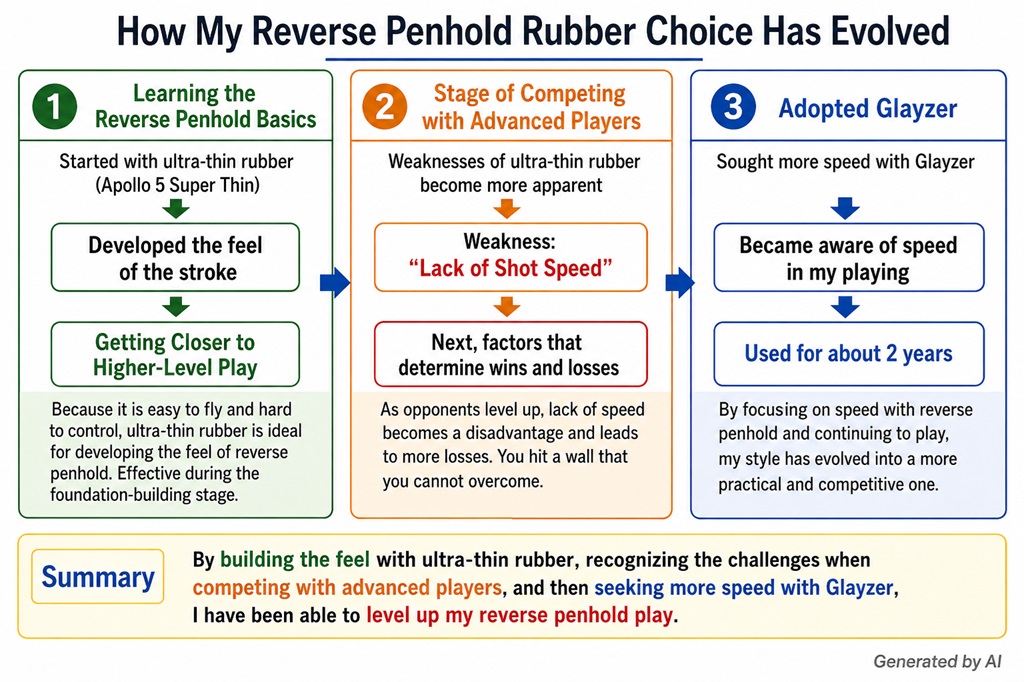
Ultra-thin rubber was very effective for developing a feel for the ball when I was learning the RPB. However, as I began playing against more advanced opponents, the lack of ball speed gradually became a major issue.
I then switched to Glayzer and continued to focus on speed in my RPB play for about two years. Although the ball quality was different from that of ultra-thin rubber, I found a major advantage in its ability to provide both speed and stability.
Now, I am trying rubbers that can maintain some of Glayzer’s speed while generating even more spin. After about two years of using Glayzer, the rubber I am currently getting good results from is Kyohyo 8-80 Power.
I explain my experience with Kyohyo 8-80 Power in more detail in the following article.
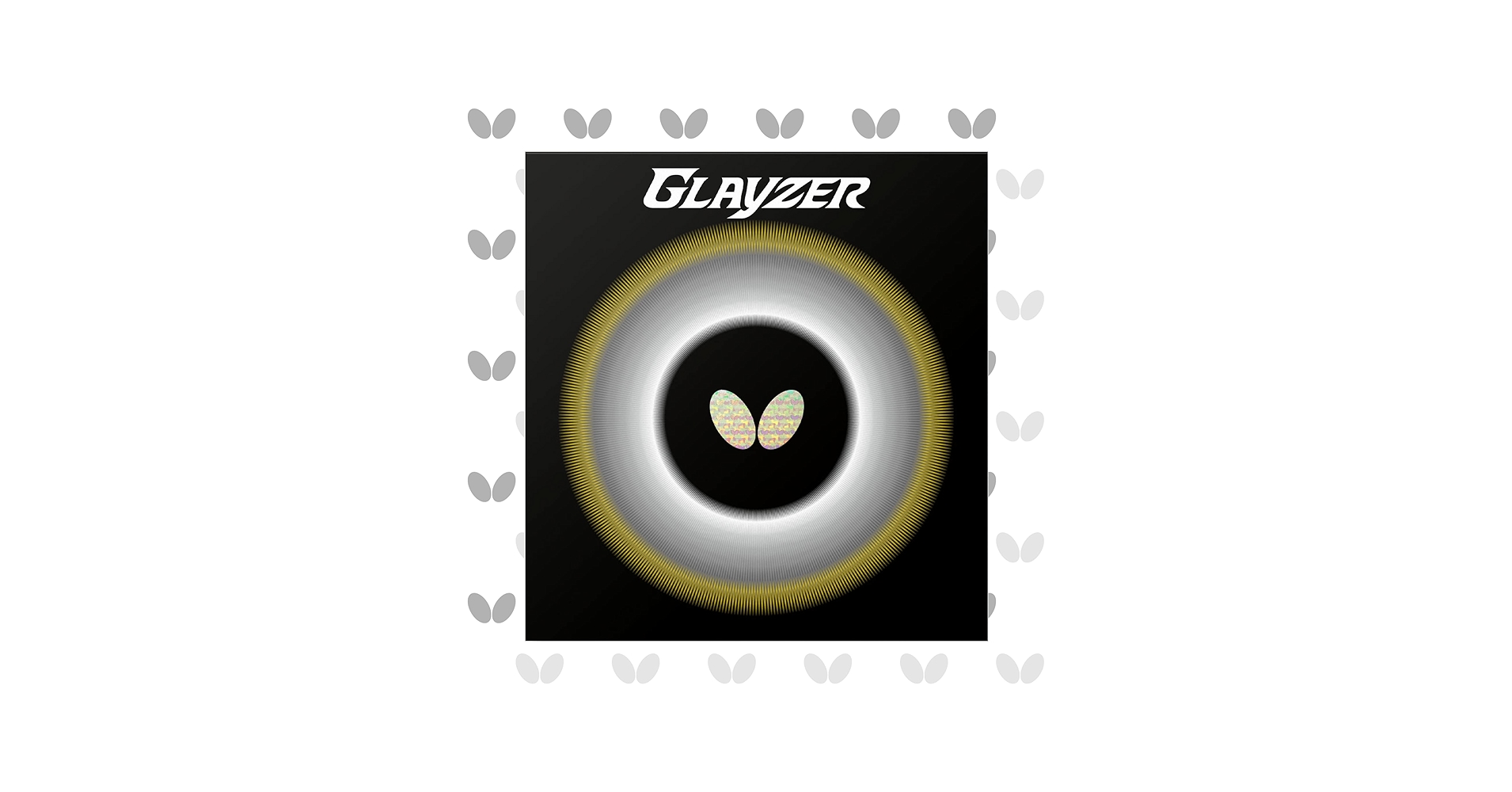
You can check the current retail price of Glayzer on the following website.

[Related Articles]
Should You Use Max or Thick Rubber for the RPB? (My Experience Using Glayzer)
-320x180.jpg)
Review of Glayzer 09C from the Same Series

Top International Players Who Use the Reverse Penhold Backhand


コメント