“I’d like to switch to a Chinese Penhold racket, but once I put rubbers on both sides, it feels too heavy to swing…”
Many players have the same concern. In fact, choosing the right racket weight is even more critical for a Chinese Penhold (C-Pen) player than for a Shakehand player.
In this article, we’ll explore the total weight for players who are trying a Chinese Penhold racket for the first time.
- How to avoid unnecessary wrist strain
- How to maintain good maneuverability
- How to generate enough power without making the racket too heavy
Let’s find the weight range that gives you the best balance of control, comfort, and performance.
1. Why Is Racket Weight So Important for Penhold Players?
One of the biggest challenges when using a Chinese Penhold (C-Pen) racket is its total weight.
About 20 years ago, I switched from a traditional Japanese Penhold (J-Pen) racket to a Chinese Penhold racket with rubbers on both sides. Since then, racket weight has been one of the biggest factors affecting my game.
For more than two decades, I have worked to keep the quick maneuverability of a J-Pen while adapting to the additional weight of a C-Pen racket.
So why is racket weight much more critical for Penhold players than for Shakehand players?
The answer lies in the difference in how the racket is supported.
- Shakehand (Surface Support): The handle fits securely into the palm, allowing the racket to be supported across a wide area from the hand to the forearm. In other words, the racket is supported by a broad surface.
- Penhold (Point Support): The handle is pinched between the thumb and index finger, while the middle finger (or ring finger) supports the back of the blade. The racket is essentially supported at three or four contact points.
Because of this structural difference, even an additional 10 grams can noticeably affect a Penhold player’s swing speed, touch in short play, and the amount of stress placed on the wrist.
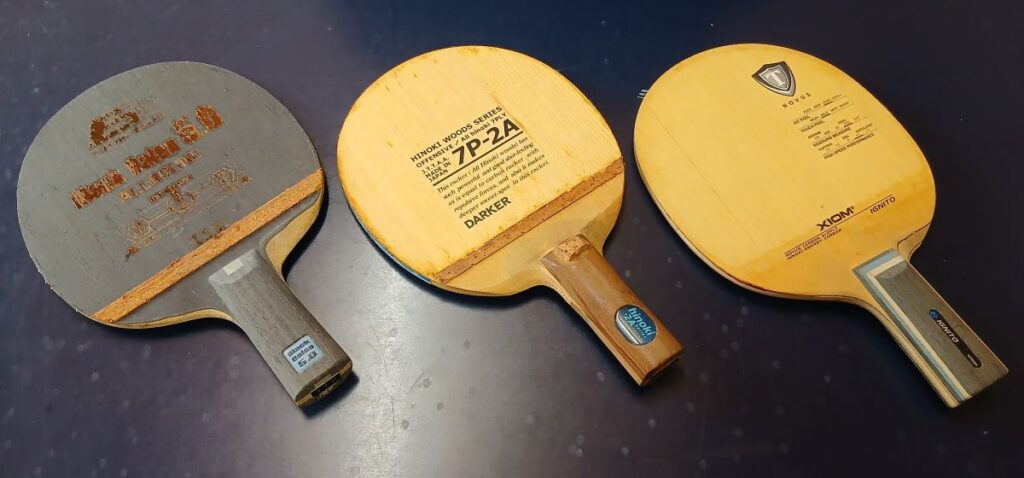
2. The Challenge of Choosing the Right Weight for a Chinese Penhold Racket
About 20 years ago, I switched from a traditional Japanese Penhold (Butterfly Cypress) to a Chinese Penhold racket.
The first challenge I faced was the racket’s weight.
A traditional J-Pen racket with rubber on only one side usually weighs around 140–145 g. At this weight, maneuverability is excellent without any special adjustments.
However, things change when you start using the Reverse Penhold Backhand (RPB).
Because rubbers are attached to both sides of the blade, the total weight increases significantly.
As the racket became heavier, I noticed several problems.
- Reduced Swing Speed
A heavier racket is harder to accelerate. I often found myself swinging too late, especially against defensive players. - Less Control in the Short Game
Fine finger control became more difficult. Serves, receives, and short pushes were less consistent. - More Stress on the Wrist
RPB places more stress on the wrist than the traditional Penhold backhand. An overly heavy racket can increase the risk of injury.
In general, a heavier racket offers more power and stability.
It can also improve blocking performance. Many high-performance blades, especially those made with composite materials or compressed wood, are relatively heavy.
However, a heavier racket is not always better.
If it exceeds your physical strength, your swing becomes slower and your maneuverability decreases.
The risk of wrist injuries also increases.
Choosing a racket weight that matches your strength is just as important as improving your technique.
Next, let’s look at five different total weight ranges and discuss the advantages and disadvantages of each.
3. Total Weight Comparison
In this section, I’ll divide total weight into five ranges and explain the characteristics of each.
The following assumptions apply throughout this comparison.
- Rubbers: Both sides of the racket use inverted rubbers. Lightweight long pips used in combination rackets are not included.
- Equipment Examples: The setups shown are my personal combinations. Since I prefer tacky rubbers, please use them as reference examples only.
Please also keep the following points in mind.
- Equipment Age: Some blades and rubbers shown are older models or have already been discontinued.
- Total Weight: All weights are measured values, including glue and side tape.
- Individual Variation: Chinese-made rubbers, in particular, can vary noticeably in weight. Even the same model may differ from one sheet to another.
(1) Total Weight: Under 140 g
Keeping a Chinese Penhold racket under 140 g is extremely difficult.
Your equipment choices will be very limited.
To reach this weight, you’ll usually need the following setup.
- Blade: Choose an ultra-lightweight blade, such as a balsa blade. Keep in mind that balsa blades are more fragile and can be damaged by impact.
- Backhand Rubber: Use an ultra-thin and lightweight rubber on the backhand side.
Example Setup
- Blade: Victas Black Balsa 7.0 — 63 g
- Forehand Rubber: Mace Pro Blue 46° (2.2 mm) — 36 g
- Backhand Rubber: Bombard Ultra-Thin (Bomb) — 36 g
- Total Weight: 138 g
This setup offers a unique balsa feel, so player preference may vary.
(2) Total Weight: 140–150 g
Compared with the under-140 g range, you have a few more equipment options.
However, your choices are still limited.
This weight range offers excellent maneuverability.
On the other hand, using thick rubbers on both sides is usually not practical.
To stay within this range, you’ll typically need one of the following:
- Use an ultra-lightweight blade, such as a balsa blade.
- Choose a thinner forehand rubber.
Example Setup
- Blade: Victas Black Balsa 7.0 — 63 g
- Forehand Rubber: Galaxy Mercury II 35° (2.2 mm) — 43 g
- Backhand Rubber: Bombard Ultra-Thin (Bomb) — 36 g
- Total Weight: 143 g
Even in this weight range, you’ll usually need either a balsa blade or a thinner forehand rubber.
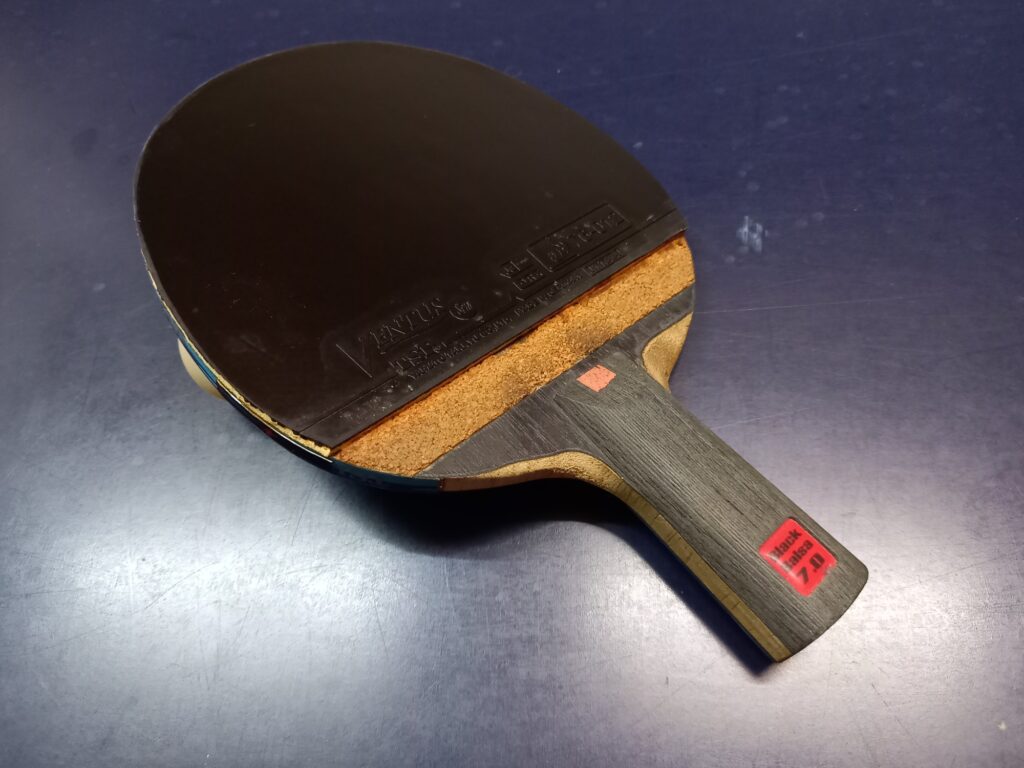
Note: Balsa blades are very fragile. They can be damaged by impacts, such as accidentally hitting the table.
(3) Total Weight: 150–160 g
This is the weight range where your equipment options increase significantly.
You can use a standard-weight blade together with high-performance, thicker rubbers.
Example Setup
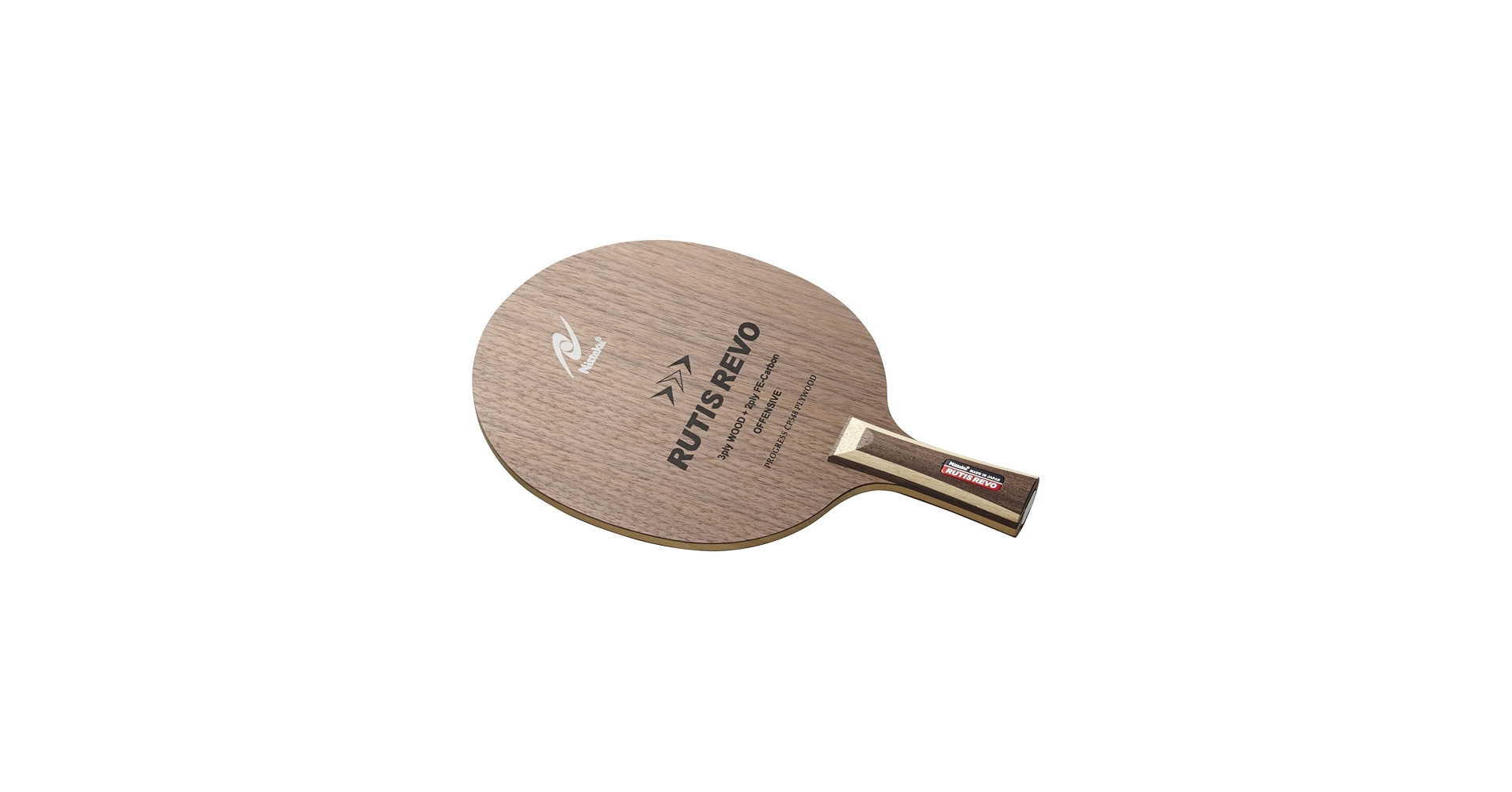
- Blade: Nittaku CP548 — 73 g
- Forehand Rubber: DHS Hurricane 3 (Thick) — 41 g
- Backhand Rubber: Butterfly Tenergy 05 (Thick) — 38 g
- Total Weight: 153 g
This was my main setup for many years.
I used this weight range as the standard for my training.
(4) Total Weight: 160–170 g
This weight range gives you a wide variety of equipment options.
You can use heavier Max rubbers and higher-performance equipment.
However, it becomes difficult to keep the total weight below 170 g if you use heavy Max rubbers on both sides.
Example Setup
- Blade: TSP Award Offensive (Discontinued) — 82 g
- Forehand Rubber: Galaxy Apollo 5, 38° (2.2 mm) — 45 g
- Backhand Rubber: Galaxy Apollo 5 Ultra-Thin — 38 g
- Total Weight: 165 g
I used this setup as my main racket in the past.
However, because of its weight, I would not recommend this range to players who are new to Chinese Penhold.
(5) Total Weight: 170 g or More
At this weight, there are almost no restrictions on equipment selection.
However, if you choose your equipment without careful planning, the total weight can easily exceed 180 g.
Make sure the racket matches your physical strength and wrist durability.
Many world-class Chinese Penhold players use rackets weighing more than 180 g.
Example Setup
- Blade: Butterfly Innerforce Layer ZLC-CS — 86 g
- Forehand Rubber: Galaxy Apollo 5, 38° (2.2 mm) — 48 g
- Backhand Rubber: Galaxy Mercury II, 35° (2.2 mm) — 44 g
- Total Weight: 179 g
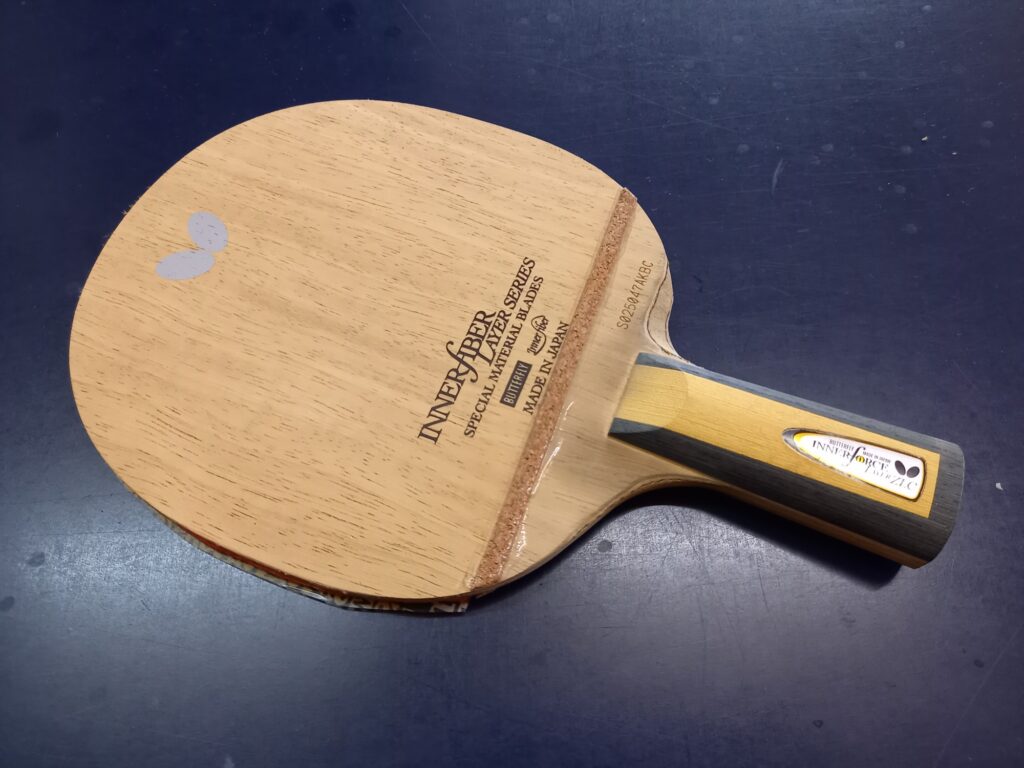
Note: I eventually found this setup too heavy to use effectively.
4. Recommended Weight for Your First Chinese Penhold Racket
If you’ve used a traditional Japanese Penhold racket for many years, you’re probably accustomed to a lightweight setup.
As a result, a Chinese Penhold racket with rubbers on both sides will feel much heavier.
Switching to a racket that is 20–30 g heavier can reduce maneuverability and increase the risk of wrist injuries while learning the Reverse Penhold Backhand (RPB).
I experienced this myself. After switching to a racket that was about 20 g heavier, I suffered several wrist injuries during practice.
Based on my experience, I recommend the following weight range for players who are new to Chinese Penhold:
150–160 g
- Lower Risk of Injury
This weight range places less stress on the wrist while you’re still learning RPB. - More Equipment Choices
You can choose from a wide variety of standard blades and rubbers without being overly restricted. - Easier Transition
A weight increase of about 10 g from a typical J-Pen setup (140–145 g) is much easier to adapt to.
The Nittaku CP548 used in my example was lightweight and easy to handle, but it has been discontinued.
If you’re buying a new blade today, look for one weighing around 75 g.
If you’re buying your first Chinese Penhold racket, I recommend aiming for a total weight of 150–160 g.
This weight range offers the best balance of power, maneuverability, and long-term comfort.





.jpg)
コメント