
- 1. Introduction
- 2. Equipment Setups Used by Top RPB Players
- Type 1: Spin Variation and Power Drive Style
- Xu Xin (China)
- Wang Hao (China)
- Type 2: Spin Variation and Unpredictable Attacks
- Felix Lebrun (France) – World Ranking #4
- Qiu Dang (Germany) – World Ranking #10
- Type 3: Two-Wing Power Attack
- Wong Chun Ting (Hong Kong) – World Ranking #50
- Taisei Matsushita (Japan) – World Ranking #481
- Type 4: Short Pips Forehand + RPB Style
- Cantero (Spain) – Unranked
- Yuna Ojio (Japan) – World Ranking #176
- 3. Conclusion
1. Introduction
As a penhold player who relies heavily on the Reverse Penhold Backhand (RPB), I have always been fascinated by how world-class players build their playing styles through equipment choices.
In this article, I break down the equipment setups of top RPB players and classify them into four distinct playing styles.
This guide focuses on the relationship between playing style, blade selection, and rubber combinations used by elite penhold players.
If you are unsure which blade and rubber combination suits your RPB, this article may help you discover a setup that matches your own style.
What You Will Learn
- Common equipment setups used by top RPB players
- Differences between four major RPB playing styles
- Blade and rubber combinations suited for each style
Note: Due to the high number of players mentioned, honorifics have been omitted.
Source Reference
Player equipment and world rankings are based on information from “Takkyu Navi,” a specialized table tennis equipment review website.
2. Equipment Setups Used by Top RPB Players
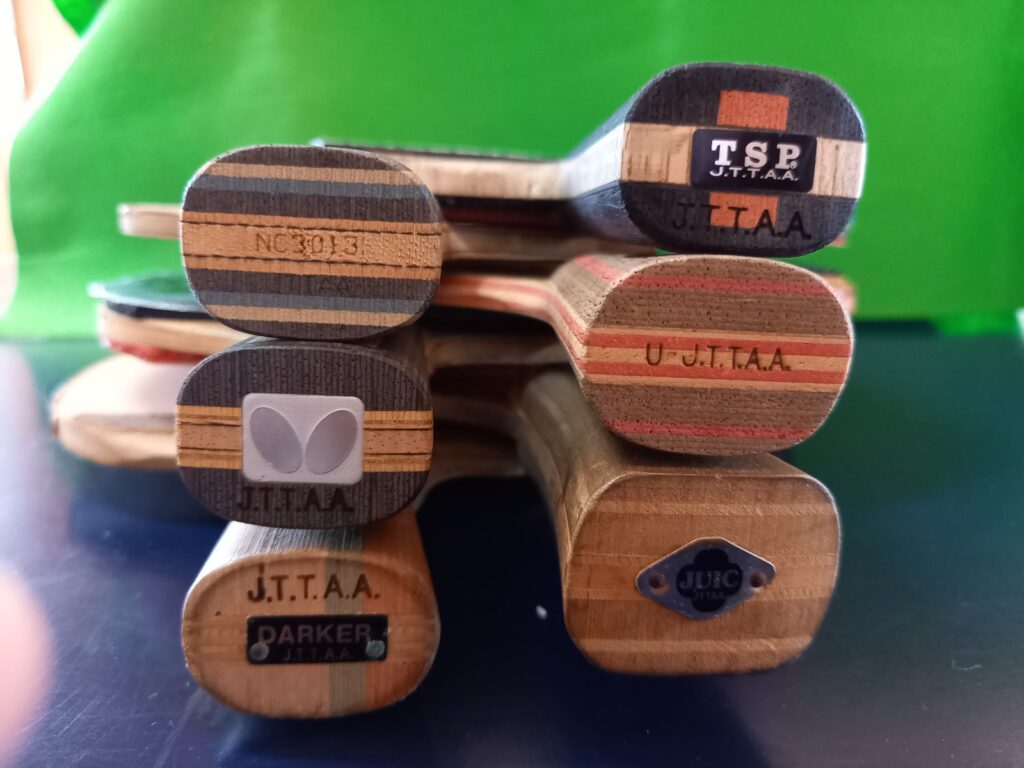
How do the world’s best penhold players build their Reverse Penhold Backhand (RPB) game through equipment choices?
Based on their playing characteristics and equipment combinations, I have classified top RPB players into four distinct types.
Each type has its own strengths, tactical ideas, and preferred blade and rubber combinations.
What You Will See in This Section
- Different RPB playing styles used by world-class players
- Common blade and rubber combinations for each type
- The relationship between playing style and equipment selection
Note: These category names are based on my own observations and analysis.
World rankings are current as of April 27, 2026.
Some YouTube videos featured in this article contain Japanese-language commentary.
Type 1: Spin Variation and Power Drive Style
Typical Equipment Setup
Forehand: Tacky Rubber (Inverted)
Backhand: Tension Rubber (Inverted)
Characteristics of This Type
This is one of the most traditional and successful equipment combinations used by elite Chinese penhold players.
Players using this setup generate heavy spin and strong forehand pressure with tacky rubber, while using tension rubber on the backhand to increase speed and attacking power in RPB rallies.
Main Features
- Heavy-spin forehand attacks
- Powerful RPB counterattacks
- Strong balance between spin and speed
- Designed for aggressive offensive play
[Representative Players]
Xu Xin (China)
Inactive in international tournaments as of April 2026
Equipment Setup
- Blade: Intensity NCT (Stiga) – 5-ply wood
- Forehand: Hurricane 3 National Blue (DHS)
- Backhand: Tenergy 05 (Butterfly)
Playing Style
Xu Xin is widely regarded as one of the most spectacular penhold players in modern table tennis history.
His playing style combines heavy-spin forehand attacks, creative shot-making, and exceptional footwork. Even today, very few players can entertain the crowd with the same level of flair and dynamism.
Highlights
- Artistic forehand play
- Heavy-spin attacks from mid-distance
- Creative shot variation
- Dynamic movement and footwork
The highlight video below showcases the unique beauty and creativity of Xu Xin’s forehand-oriented style.
Wang Hao (China)
Retired
Equipment Setup
- Blade: Hurricane Hao 3 (DHS) – 5-ply wood (with special material)
- Forehand: Skyline NEO 3 (DHS)
- Backhand: Bryce Speed (Butterfly)
Playing Style
Wang Hao is widely regarded as one of the greatest Reverse Penhold Backhand (RPB) players in table tennis history.
Unlike traditional penhold players who relied heavily on short blocks and forehand control, Wang Hao built his entire game around an aggressive and dominant RPB attack.
His backhand was so powerful and consistent that it often rivaled — and sometimes surpassed — the backhand attacks of top shakehand players.
For many years, this revolutionary style helped him remain at the highest level of world table tennis.
Highlights
- One of the pioneers of modern RPB
- Extremely powerful backhand attacks
- Aggressive offensive pressure from both wings
- Revolutionary penhold playing style
The video below showcases Wang Hao’s signature backhand drive and the explosive power of his RPB attack.
Type 2: Spin Variation and Unpredictable Attacks
Typical Equipment Setup
Forehand: Tacky Tension Rubber (Inverted)
Backhand: Tacky Tension Rubber (Inverted)
Characteristics of This Type
Players in this category use tacky tension rubber on both sides to create heavy spin, sharp changes in ball trajectory, and unpredictable timing.
Compared with traditional tension rubber setups, this combination produces more variation and makes it difficult for opponents to read the spin and speed of the ball.
Main Features
- Heavy topspin and strong spin variation
- Unpredictable ball trajectory
- Fast transitions between offense and counterattack
- High-pressure rally play close to the table
[Representative Players]
Felix Lebrun (France) – World Ranking #4
Equipment Setup
- Blade: Hybrid AC Inside (TIBHAR) – 7-ply wood
- Forehand: Hybrid K3 (TIBHAR)
- Backhand: Hybrid K3 (TIBHAR)
Playing Style
Felix Lebrun is widely regarded as one of the most exciting modern penhold players in the world.
Using tacky tension rubber on both sides, he creates explosive topspin, unpredictable ball trajectories, and relentless pressure close to the table.
Even against world-class power attackers such as Hugo Calderano, he refuses to give ground and continuously challenges opponents with high-speed counterattacks and rapid tactical adjustments.
Highlights
- Explosive topspin attacks
- Extremely fast rally tempo
- Creative shot variation
- Aggressive close-to-the-table pressure
- Outstanding tactical adaptability
The video below showcases Felix Lebrun’s high-speed rally exchanges and his fearless attacking style against Hugo Calderano.
I have also written a separate article exploring the unique appeal and playing style of Felix Lebrun in greater detail.

Qiu Dang (Germany) – World Ranking #10
Equipment Setup
- Blade: Custom-made
- Forehand: Dignics 09C (Butterfly)
- Backhand: Dignics 09C (Butterfly)
Playing Style
It is impossible to discuss modern Reverse Penhold Backhand (RPB) play without mentioning Qiu Dang.
Although he uses the same “tacky tension rubber on both sides” setup as Felix Lebrun, his playing style is very different.
In many ways, Qiu Dang can be considered the “textbook of modern penhold.”
His movements are compact, efficient, and remarkably refined. Unlike more explosive penhold attackers, he relies on precise timing, smooth rally control, and high-percentage shot selection to outmaneuver opponents.
Highlights
- Extremely efficient movement
- Smooth and balanced rally play
- Precise backhand control
- High-level tactical consistency
- Exceptional down-the-line backhand attacks
Personally, I believe Qiu Dang represents an ideal model for middle-aged penhold players who want to improve their RPB in a technically efficient and sustainable way.
The video below features a direct matchup between Qiu Dang and Felix Lebrun. Comparing their contrasting styles makes the tactical differences between modern penhold approaches especially interesting.
In particular, Qiu Dang’s precise down-the-line backhand attack is absolutely worth watching.
Type 3: Two-Wing Power Attack
Typical Equipment Setup
Forehand: Tension Rubber (Inverted)
Backhand: Tension Rubber (Inverted)
Characteristics of This Type
This type uses high-performance tension rubber on both sides to generate continuous attacking pressure through speed, power, and aggressive topspin rallies.
Rather than relying heavily on spin variation, these players focus on overwhelming opponents with fast-paced exchanges and powerful drives from both wings.
Main Features
- Aggressive counterattacking play
- Powerful topspin attacks from both sides
- Fast rally tempo
- Continuous offensive pressure
[Representative Players]
Wong Chun Ting (Hong Kong) – World Ranking #50
Equipment Setup
Blade: Custom (Butterfly)
Forehand: Tenergy 05 Hard (Butterfly)
Backhand: Dignics 05 (Butterfly)
Playing Style
Wong Chun Ting is known for his explosive attacking power and high-speed rally play.
He reached a career-high world ranking of #6 and continues to compete internationally as an important member of the Hong Kong national team.
Even at 34 years old, he remains highly competitive, especially in doubles events, where his quick reactions and aggressive counterattacks continue to trouble world-class opponents.
Highlights
- Explosive two-wing attacks
- Fast counterattacking rallies
- Strong backhand pressure
- High-speed offensive play
The video below features Wong Chun Ting’s match against Qiu Dang, showcasing the intensity and speed of modern penhold rally exchanges.
Taisei Matsushita (Japan) – World Ranking #481
Equipment Setup
- Blade: Innerforce Layer ZLC – CS [Custom (Modified)]
- Forehand: Dignics 09C (Butterfly)
- Backhand: Xa-03 (Butterfly)
Playing Style
Although Matsushita technically combines characteristics of both tacky tension and standard tension rubber styles, I chose to include him in this category because of his aggressive two-wing attacking approach.
He is widely regarded as one of the strongest active penhold players in Japan.
During his three years with Shizuoka Jade, he consistently demonstrated the competitiveness and potential of modern penhold play at a high level.
In April 2026, it was announced that he would leave the team, and many penhold fans are looking forward to seeing what comes next in his career.
Highlights
- Aggressive two-wing attacks
- Modern offensive penhold style
- Strong counterattacking ability
- Powerful rally play close to the table
The video below features Matsushita’s match against South Korean national team player Jang Woo-jin.
Type 4: Short Pips Forehand + RPB Style
Typical Equipment Setup
Forehand: Tension Rubber (Short Pips)
Backhand: Tension Rubber (Inverted)
Characteristics of This Type
Players in this category use aggressive short pips forehand attacks to apply constant speed and pressure, while using Reverse Penhold Backhand (RPB) with inverted rubber to strengthen backhand rally stability and attacking options.
This combination creates a unique balance between flat hitting speed, quick attacks, and modern backhand versatility.
Main Features
- Fast flat-hit attacks
- Aggressive forehand pressure
- Quick transitions between forehand and RPB
- Unpredictable attacking rhythm
[Representative Players]
Cantero (Spain) – Unranked
Equipment Setup
- Blade: Samsonov Force Pro (TIBHAR) – 7-ply wood
- Forehand: Raystorm (Butterfly)
- Backhand: Evolution EL-P (TIBHAR)
Playing Style
Cantero is a well-known former Spanish national team player who used an uncommon combination of short pips forehand attacks and Reverse Penhold Backhand (RPB).
His style focused on aggressive flat hitting and quick offensive transitions, creating constant pressure during fast rallies.
The video below features his doubles play at the 2017 World Table Tennis Championships, showcasing the speed and uniqueness of his attacking style.
Highlights
- Fast short pips attacks
- Quick offensive transitions
- Aggressive flat hitting
- Unique penhold attack patterns
Yuna Ojio (Japan) – World Ranking #176
Equipment Setup
- Blade: Quartet VFC (Victas) – 5-ply wood (with special material)
- Forehand: VO>102 (Victas) – Short Pips
- Backhand: V>15 Extra (Victas) – Inverted Rubber
Playing Style
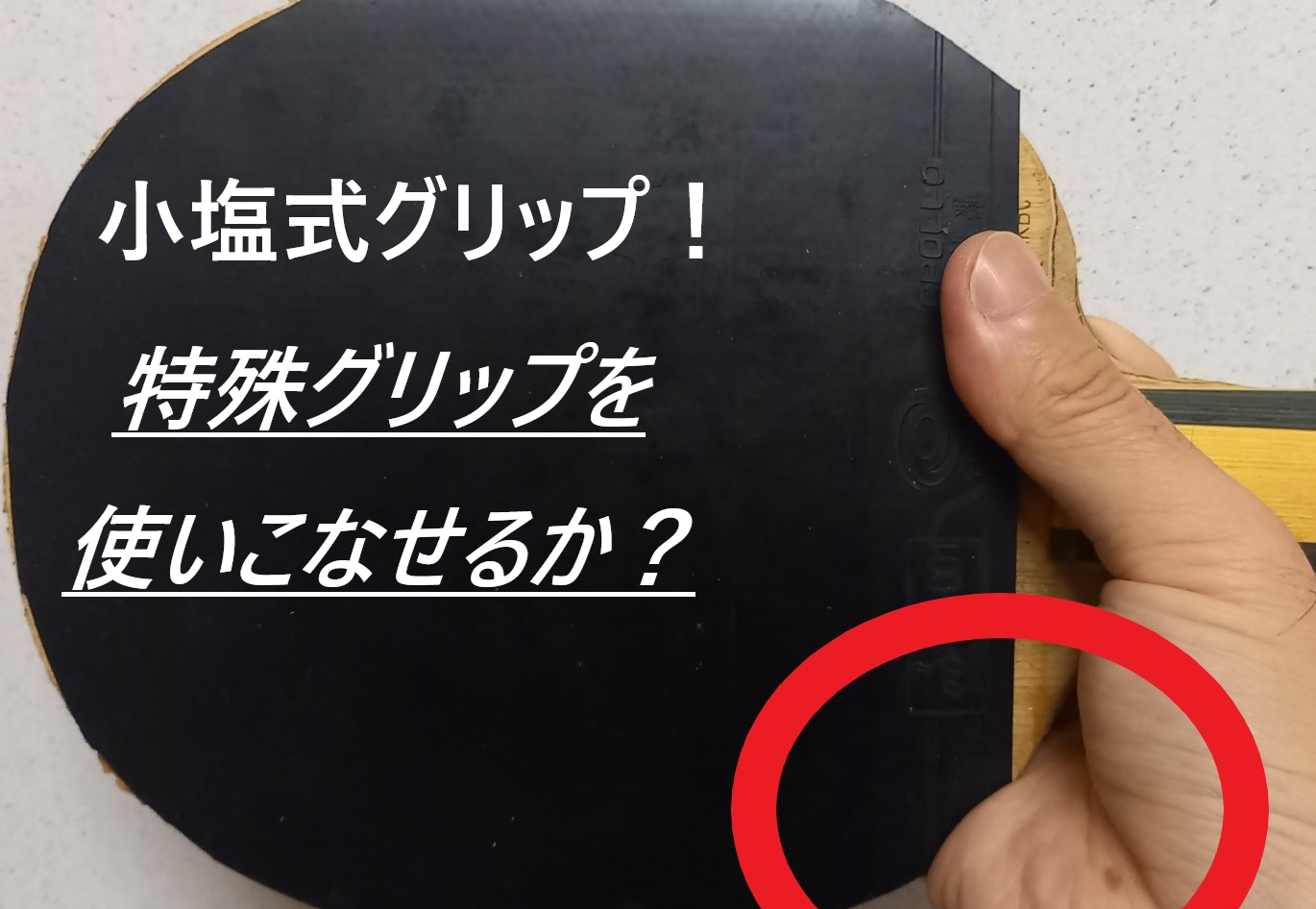
Although Ojio does not technically use a traditional penhold grip, I wanted to include her here out of deep respect for her highly unique playing style and tactical creativity.
Her combination of short pips forehand attacks and inverted backhand play creates an unconventional rhythm that is extremely difficult for opponents to predict.
Highlights
- Unique grip style
- Creative tactical variation
- Fast short pips attacks
- Unpredictable rally tempo
The video below showcases her highly distinctive style and tactical creativity.
For a more detailed analysis of Yuna Ojio’s grip, tactics, and playing style, please check out the related article below.
Please note that the linked article is currently available only in Japanese.
3. Conclusion
The world of Reverse Penhold Backhand (RPB) players is far more diverse and fascinating than many people realize.
Each player introduced in this article demonstrates a different approach to modern penhold table tennis through their unique combination of technique, tactics, and equipment selection.
Key Takeaways
- Modern penhold styles continue to evolve
- Equipment choices strongly influence playing style
- RPB allows a wide variety of tactical approaches
- Different blade and rubber combinations create completely different identities
Although shakehand players currently dominate the world rankings, modern penhold players continue to push the boundaries of what this style can achieve.
Players such as Qiu Dang, Felix Lebrun, Taisei Matsushita, Yuna Ojio, and Xue Fei continue to show new possibilities for the future of penhold table tennis.
In particular, Xue Fei possesses world-class ability despite the extraordinary depth of competition within China. I sincerely hope to see him shine once again on the international stage.
As a fellow penhold player, I look forward to continuing my own RPB journey while learning from these incredible athletes.
Thank you very much for reading until the end.
If you are interested in modern penhold equipment and playing styles, please check out the related articles below.




コメント