.jpg)
1.Introduction
Sponge thickness can significantly change the feel and performance of a table tennis rubber.
Many offensive players automatically choose “Max” thickness, especially on the forehand side.
However, “Max” is not always the best choice for every player.
Some players actually improve their control and consistency by switching to a slightly thinner sponge.
In this article, I compare the same rubber in both “Max” and “2.0mm” to explain the practical differences between them.
【Notes】
- Sponge thickness labels vary depending on the manufacturer.
- This article focuses on inverted rubbers for offensive players.
2.Rubbers Used for Testing
Tested Rubber: Glayzer (Butterfly)

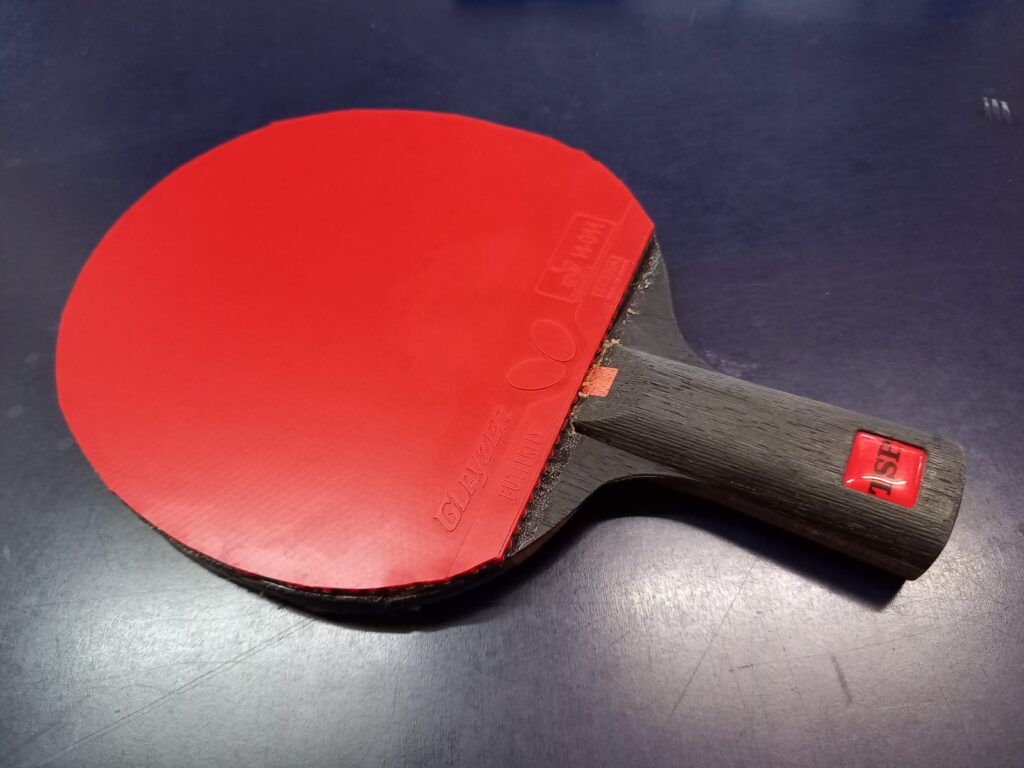
- I use this rubber on the backhand side of my penholder racket.
- Glayzer is designed to offer strong performance while remaining more user-friendly than high-end rubbers like Dignics.
- It is also more affordable than Butterfly’s premium Dignics series.
Key Features
- High spin and stable arc
- Good balance of power and control
- Durable top sheet with Spring Sponge X


Players seeking even more spin and power may also consider Butterfly’s Dignics 05.


3.Rubber Weight Comparison
I compared the weights of recently purchased Glayzer rubbers.

- The 2.0mm (“Thick”) version was about 5g lighter before cutting.
- After cutting and applying the rubber, the difference was about 3g in this case.
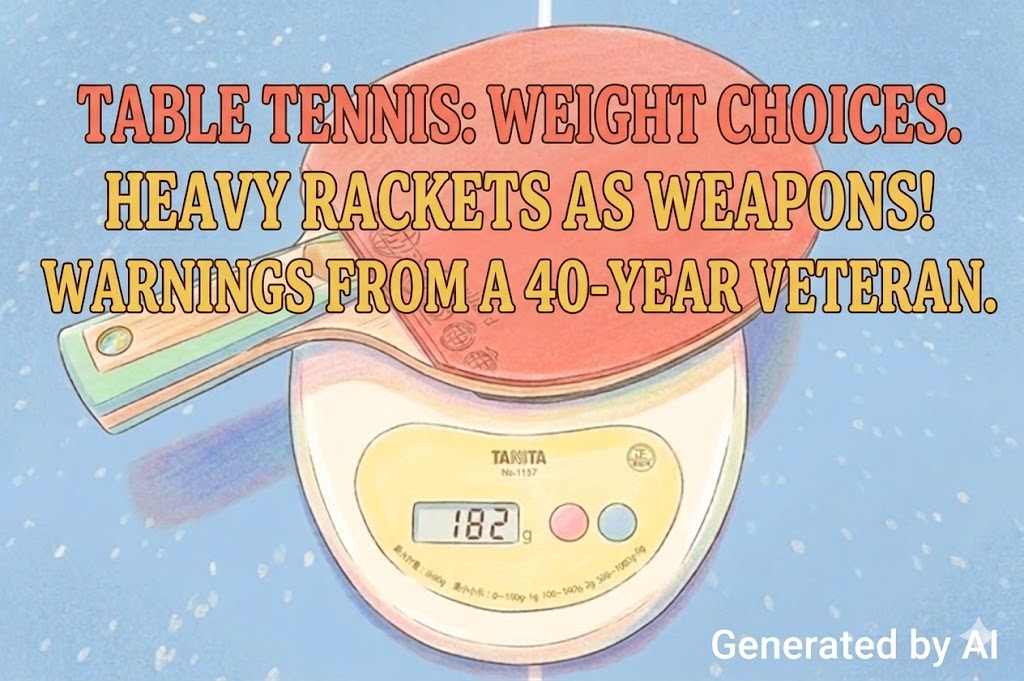
- However, the overall racket weight does not change dramatically.
Rubber weight can vary even within the same product and sponge thickness.
Because of this, some players check the weight of each rubber before purchasing.
4.Characteristics by Sponge Thickness
Below is a general comparison between “Max” and “2.0mm” sponge thickness.
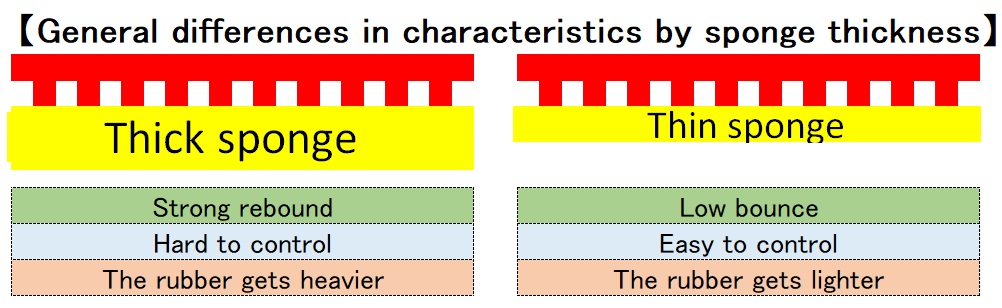
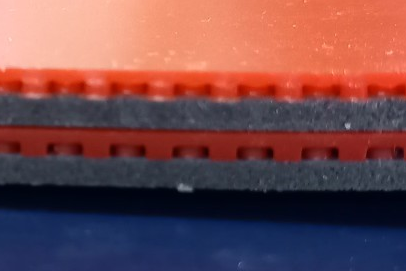
- This article compares “Extra Thick” (Max) and “Thick” (2.0mm).
- Beginners may not notice a major difference at first.
- However, experienced players can often feel the difference more clearly during matches.
5.Choosing Based on Your Playing Style
The best sponge thickness depends on your playing style and priorities.
(1)Who Should Use “Max” Sponge Thickness?
- Players who prioritize power and strong 3rd-ball attacks
- Players who want maximum pressure during topspin rallies
- Aggressive attackers with fast swing speed
- Players willing to trade some consistency for more winners
(2)Who “Thick” (2.0mm) is best for
- Players who value control and stable receives
- Players who focus on placement, blocking, and consistency
- Players who prefer touch and clearer ball feedback
- Players who want to reduce unforced errors
Advanced players can often control the disadvantages of Max thickness through superior technique.
However, it is much harder to compensate for the reduced power and speed of thinner rubbers.
That is why most advanced offensive players use at least “Thick” sponge thickness.
Here is the setup I currently use:
Forehand: Max
- I trust my forehand swing speed.
- I prefer aggressive attacking play.
- I prioritize power in 3rd-ball attacks and topspin rallies.
Backhand: 2.0mm
- My backhand swing is slower than my forehand.
- I value consistency and placement over raw speed.
- I prioritize control in backhand receives and Chiquita attacks.
6.Conclusion

For many players, simply changing sponge thickness can noticeably improve control and consistency.
Changing the thickness of your backhand rubber can also affect the overall feeling of your racket.
If your current setup feels slightly uncomfortable, try adjusting the sponge thickness before changing to a completely different rubber.
Players looking for even more spin and offensive power may also want to check Butterfly’s Dignics 05.





コメント