
- 1. Introduction
- 2. Why Did I Choose a Reverse Penhold Racket?
- 3. Modifying the Grip for Match Play
- 4. Key Characteristics of the Galedia Revolver R in Actual Play
- 5. Especially Recommended for Former Japanese Penhold Players
- 6. Who Should Consider the Galedia Revolver R?
- 7. Points to Consider Before Buying
- 8. Final Verdict
1. Introduction
In my previous article, I covered the unboxing of the Butterfly Galedia Revolver R, including weight measurements and the rubber assembly process.
If you have not read that article yet, I recommend checking it out first.

For a long time, I had been searching for a penhold racket that could support a lightweight setup.
My ideal racket needed to meet the following requirements:
- Keep the total weight around 150g even with max-thickness heavy Chinese sticky rubbers on both sides
- Support both forehand and backhand play
- Not use balsa wood (I will explain why later)
After researching various options, I chose the Butterfly Galedia Revolver R, a reverse penhold racket.
The result exceeded my expectations. Even with max-thickness sticky rubbers on both sides, the finished racket weighed only 152g.
In this review, I will cover the following topics:
- Why I decided to switch to a reverse penhold racket
- The weight balance characteristics I noticed during actual play
- How suitable it is for former Japanese Penhold players
- Who I would recommend this racket to
- Important points to consider before buying
I plan to publish a separate review of the rubbers used in this setup.
In this article, I will focus on the features, performance, and appeal of the Galedia Revolver R itself.
2. Why Did I Choose a Reverse Penhold Racket?
Among all penhold racket styles, I believe the Chinese Penhold (C-Pen) offers the best overall maneuverability.
You might be thinking:
“If that’s the case, why not simply choose a Chinese Penhold racket?”
That would be a reasonable question.
However, I had several non-negotiable requirements:
- Use max-thickness Chinese sticky rubbers on both sides
- Keep the total racket weight around 150g
- Maintain excellent maneuverability with a relatively thin blade
To achieve these goals, the bare racket would need to weigh somewhere in the low 60g range.
The problem is that most Chinese Penhold rackets weigh around 70g or more, even among lighter examples.
There are some exceptions. Ultra-lightweight balsa rackets can weigh around 60g, and I actually used one for about five to six years.
Why I Did Not Choose a Balsa Racket
- The feel is quite unique and takes time to get used to
- Balsa blades dent easily if they hit the table
- The blade often needs to be thicker to generate sufficient speed
- I personally prefer thinner blades
Of course, balsa rackets have their own advantages.
However, I eventually wanted a racket with a more solid and traditional feel on ball contact.
The Reverse Penhold Option That Caught My Attention
While researching alternatives, I noticed that many reverse penhold rackets are both lightweight and thin without relying on balsa wood.
However, many of them are designed for combination or all-round styles and tend to prioritize control over speed.
That is what led me to the Butterfly Galedia Revolver R.
- Lightweight construction
- Relatively thin blade design
- Arylate-Carbon reinforcement
- Plenty of power for offensive play
In other words, it was one of the few rackets that matched the three qualities I was looking for: lightweight, thin, and offensive.
It already looked promising on paper, but after using it in practice, I discovered that it had several characteristics I had not fully anticipated.
In the next section, I will explain the grip modifications I made before putting the racket into match play.
3. Modifying the Grip for Match Play
As I mentioned in my previous article, even after lightly sanding the racket immediately after purchase, there were still several areas of the grip that caused discomfort.
The most noticeable issue was pain around my index finger, which made it difficult to take a full swing comfortably.
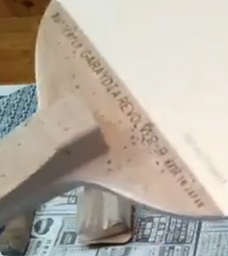

To solve these issues, I reshaped several areas around the handle and customized the grip to match my preferred hand position.
After the modification, the discomfort completely disappeared, and the racket became comfortable enough for match play.
The finished result is shown below.
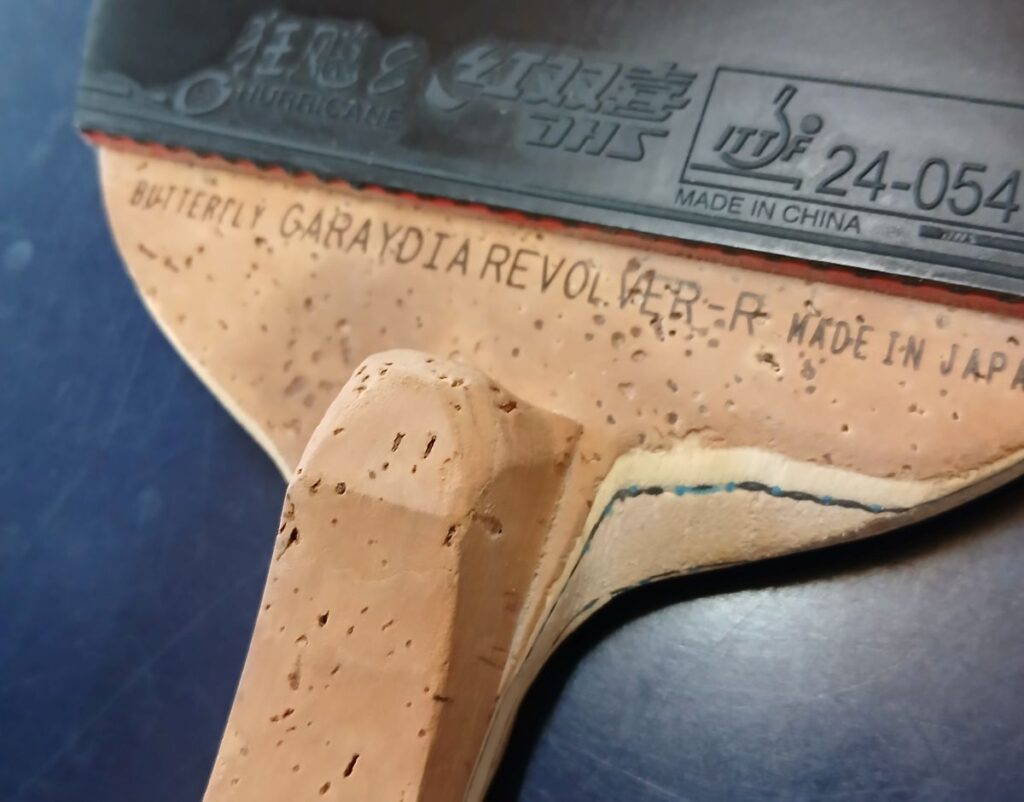
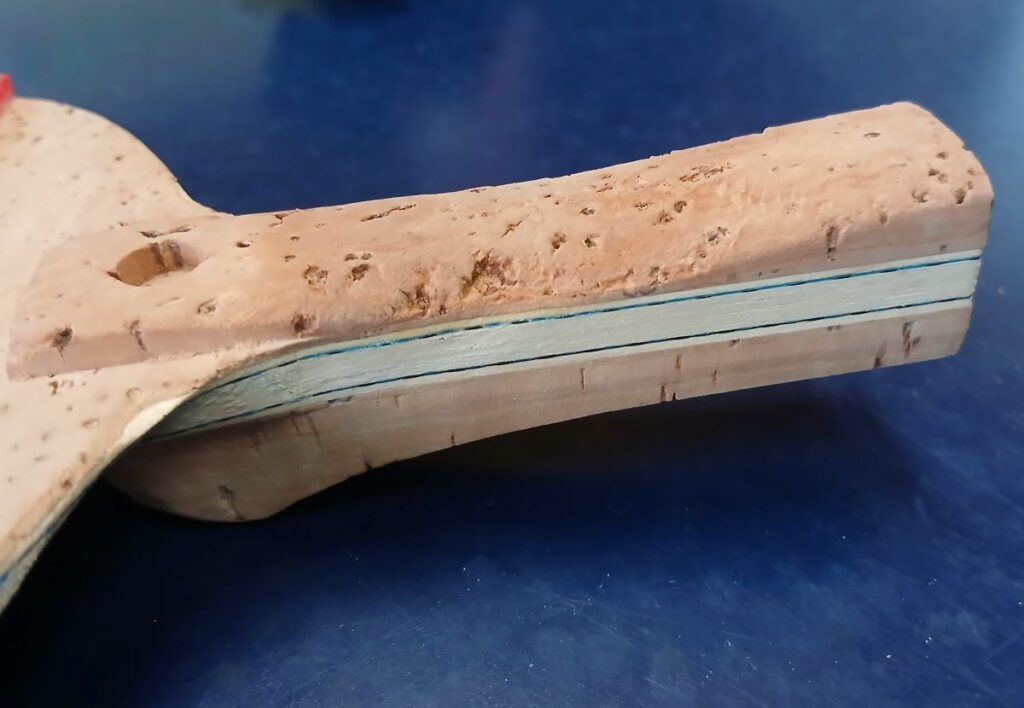
I recommend modifying a penhold grip gradually over multiple sessions rather than removing too much material at once. In my case, the process took four days.
For more details, please see the article below.

Final Weight: 152g
The completed racket weighed 152g after the grip modification and rubber installation.
- Blade: Butterfly Galedia Revolver R
- Forehand: Nittaku Hurricane 8-80 (Max)
- Backhand: Nittaku Hurricane 8-80 Power (Max)
This setup uses very heavy Chinese sticky rubbers on both sides, so the final weight represents a demanding configuration.
If you choose more conventional rubbers, there are several ways to reduce the overall weight:
- Use lightweight tensor rubbers
- Choose thinner sponge thicknesses instead of Max
With these adjustments, I believe reducing the total weight by another 10–15g is entirely realistic.
4. Key Characteristics of the Galedia Revolver R in Actual Play
After using the Galedia Revolver R in practice sessions, I noticed the following characteristics.
Head-Heavy Balance
- The racket head naturally accelerates through the ball, making it easier to transfer power
- Produces powerful forehand loops with less effort
- Feels familiar to players with a Japanese Penhold background
Forehand-to-Backhand Transition
- The transition speed is slower than that of a traditional round-head Chinese Penhold racket
- In fast rallies, I occasionally found myself reacting slightly late
RPB (Reverse Penhold Backhand)
- It is important to actively rotate the racket head through the stroke
- A half-committed swing does not fully unlock the racket’s performance
- RPB is fully playable, but it feels different from a traditional Chinese Penhold racket.
Arylate-Carbon Construction
- Even off-center shots retain good quality and do not easily become weak returns
- Blocking feels stable and predictable
Three-Ply Wood Construction
- Because the blade is based on a three-ply wood structure, it provides a softer feel than many composite blades
- Pairs very well with hard Chinese sticky rubbers
5. Especially Recommended for Former Japanese Penhold Players
The strongest impression I had after using the Galedia Revolver R was how well it suits players with a Japanese Penhold background.
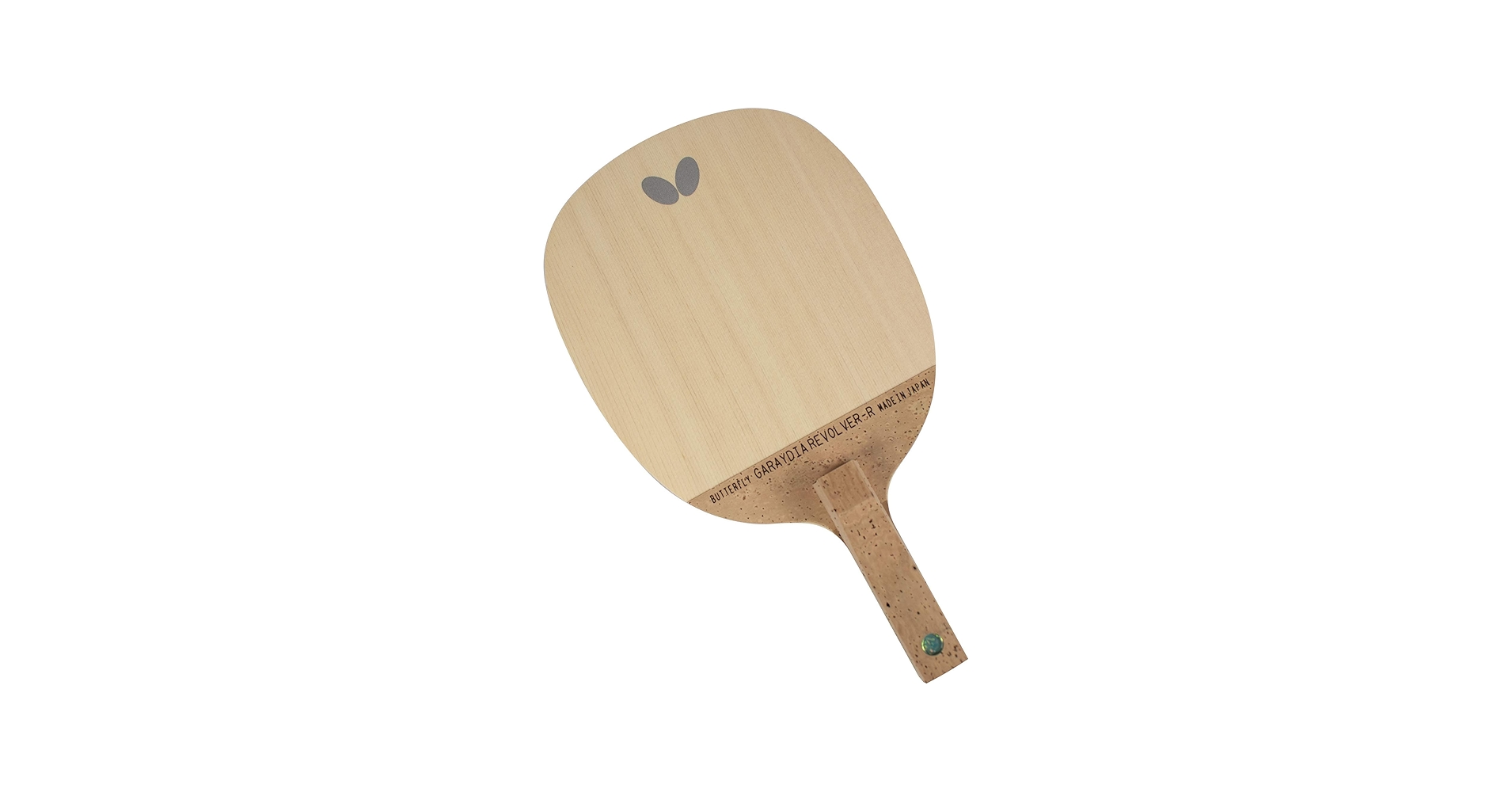
Most Chinese Penhold rackets use a round blade shape. In contrast, the Galedia Revolver R adopts a shape that is much closer to a traditional Japanese Penhold racket.
Because of this, I believe players who have used Japanese Penhold for many years can transition to a two-sided rubber setup with relatively little adjustment.
- A rounded-square blade shape similar to Japanese Penhold rackets
- A familiar head-heavy balance
- A forehand swing that feels natural from the start
Having previously played with Japanese Penhold myself, I was able to adapt to the Galedia Revolver R without any significant discomfort.
6. Who Should Consider the Galedia Revolver R?
After spending time with this racket, I believe it is particularly well suited for the following types of players:
- Players looking for a lightweight yet offensive reverse penhold racket
- Players who prefer a feel closer to an all-wood blade
- Players who want the stability of a composite blade without sacrificing touch
- Players who build their game primarily around the forehand attack
On the other hand, players who place a high priority on quick forehand-to-backhand transitions may want to consider a traditional round-head Chinese Penhold racket instead.
7. Points to Consider Before Buying
Although I am very satisfied with this racket overall, there were a few characteristics that stood out during use.
- Forehand-to-backhand transitions are slightly slower than with a traditional Chinese Penhold racket
- Effective RPB strokes require an active rotation of the racket head through the swing
In my opinion, both of these characteristics are related to the racket’s head-heavy balance.
When performing RPB strokes, the racket is capable of producing excellent speed and spin, but only if you fully rotate the racket head through the ball.
This is a personal theory of mine, but I believe that understanding and utilizing a racket’s balance point is extremely important for smooth racket handling, especially when playing with a penhold grip.
For that reason, the Galedia Revolver R feels particularly well suited to my playing style.
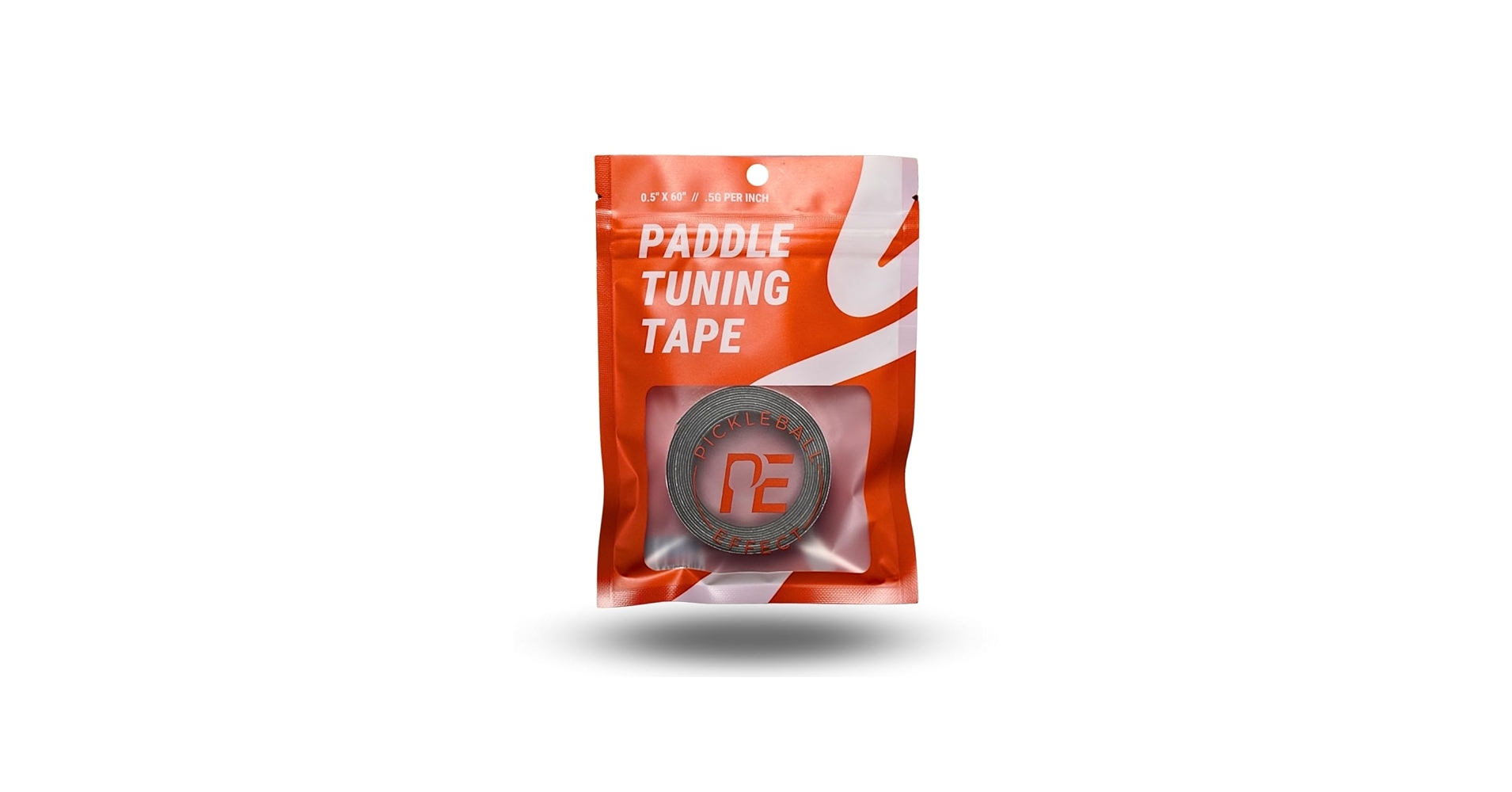
As a side note, when I use a Chinese Penhold racket, I often apply weight tape near the tip of the blade to create a more head-heavy balance and make the racket’s center of gravity easier to feel during play.
Some table tennis players also use weight-balancing accessories such as the one shown below.

8. Final Verdict
To summarize my impressions of the Galedia Revolver R:
- An exceptionally lightweight reverse penhold racket
- A head-heavy balance that helps generate powerful forehand attacks
- Excellent stability thanks to the Arylate-Carbon construction
- Pairs very well with hard Chinese sticky rubbers
- An easy transition option for former Japanese Penhold players
The Galedia Revolver R successfully delivered the three qualities I was looking for: light weight, thin blade construction, and offensive performance.
As a result, it has become one of the most satisfying rackets I have used in recent years.
I would particularly recommend it to players who want to transition from traditional Japanese Penhold to RPB, as well as those seeking a lightweight two-sided rubber setup.
I plan to continue using this racket and will update this review in the future with additional observations regarding durability and match performance.
I’ve also published a video showing how I modified the grip of the Garaydia Revolver. If you’re interested, be sure to check it out! ⭐
I hope this review has been helpful.
If you would like to check the current price, please see the link below.





コメント