1. Introduction
※Update (May 2026)
I currently also use the higher-end Dignics 09C.
Looking back at this review now, I still feel that Glayzer 09C is a very well-balanced and user-friendly hybrid tacky rubber.
In particular, I believe it is still one of the best options for players who want to transition from hard Chinese tacky rubbers to tension-style tacky rubbers for the first time.
I am a user of Chinese tacky rubbers.
At the time of this review, I had been using Apollo 5 (Yinhe/Galaxy), a hard Chinese tacky rubber, as my main rubber for more than five years.
After my most important tournament of the year had ended, I finally decided to try Butterfly Glayzer 09C, a rubber I had been interested in for quite some time.
In this review, I will honestly share my impressions after switching from Apollo 5, a hard Chinese tacky rubber focused on heavy spin, to Butterfly Glayzer 09C.
“A high-performance rubber that combines strong tackiness with impressive speed.”
Glayzer 09C uses Butterfly’s gray Spring Sponge X technology.
The combination of a tacky topsheet with strong High Tension characteristics and a 42-degree Spring Sponge X allows players to generate powerful spin, stable arc trajectories, and excellent touch play over the table.
It also makes it easier to perform spin-oriented loop drives and sharp counterattacks typical of hybrid tacky rubbers.
I personally prioritize spin over speed and rely heavily on counterattacks, which is why I chose Glayzer 09C for this review.
Throughout this article, I will occasionally compare it with Apollo 5, the rubber I mainly used at the time.
I hope this review will be helpful, especially for players interested in Chinese-style tacky rubbers.
2. Weight
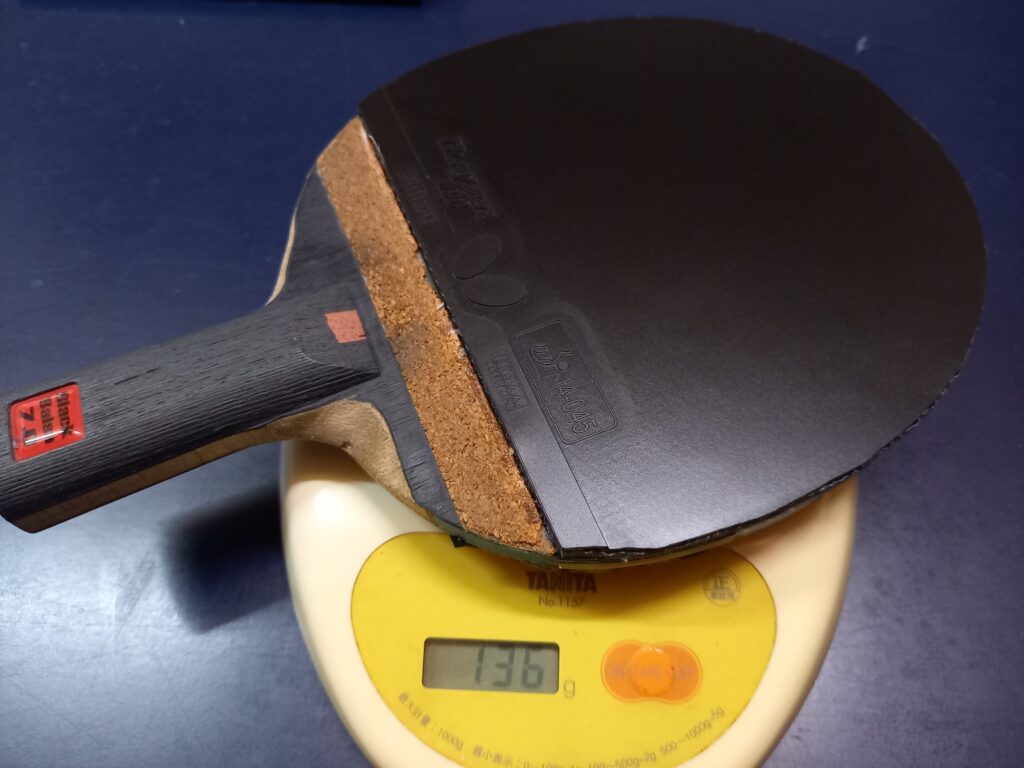
As a Chinese penhold player, I care a lot about the weight of both the blade and rubbers.
First, let’s take a look at the rubber weight.
For reference, I have included my personally measured data in the table below.
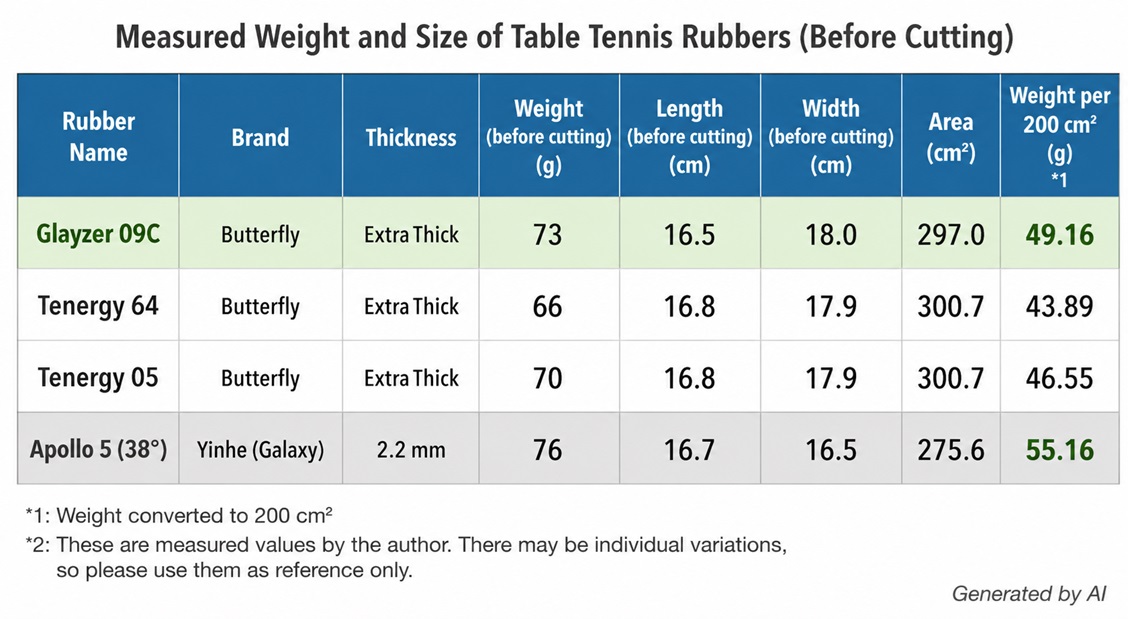
Glayzer 09C was lighter than the hard Chinese tacky rubber Apollo 5 (38°) that I usually use.
However, it was heavier than Tenergy 64 and Tenergy 05.
The table above shows the rubber weight and surface area before cutting, converted to the equivalent weight per 200 cm².
Please note that rubber weight can vary between individual sheets.
These are personally measured values and should be used as reference only.
For this setup, I intentionally focused on building a lightweight racket combination.
Compared with traditional Chinese tacky rubbers, Glayzer 09C felt relatively lightweight, which I personally appreciated.
3. Equipment Setup (Lightweight Racket Setup)
For this review, I built the setup around the concept of a lightweight racket.
Equipment Used
- Blade: Black Balsa 7.0 (TSP) → 63g
※Including a 2g side balancer - Forehand Rubber: Glayzer 09C → 40g
- Backhand Rubber: Apollo 5 Ultra Thin → 33g
Total Weight: 136g

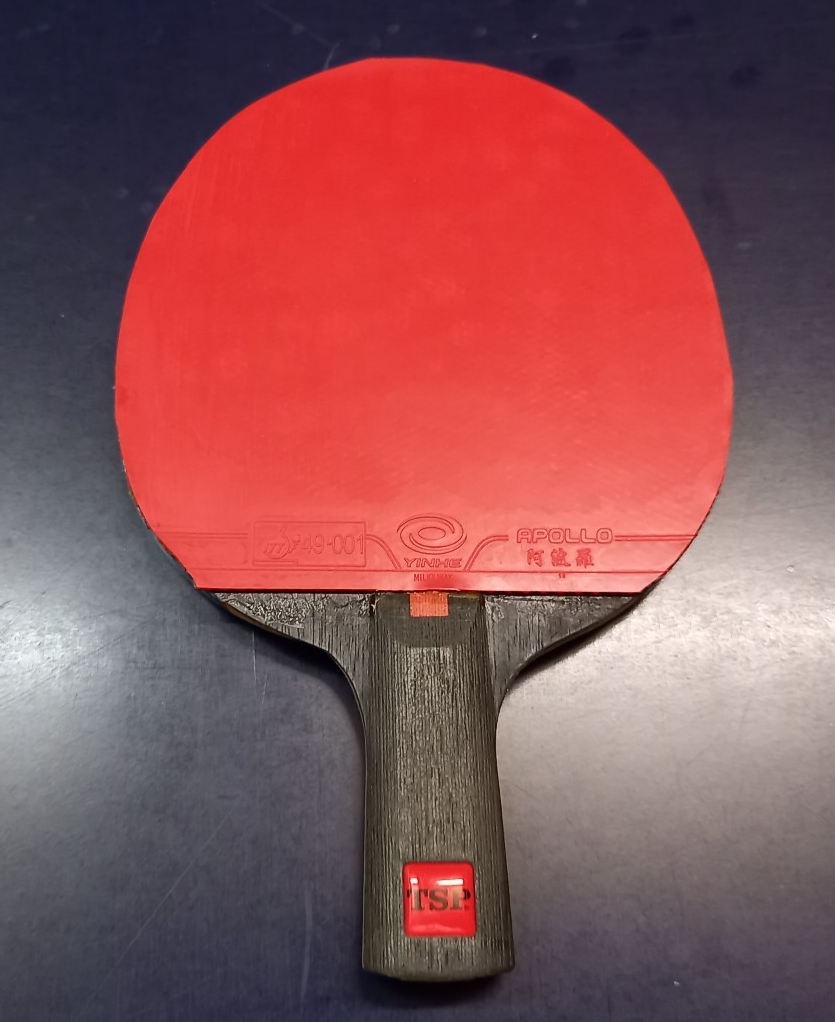
As a result, I was able to create an incredibly lightweight racket setup with a total weight of only 136g.
Although the Black Balsa 7.0 (TSP) has been discontinued, Victas currently sells a racket with a very similar specification.
The Black Balsa 7.0 is an extremely lightweight blade.
However, because Black Balsa 7.0 uses balsa wood, it is also known for being relatively fragile against impacts compared to standard all-wood blades.
This lightweight setup may be interesting for Chinese penhold players.
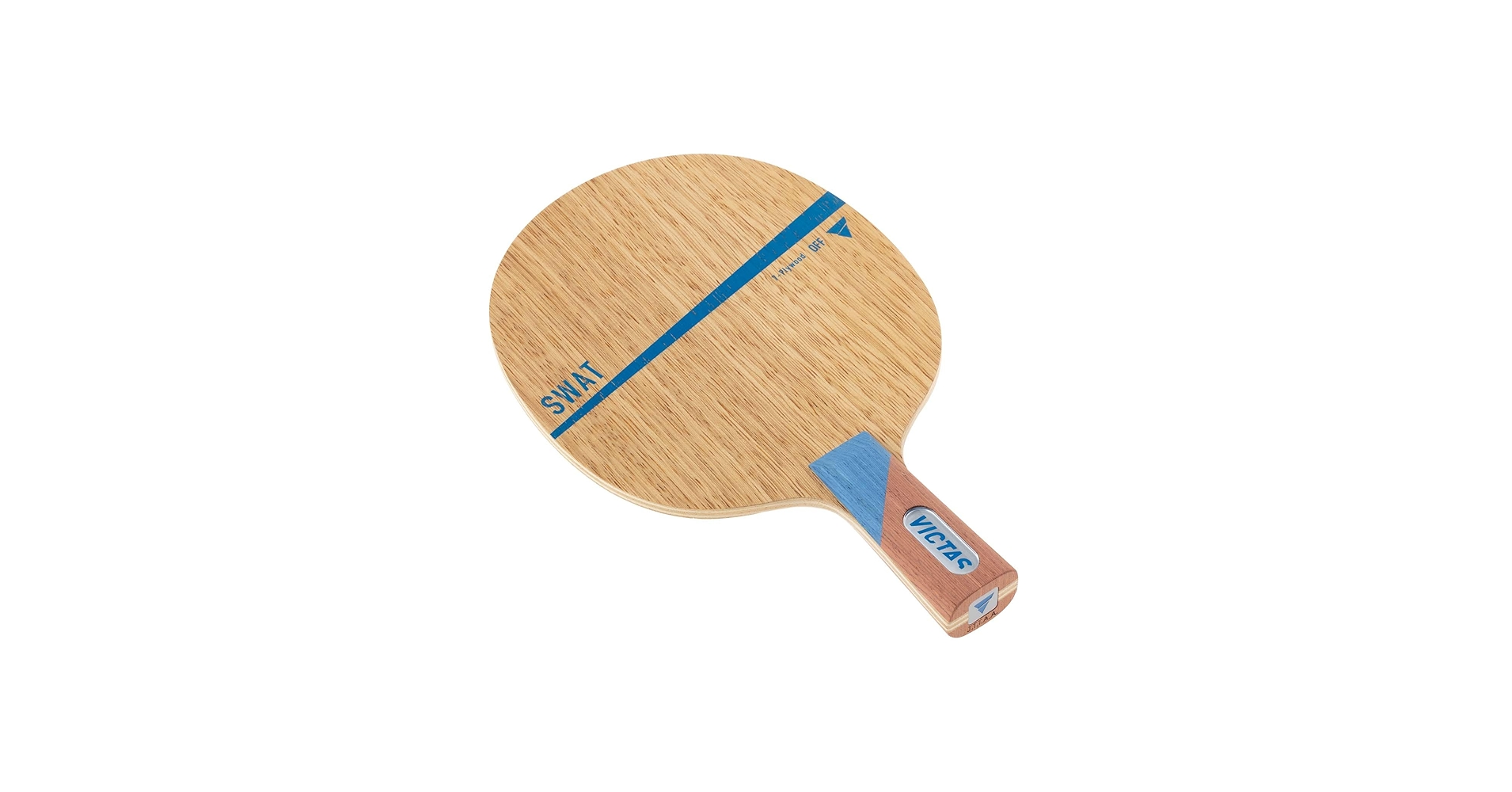
If you prefer a more traditional all-wood feeling instead of an ultra-lightweight setup, the Victas SWAT series is also a popular option.

4. Playing Impressions
The Glayzer series includes both Glayzer and Glayzer 09C.
Since I am a Chinese tacky rubber user who values spin more than speed, I chose the tacky-type Glayzer 09C.
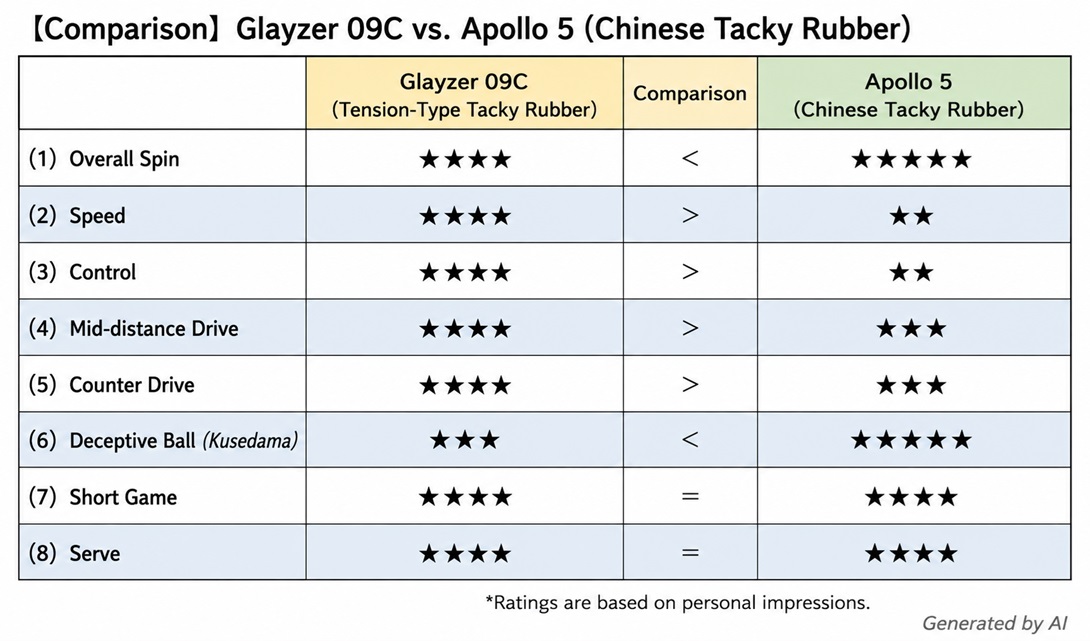
(1) Spin
Naturally, it did not produce as much spin as Apollo 5 (38°), which is heavily focused on spin performance.
However, the spin was still more than sufficient.
What impressed me most was how easily the ball lifted on forehand loops, creating a very clean arc.
Loop drives felt extremely stable.
(2) Speed (Loop Drive)
For a tacky rubber, Glayzer 09C is quite fast.
At the same time, it never felt uncontrollable.
My honest impression was that it could produce very fast shots while still remaining controllable.
Since I normally use slower Chinese tacky rubbers focused on spin, it initially felt very fast to me.
However, I got used to it fairly quickly.
(3) Control
I found it very easy to control and place the ball where I wanted.
It gave me the feeling that I could produce exactly the shots I intended.
Since Apollo 5 (38°), my usual rubber, has a very hard sponge and is relatively demanding to control, that difference probably made Glayzer 09C feel even easier to use.
(4) Mid-Distance Loop Drives
I was able to produce surprisingly powerful forehand loops for a tacky rubber.
With hard Chinese rubbers, I usually need to hit the ball very hard with strong impact to produce quality shots.
With Glayzer 09C, however, I could produce strong shots much more easily.
(5) Counter Drives
Even lightly matching the opponent’s ball resulted in a strong counter drive, which felt very comfortable.
Since I rely heavily on counterattacks, this was one of my favorite aspects of the rubber.
(6) “Kusedama” (Deceptive Ball Effect)
Glayzer 09C produces a very clean and stable ball trajectory.
However, this was actually the point that concerned me the most.
Because the trajectory of the forehand loop was very straightforward, the ball lacked the deceptive “kusedama” effect that sometimes makes returns difficult for opponents.
With Apollo 5 (38°), opponents occasionally make mistakes even on ordinary shots because of the deceptive ball quality.
I did not feel that same effect with Glayzer 09C.
(7) Short Game
Pushes felt very safe and controlled, even when applying heavy spin.
Stop shots were also very easy to perform.
This definitely felt like a proper tacky rubber.
One reason I continue to use Chinese tacky rubbers is because they make it easier to produce sharp and heavy-spin pushes.
I felt that Glayzer 09C handled this aspect very well.
(8) Serves
As expected from a tacky rubber, the spin on serves was excellent.
Even when applying strong spin, the ball did not fly too long and stayed safely on the table.
I had absolutely no complaints about the serve performance.
5. Conclusion
My honest impression is that Glayzer 09C is an extremely well-balanced hybrid tacky rubber.
For players who want to try a hybrid tacky rubber for the first time, Glayzer 09C remains one of the safest choices.
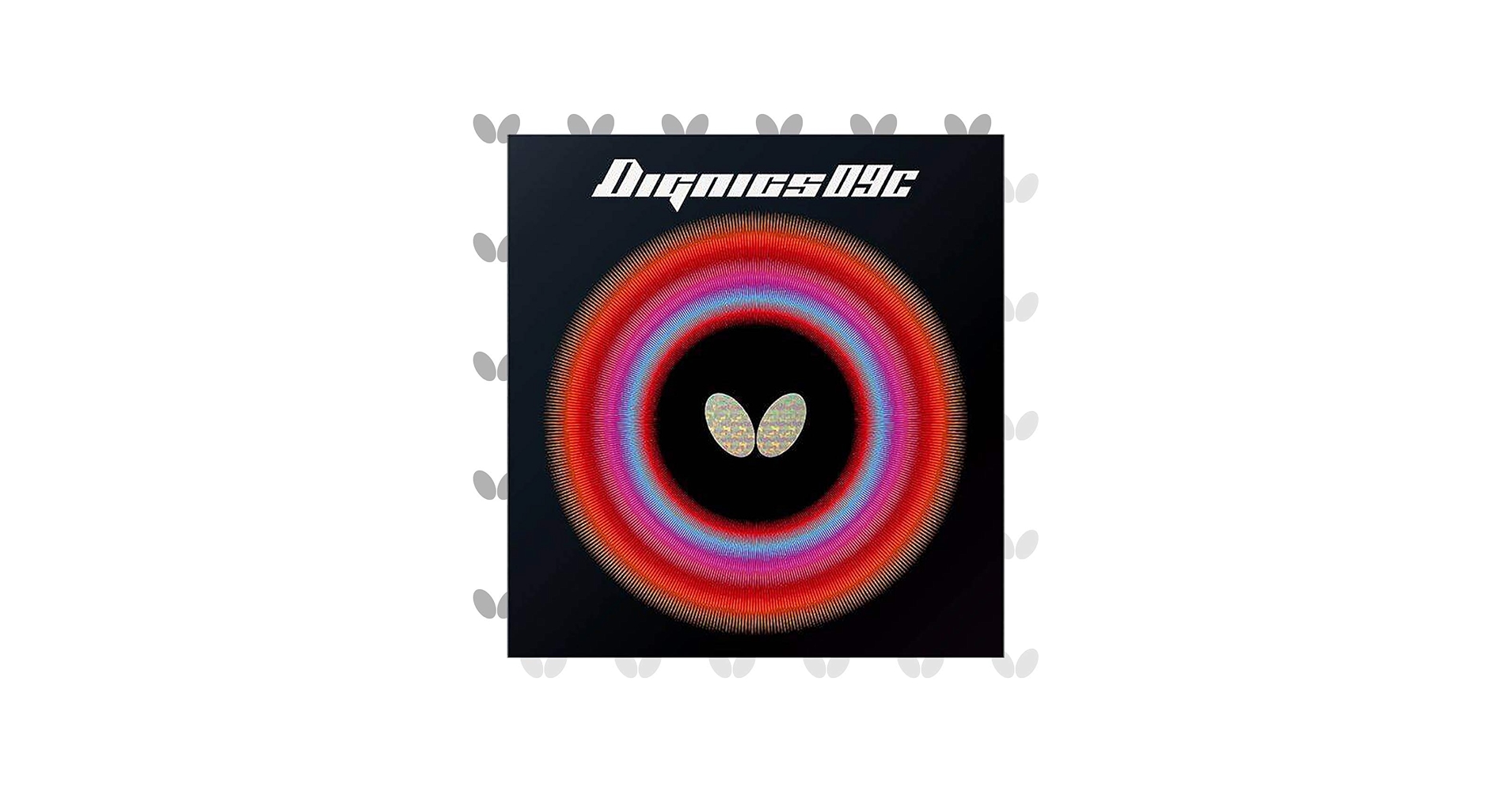
Players seeking even higher levels of spin and power may also want to consider Butterfly’s flagship Dignics 09C.


From my personal perspective, the biggest drawback was the lack of the deceptive “kusedama” ball effect often seen with traditional hard Chinese tacky rubbers.
Even so, I still consider Glayzer 09C an excellent hybrid tacky rubber with outstanding overall balance.


Please also check out the related articles below.
-320x180.jpg)


コメント