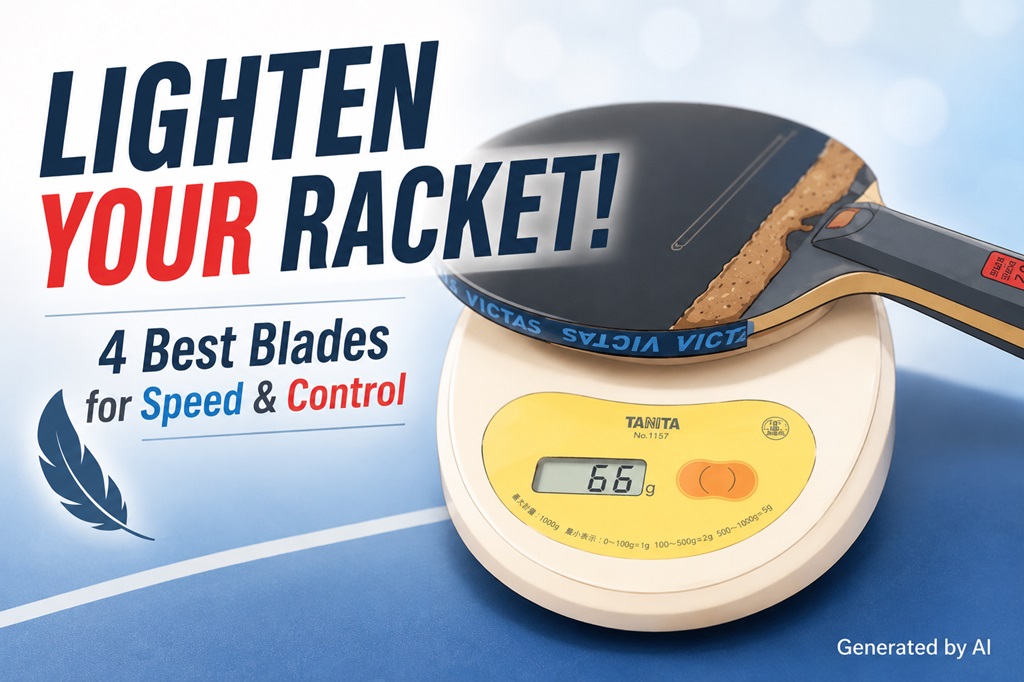
1.What Is Considered a Lightweight Racket?
While there is no strict definition, many players consider a racket setup under 160g to be lightweight for modern Shakehand play.
- Blade only: Around 80g or less
- Complete racket (with rubbers): Around 160g or less
Even a difference of 5–10g can significantly affect maneuverability, swing speed, and recovery during fast rallies.
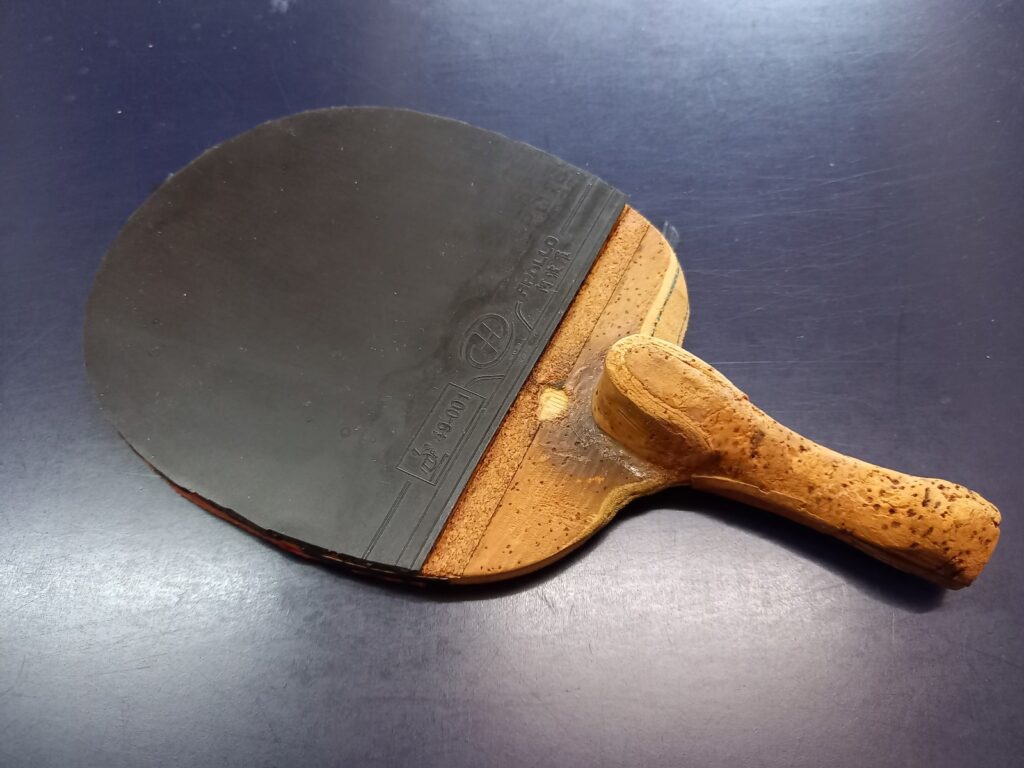
I personally use an ultra-lightweight setup based on the discontinued Butterfly “Paradox” blade.
- Blade Weight: 67g
- Total Weight: 138g
At this weight, forehand-backhand transitions become faster, touch play feels easier, and physical strain is reduced during long practice sessions.
2.Three Major Benefits of Using a Lightweight Racket
A lightweight racket can significantly improve maneuverability and reduce physical strain during fast rallies.
(1) Faster Forehand-Backhand Transitions
Quick transitions are extremely important in modern close-to-the-table play.
- Faster Reactions: Easier handling during high-speed rallies.
- Better Consistency: More stable shot timing during continuous attacks.
(2) Faster Swing Speed and Recovery
A lighter racket is easier to accelerate and recover after each swing.
- Quick Acceleration: Easier to generate racket speed with less effort.
- Faster Recovery: Returning to the ready position becomes smoother and quicker.
(3) Better Touch Play and Control
Lightweight rackets often provide better maneuverability in short play situations.
- Improved Touch: Easier flicks, pushes, and short receives near the table.
- Less Wrist Strain: More comfortable during long practice sessions.
3.Potential Drawbacks of Lightweight Rackets
Lightweight rackets offer excellent maneuverability, but there are also trade-offs.
(1) Less Stability Against Powerful Shots
Because the racket has less mass, it can feel less stable against heavy topspin or powerful attacks.
- Blocking Difficulty: Strong impacts may push the racket back more easily.
- Technique Matters: Stable blocking requires better timing and control.
(2) Stronger Vibration and Impact Feel
Lighter rackets often transmit more vibration to the hand during impact.
- Sharper Feedback: Some players enjoy the direct feeling, while others prefer a heavier and more solid impact.
However, I do not believe lightweight rackets automatically produce “weak balls.” In many cases, the difference is more about feel, stability, and maneuverability than raw power.
4.Who Should Try a Lightweight Racket?

A lightweight racket can be especially effective for players who value maneuverability, quick recovery, and reduced physical strain.
- Players with Wrist or Shoulder Fatigue: A lighter setup reduces physical stress during long practice sessions.
- Close-to-the-Table Attackers: Faster forehand-backhand transitions improve rally speed and recovery.
- Players Struggling with Touch Play: Lightweight rackets often feel easier to maneuver in short rallies and receive situations.
- Players Learning Modern Two-Wing Attacks: Lightweight equipment helps continuous attacking play feel smoother and more natural.
In my experience, lightweight equipment is not just about comfort—it can also improve speed, consistency, and overall maneuverability during modern table tennis play.
5.How to Choose a Lightweight Racket
Lightweight rackets are often created by using lighter wood materials or selecting lighter individual blades.
(1) Lightweight Wood Materials
Balsa wood is especially known for its extremely light weight, while Hinoki is known for its soft feeling and natural elasticity.
- Balsa: Extremely lightweight, but softer and more fragile.
- Hinoki: Comfortable feeling with excellent touch and elasticity.
(2) Individual Weight Variation
Even within the same racket model, actual weight can vary because blades are made from natural wood.
- Typical Difference: Around ±5g from the catalog weight.
- Recommendation: If possible, check the actual weight before purchasing.
6.Top 4 Recommended Lightweight Rackets
The following four blades were selected based on lightweight handling, ease of use, and suitability for modern close-to-the-table play.
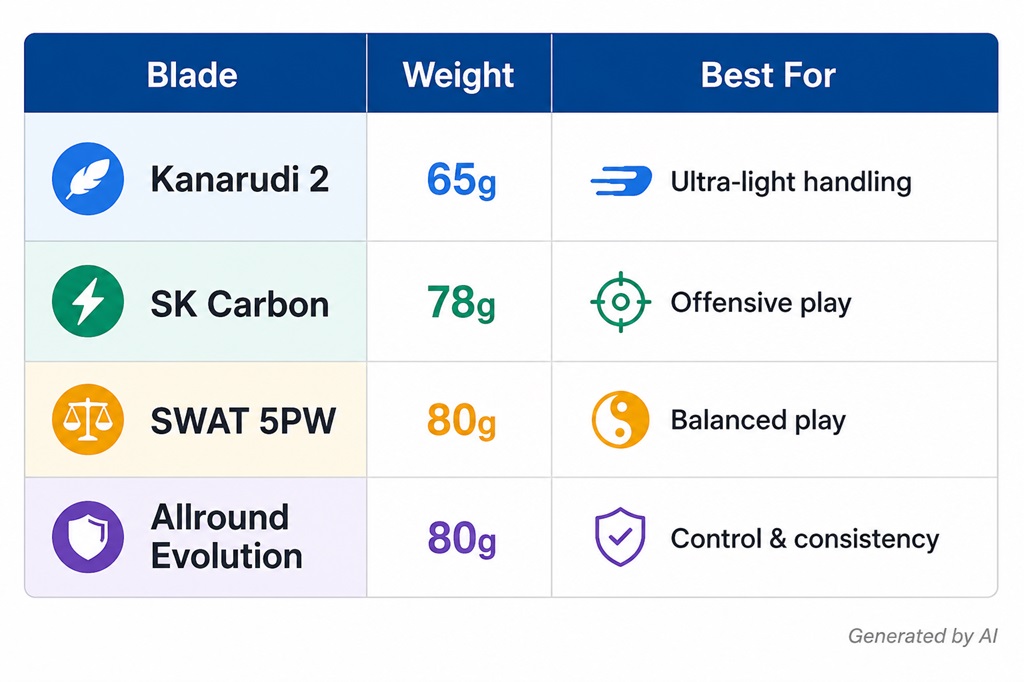
From the models currently available on the market, I selected four lightweight Shakehand blades suitable for modern close-to-the-table play.
Each racket has a different personality. Some prioritize ultra-light maneuverability, while others focus on speed, balance, or control.
(1) Ultra-lightweight Choice: Kanarudi 2 (Nittaku)
- Average Weight: ±65g
- Best For: Players prioritizing ultra-light handling and reduced physical strain.
Key Features:
- Ultra-Lightweight Design: One of the lightest blades currently available.
- Quick Wrist Play: Excellent for touch play, flicks, and fast transitions.
- Reduced Physical Burden: Helps reduce wrist and shoulder fatigue during long practice sessions.
Possible Drawback: Advanced power players may find it less stable during heavy rallies.
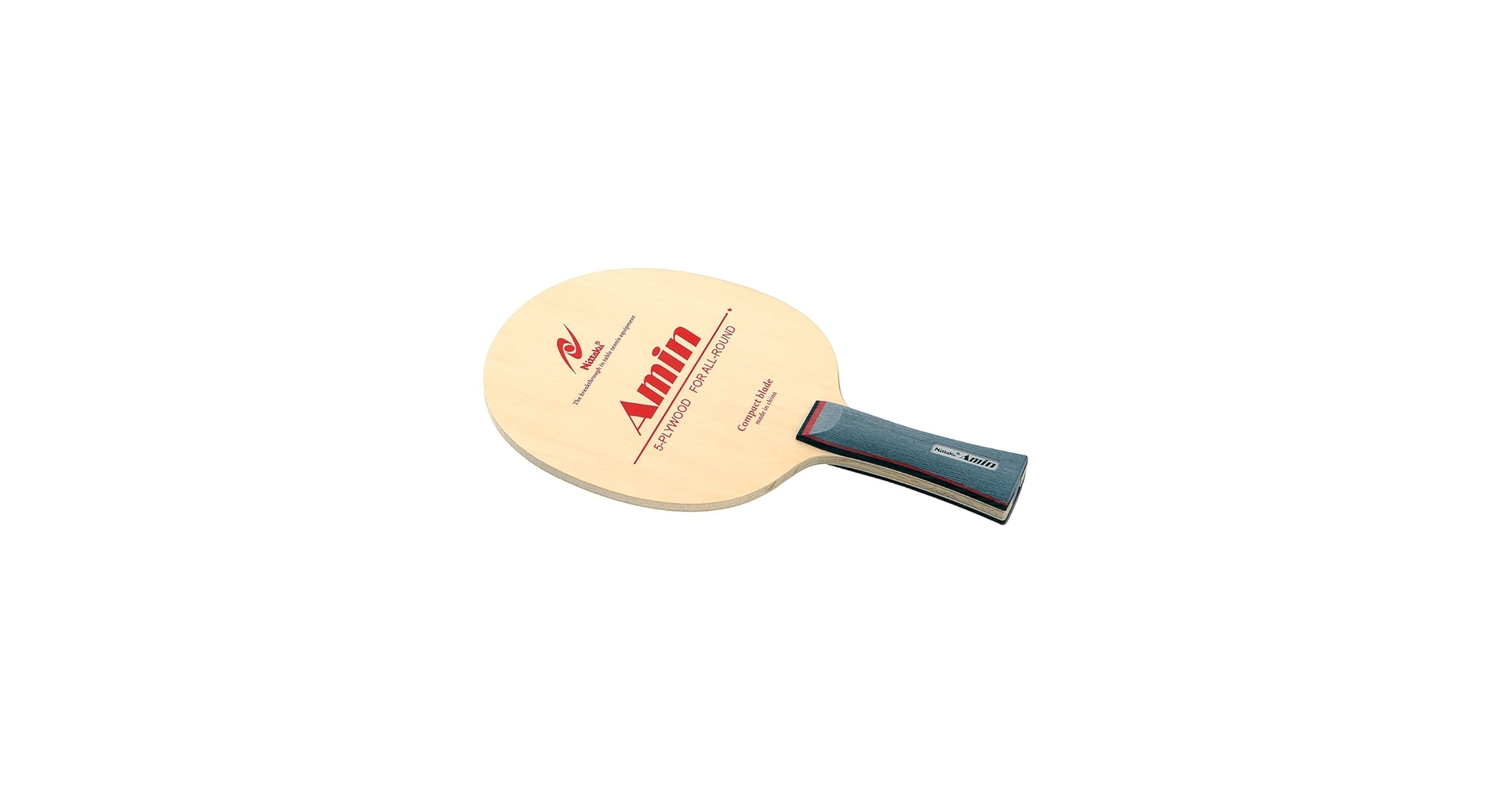

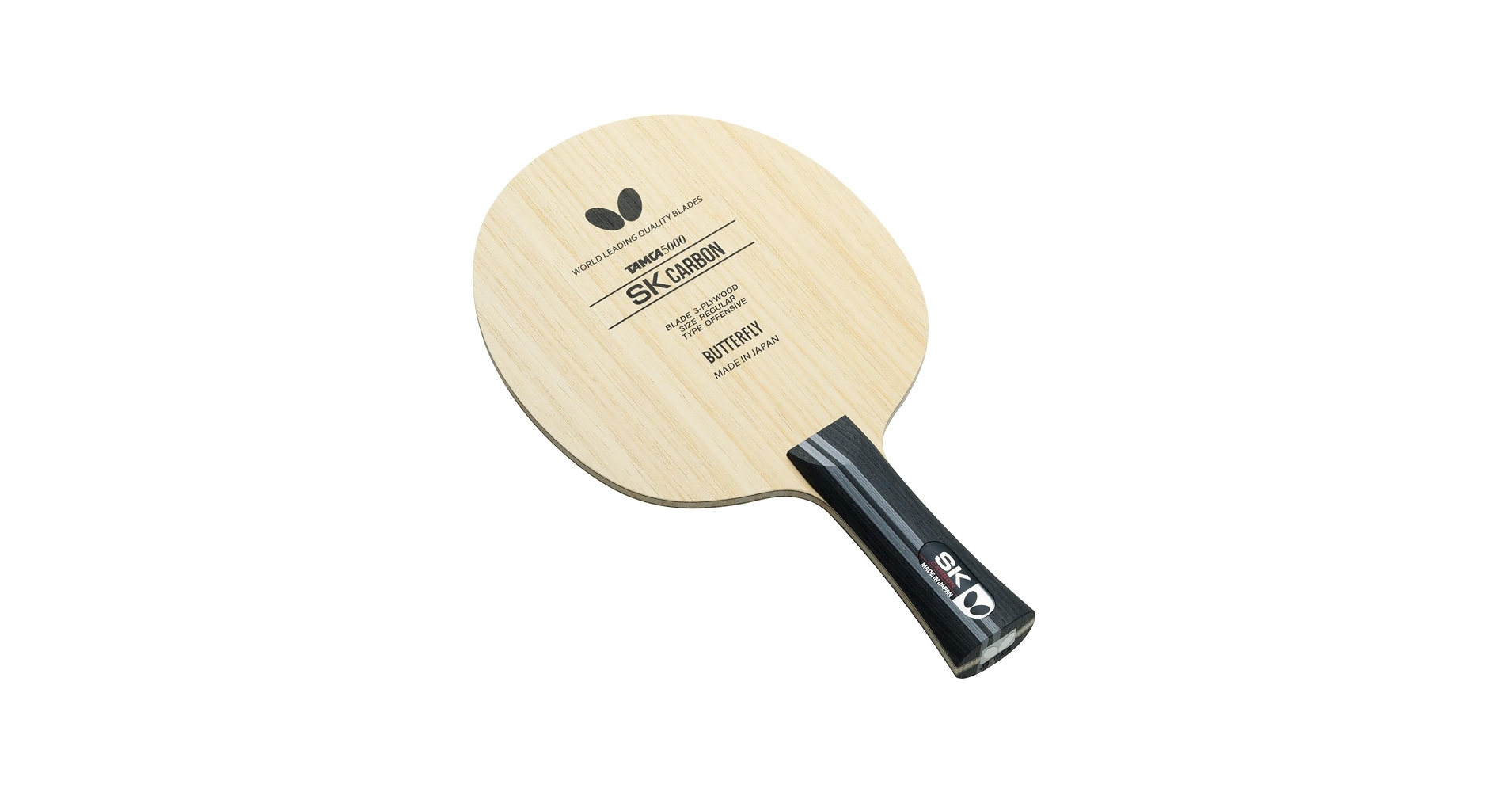
(2) Lightweight Offensive Choice: SK Carbon (Butterfly)
- Average Weight: ±78g
- Best For: Offensive players who want both speed and lightweight handling.
Key Features:
- Lightweight Carbon Blade: Combines aggressive speed with light handling.
- Fast Transitions: Excellent for quick forehand-backhand exchanges.
- Sharp Impact Feeling: TAMCA 5000 carbon provides crisp feedback and strong rebound.
Possible Drawback: Beginners may initially struggle with its high rebound speed.

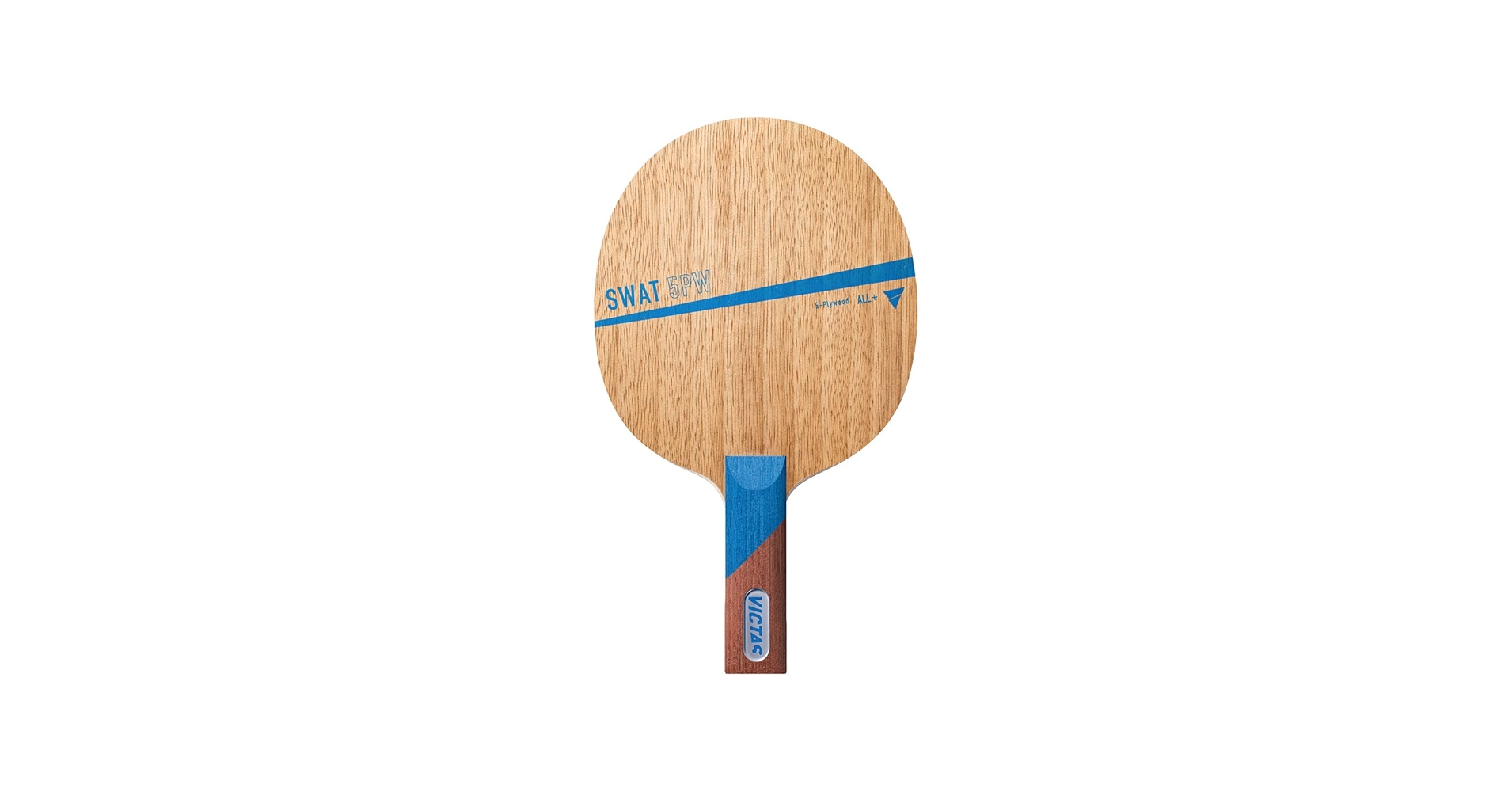
(3) Balanced Lightweight Choice: SWAT 5PW (VICTAS)
- Average Weight: ±80g
- Best For: Players seeking balanced speed, control, and stability.
Key Features:
- Balanced Performance: Stable balance of speed, spin, and control.
- Natural Wood Feeling: Softer and more controlled than carbon blades.
- Easy to Use: Smooth handling during continuous rallies.
Possible Drawback: Players seeking maximum power may prefer a faster carbon blade.

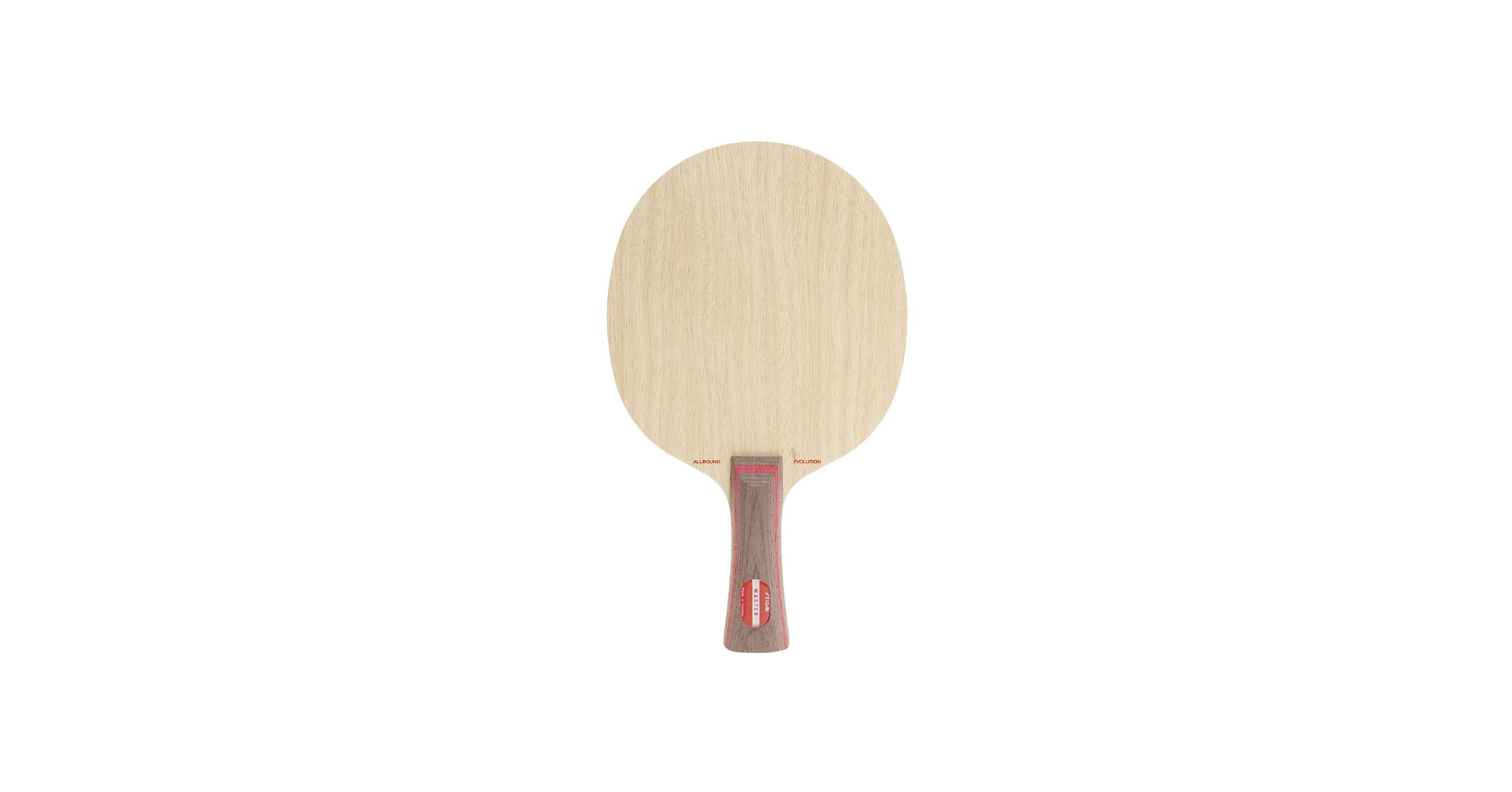
(4) Control-Oriented Classic: Allround Evolution (STIGA)
- Average Weight: ±80g
- Best For: Players focusing on control, touch play, and consistency.
Key Features:
- Excellent Control: Stable ball placement and reliable touch play.
- Classic Allround Feeling: Good dwell time and natural spin generation.
- Modern Control Play: Ideal for improving rally consistency and spin control.
Possible Drawback: Aggressive attackers may prefer a faster offensive blade.

7.Conclusion
Many players assume that heavier rackets automatically lead to better performance. However, equipment that feels too heavy can reduce maneuverability, recovery speed, and overall consistency.
For players who value quick transitions, touch play, and reduced physical strain, a lightweight setup can be a highly effective option in modern table tennis.
I hope this article helps you find a racket that feels faster, more comfortable, and easier to control.

-320x180.jpg)

コメント