1. Introduction
After trying various rubbers on the back side of my Chinese penhold racket, I have come to believe that an extremely thin rubber is the best choice for developing a good feel for reverse penhold backhand (RPB) and gaining the confidence to use it effectively in matches.
I explain in detail how I use extremely thin rubber for RPB in the following article. Please take a look if you are interested.

However, using extremely thin rubber for RPB also has some disadvantages.
Since I wanted to explore the possibilities of RPB from different angles, I decided to try something I had been interested in for some time: What would happen if I used short pips on the back side for RPB?
This article is a review of my experience using short pips for RPB. Therefore, I did not test techniques such as pushes or serves, so this review is different from a typical table tennis rubber review. Please keep this in mind when reading.
2. Moristo SP (Rubber Used by Mima Ito)
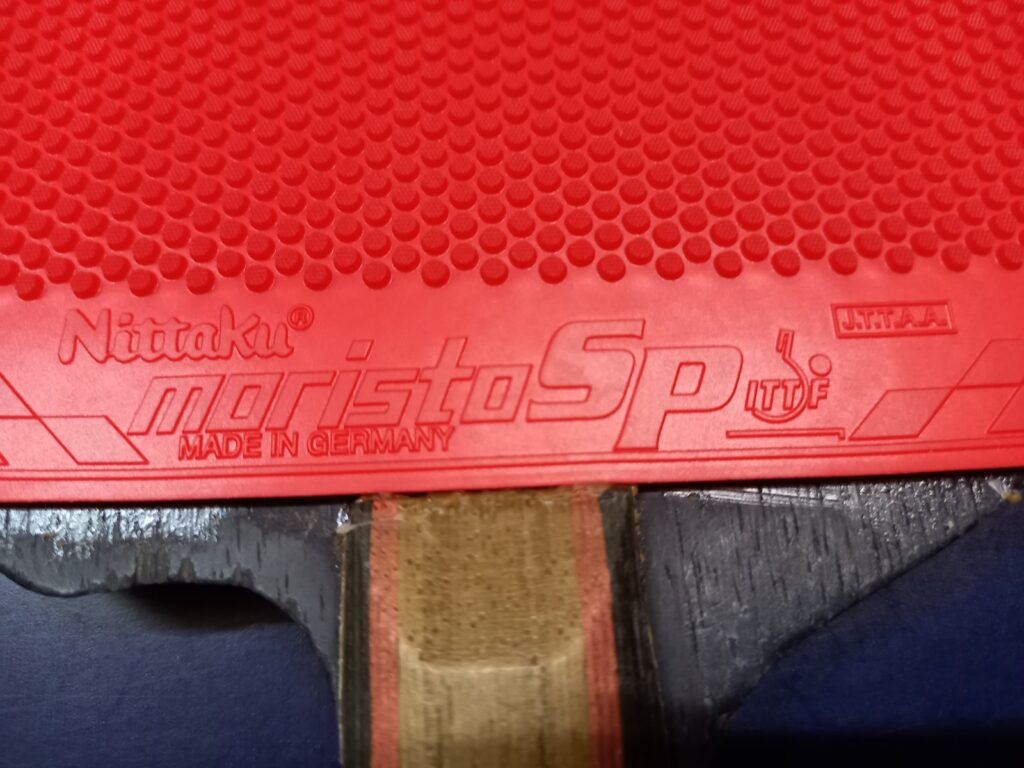
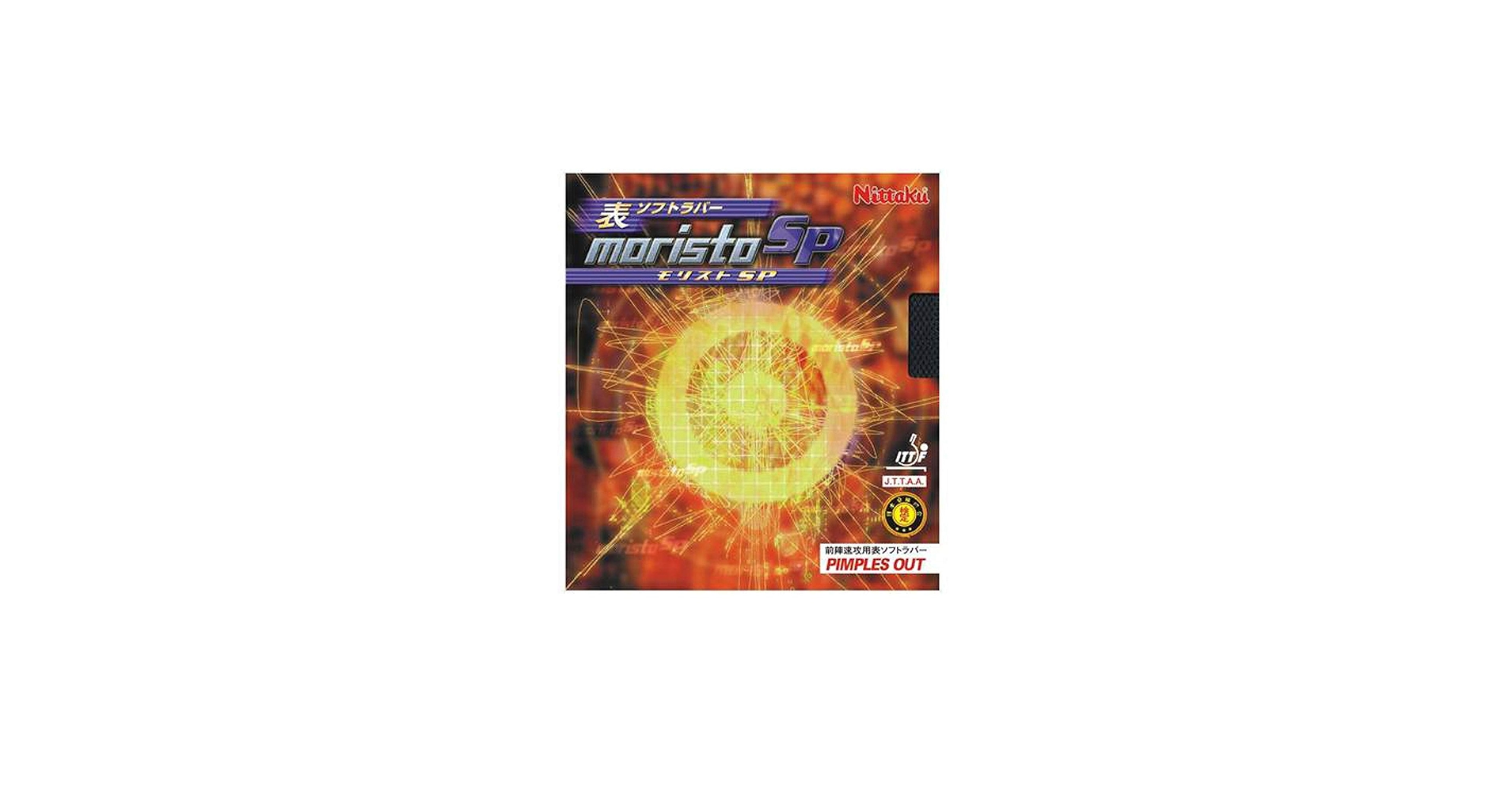
For this test using short pips, I chose Moristo SP (Nittaku).
Moristo SP is a long-selling short pips rubber known for being used by Mima Ito on the backhand side of her shakehand racket. (As of the end of July 2026.)
A highly versatile short pips rubber!
Source: Nittaku official website
It produces fast shots with a sharp, direct trajectory, while natural variations create a contrast between knuckle balls and blocks that stop quickly, allowing you to build powerful rallies.
It expands your range of play and allows you to develop a wide variety of tactics. This is what makes it a long-selling short pips rubber!
Nittaku’s official website also features the following comment from Mima Ito about Moristo SP.
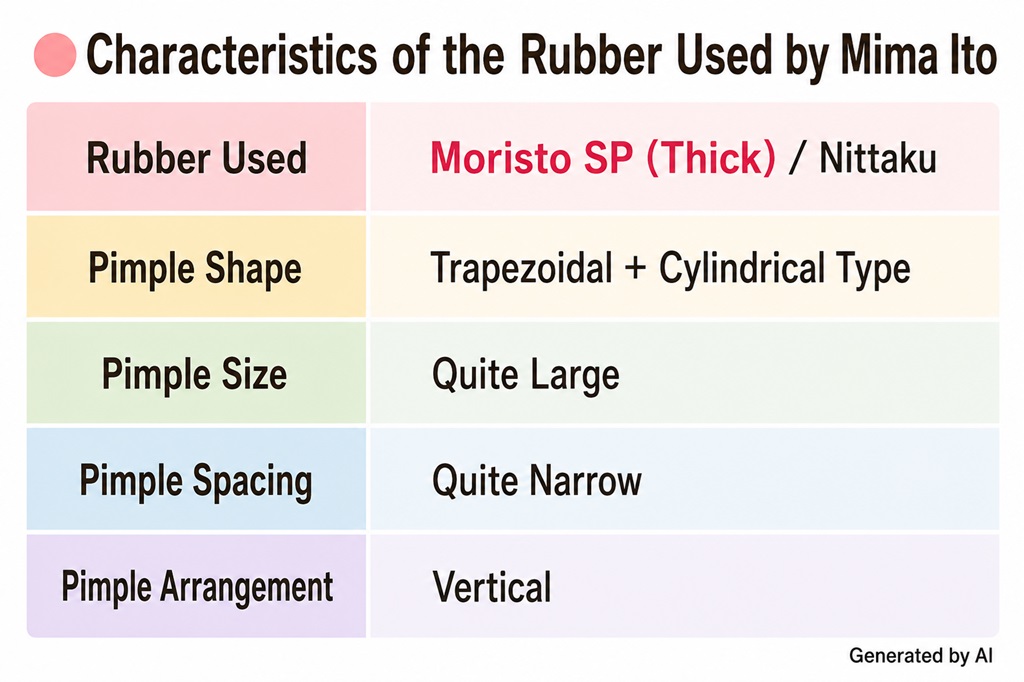
Based on these characteristics, Moristo SP appears to be a spin-oriented rubber. Also, because it has a trapezoidal and cylindrical pips design, I believe it should be relatively easy to produce knuckle balls to some extent.
I discuss in detail how differences in pips shape, pips size, and pips spacing affect the characteristics of short pips rubbers in the following article.
I was particularly interested in Mima Ito’s comment that Moristo SP can produce both spin and knuckle balls, so I decided to give this rubber a try.
In the following sections, I will occasionally compare it with Galaxy Apollo 5 Super Ultra Thin, the rubber I mainly use for RPB. I hope this review will give you some useful reference.
3. Lightweight! Rubber Weight
As a Chinese penhold player, I pay close attention to the weight of both my racket and rubber. First, let’s take a look at the weight of the rubbers.
For reference, the table below shows the weights I measured myself.
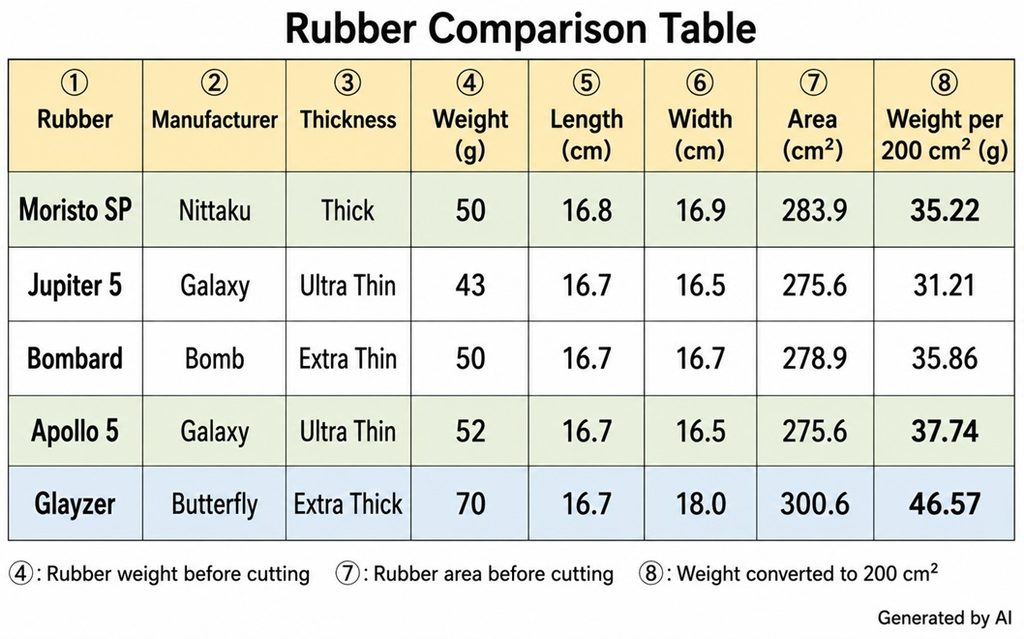
For this test, I chose the “Thick” sponge thickness. The measurements showed that Moristo SP is surprisingly lightweight, with a weight comparable to rubbers with an extremely thin sponge.
For comparison, I have also included the data for the inverted rubber “Glayzer (Max).” Moristo SP can reduce the weight by around 10 g per sheet compared with Glayzer (Max). That is a significant difference.
For this test, I used a spin-oriented tacky rubber on the forehand side to create a setup that would allow me to focus on the difference in spin production.
As for why I chose “Thick” for the short pips, even though I normally prefer “Max” thickness for inverted rubbers, I explain the reasons in detail in the following article.
4. Equipment Setup
For this test, I built my equipment setup around the difference in spin production between the short pips and inverted rubber.
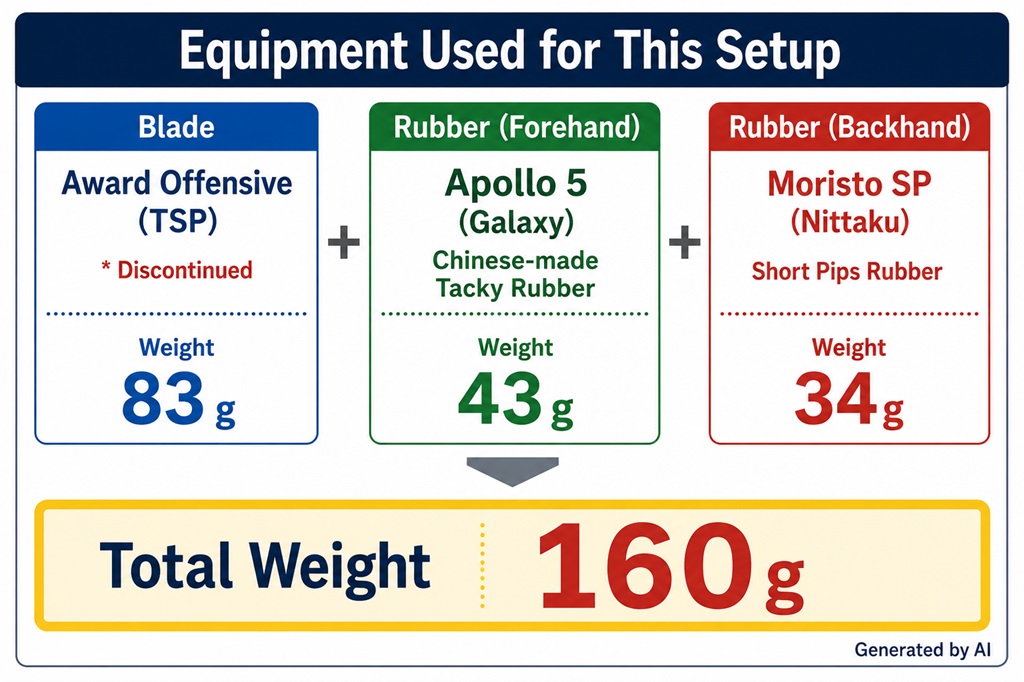
Note 1: The weight may differ slightly from the figures shown in my previous articles due to factors such as the amount of adhesive used.
Note 2: The forehand rubber is attached away from the grip, which can reduce the weight by approximately 4–5 g.

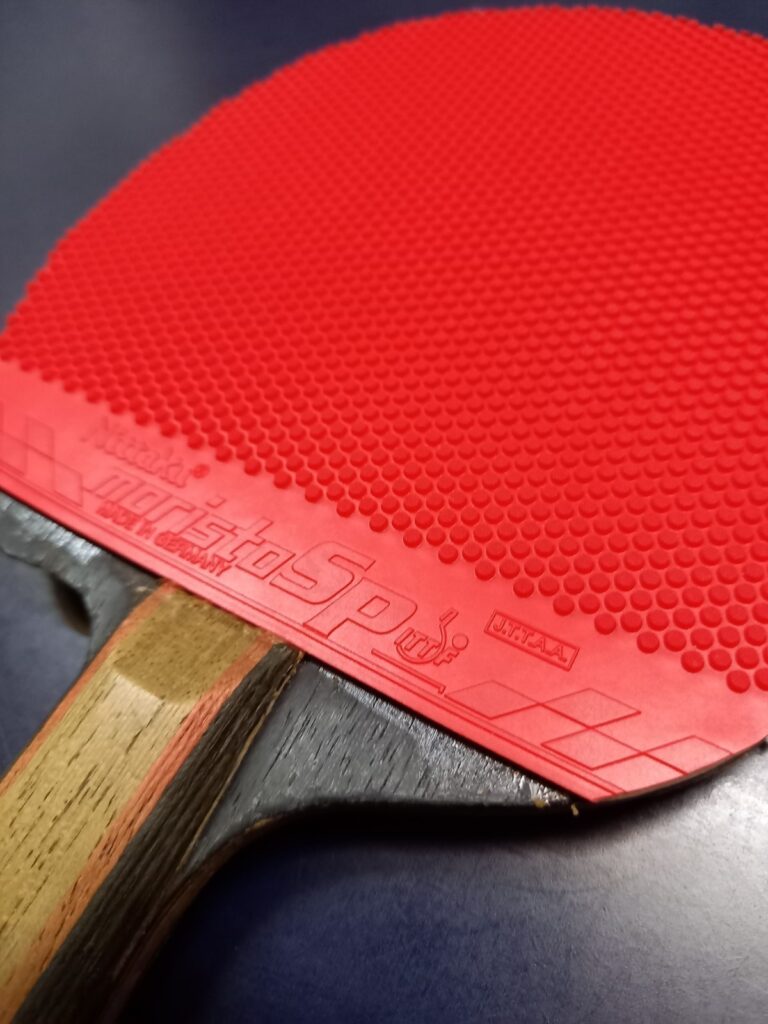
Even when the rubber covers the entire back side, its weight is only 34 g. For someone like me who places a high priority on racket weight, I found this extremely lightweight and appealing.
5. Feel and Performance
Nittaku Moristo SP is a long-selling short pips rubber familiar to many short pips players.
For this test, I used it for RPB on a Chinese penhold racket and tried a variety of techniques.
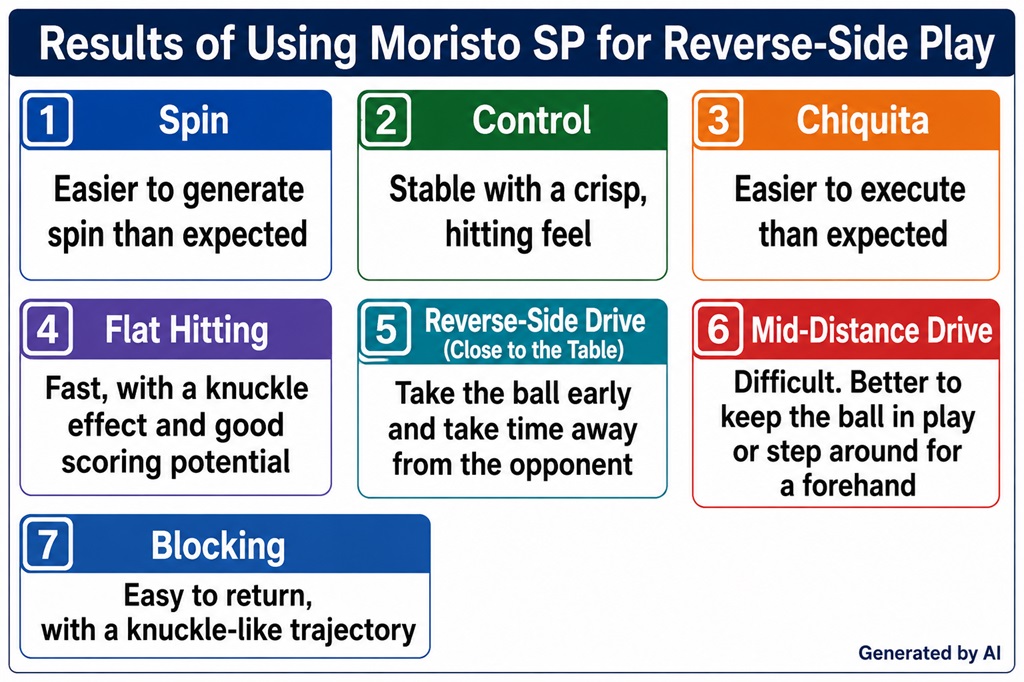
I found it easier to use than I had expected, not only for generating spin but also for techniques such as the banana flick, flat hitting, and blocking.
Here are my impressions of each technique based on my actual experience.
(1) Spin
I did not expect much spin from a short pips rubber, so I was surprised to find that it was easier to generate spin than I expected for a short pips rubber.
Brushing drives are difficult, and the ball tends to slip off the racket. However, I was able to generate a reasonable amount of spin with a thicker contact.
(2) Control
At first, I struggled with control because the technique is different from using inverted rubber. I normally rely on spin to stabilize the ball.
However, I found it much more stable when I made solid contact with the racket face and hit the ball with a “punching” motion. I felt that getting used to the proper technique for short pips was the key.
(3) Banana Flick Receive (Most Important)
The banana flick is an important receiving technique for RPB. I also use the RPB banana flick frequently.
Before trying it, I was worried that the banana flick would be difficult because short pips produce less spin. However, I found it much easier to execute than I expected.
Although it cannot produce the heavy spin of inverted rubber, I was able to return the ball consistently by making a thicker contact at impact.
One of my practice partners said, “The ball is difficult to handle because it comes at you as if it were sliding.”
Also, while a short pips banana flick curves less after the bounce, it can produce tricky balls by preserving some of the spin from the opponent’s serve.
Another advantage was that the returned ball had relatively predictable spin and was easier to handle. With a powerful inverted-rubber banana flick, the remaining spin can cause the fourth ball to curve significantly. With short pips, this effect is smaller, making it easier to anticipate the fourth ball.
(4) Flat Hitting
For RPB, I consider flat hitting an important technique alongside the banana flick.
The ball comes off the racket quickly and is easy to make into a knuckle ball, making it effective for winning points. Apollo 5 (Super Ultra Thin) is also easy to use for flat hitting, but I found Moristo SP even easier.
(5) RPB Drive (Close to the Table)
Since short pips cannot easily produce the powerful, arcing RPB drives possible with inverted rubber, I made a thicker contact at the rising point of the ball and used my opponent’s incoming power.
There is no need to hit the ball hard with this technique. Instead, by taking the ball early and using its incoming power, I felt I could return it naturally.
Although these were not powerful shots that pushed my opponents back, they struggled to read the timing and spin, and I repeatedly caused them to hit their blocks into the net.
In practice matches, I was also able to force blocking errors with this third-ball attack. I felt this technique could force errors in a different way from simply using speed or spin.
(6) Mid-Distance Drive
This was a difficult technique for an intermediate-level player like me. Once I moved away from the table, I could mainly rely on flat hitting or a safe shot to keep the rally going. In actual matches, I felt it was more practical to step around and attack with a forehand drive.
(7) Blocking
I found it very easy to block my opponent’s drives, and the resulting knuckle balls could disrupt their rhythm. After actually using it, I felt that blocking was one of the biggest strengths of short pips rubber.
6. Differences Between Short Pips and Inverted Rubber: What I Discovered
Using short pips as my RPB rubber led to an important discovery.
“Using short pips allowed me to play with a more relaxed swing.”
This is just my personal impression, but when I use inverted rubber for RPB, I tend to focus on generating enough spin to stabilize the ball. As a result, I naturally put more tension into my swing.
With short pips, however, it is more difficult to generate strong spin on my own, so I naturally focused more on using my opponent’s spin to return the ball.
As a result, I found myself relaxing my body naturally and playing more comfortably without trying to generate excessive spin.
This was a new discovery for me, and I feel that alone made trying short pips worthwhile.
7. Important Points to Keep in Mind
Now that I have introduced “Moristo SP (Nittaku),” there are a few points to keep in mind when using it.
I do not recommend using short pips if you have just started learning RPB.
If you want to use short pips for RPB, I recommend first developing enough feel and control to consistently hit RPB drives against backspin on the backhand side.
I once tried using short pips when I was still unfamiliar with RPB. However, I could not control them at all and quickly stopped using them because I felt that short pips were not suitable for me.
If you are just starting RPB, I recommend first developing your feel for the technique with extremely thin rubber before trying short pips.
8. Conclusion
These are my personal impressions, but when I compared “Moristo SP” and “Galaxy Apollo 5 (Super Ultra Thin)” for RPB, I found the following differences.

Personally, I believe Moristo SP could become a powerful weapon if used extensively for RPB.
In particular, its ability to naturally produce knuckle balls and make it easier to force errors from opponents is a major advantage.
To be honest, I planned to switch back to inverted rubber as soon as the test was over. However, after actually using short pips, I discovered that, as described in Section 6, I could play with a more relaxed swing.
Discovering a new possibility for RPB was one of the biggest benefits of this test. However, in the end, I found playing with self-generated spin more appealing, so I have now switched back to inverted rubber.
Using short pips for RPB offers a different kind of enjoyment from using inverted rubber. If you are interested in trying short pips for RPB, I can recommend Moristo SP.
If you would like to try Moristo SP, you can check its current selling price below.

Related Articles
Which Is Better for RPB: Inverted or Short Pips?

Testing RPB Techniques with Short Pips

Top Players Around the World Who Use RPB




コメント