1. Introduction
In recent years, many table tennis manufacturers have released new tacky rubbers almost every year.
Tacky rubbers are widely used by top players, especially members of the Chinese national team. Recently, not only traditional Chinese-style tacky rubbers, but also easier-to-use “hybrid” or “tacky tension” rubbers have become increasingly popular.
However, even though they are all called tacky rubbers, their performance and playing feel can vary greatly. Since many products are designed for different playing styles, beginners often struggle to choose the right one.
In this article, we will explain:
- Different types of tacky rubbers
- Tacky rubbers used by top players
- Recommended tacky rubbers for beginners
We hope this guide helps you find the right tacky rubber for your playing style.
2. Top Players Using Tacky Rubbers
In this article, we will often mention the term “tricky ball”, which is one of the biggest characteristics of tacky rubbers.
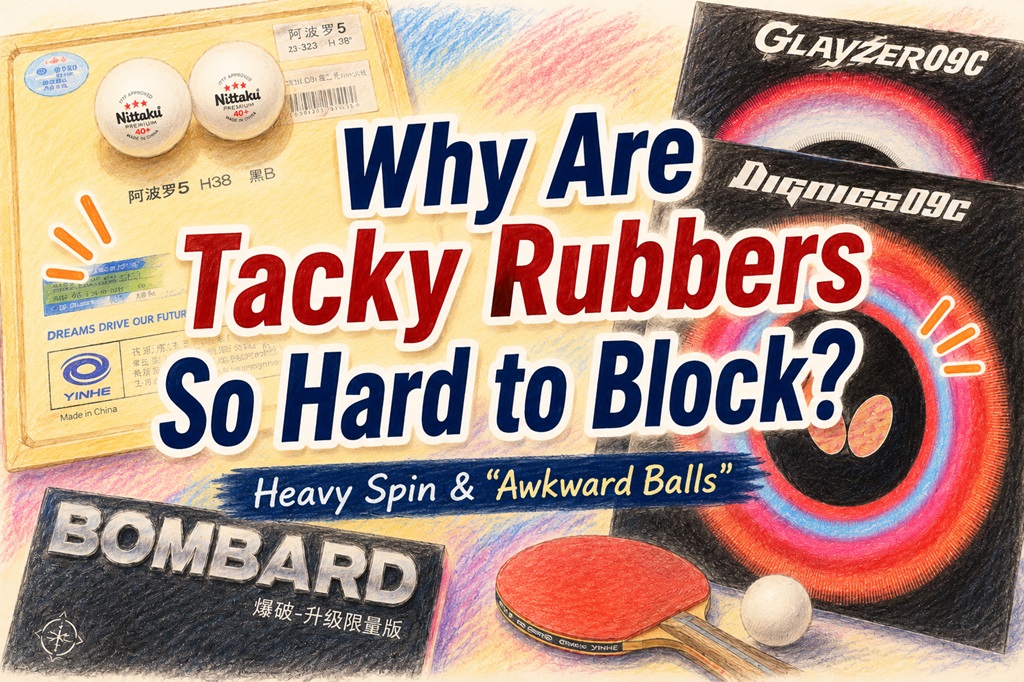
If you would like to learn more about “tricky balls” and how they affect opponents, please check out our related article below.

Major Players Using Tacky Rubbers
- China: Wang Chuqin, Sun Yingsha, and many other Chinese national team players
- Japan: Sora Matsushima, Hina Hayata, Honoka Hashimoto
- Germany: Dimitrij Ovtcharov, Qiu Dang, and others
- France: Felix Lebrun, Alexis Lebrun
However, modern tacky rubbers are no longer limited to traditional hard Chinese-style rubbers. Today, the category has expanded to include easier-to-use hybrid and tacky tension rubbers as well.
Next, let’s take a closer look at the different types of tacky rubbers and the styles preferred by top players.
3. Types of Tacky Rubbers
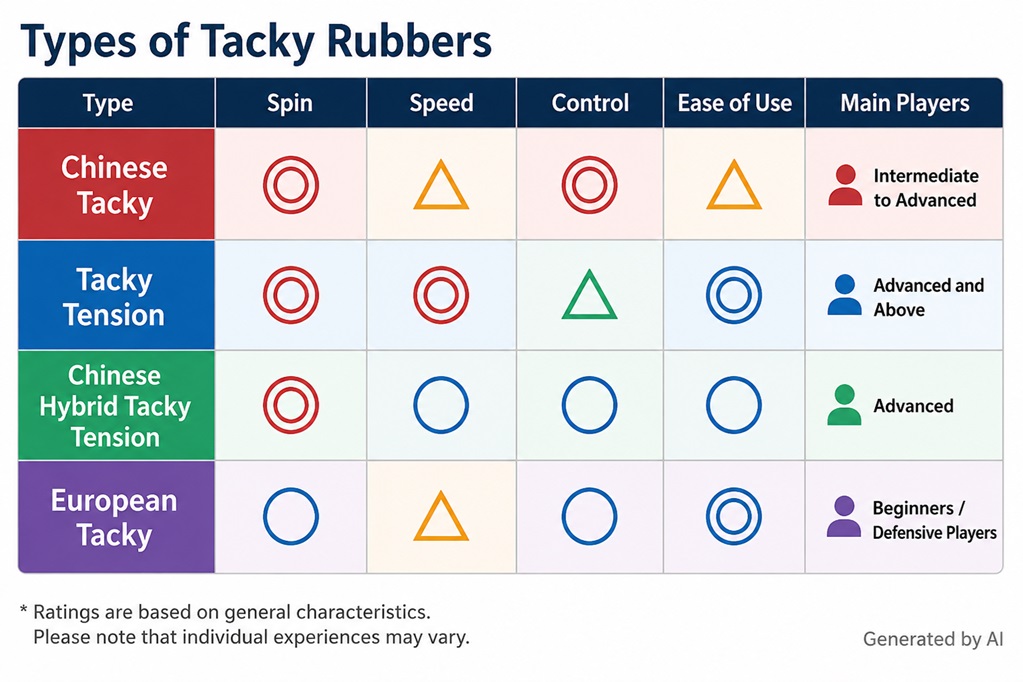
This classification is based on modern table tennis equipment trends and playing characteristics.
(1) Traditional Chinese-Style Tacky Rubbers
• Chinese-style tacky rubbers that focus on heavy spin and highly deceptive ball quality.
This type of rubber has a very unique playing style. It can feel difficult to use at first, but it often causes even more trouble for opponents. In many ways, it is a double-edged sword.
Personally, this is one of my favorite rubber categories. With enough practice, even intermediate players can learn to use it effectively.
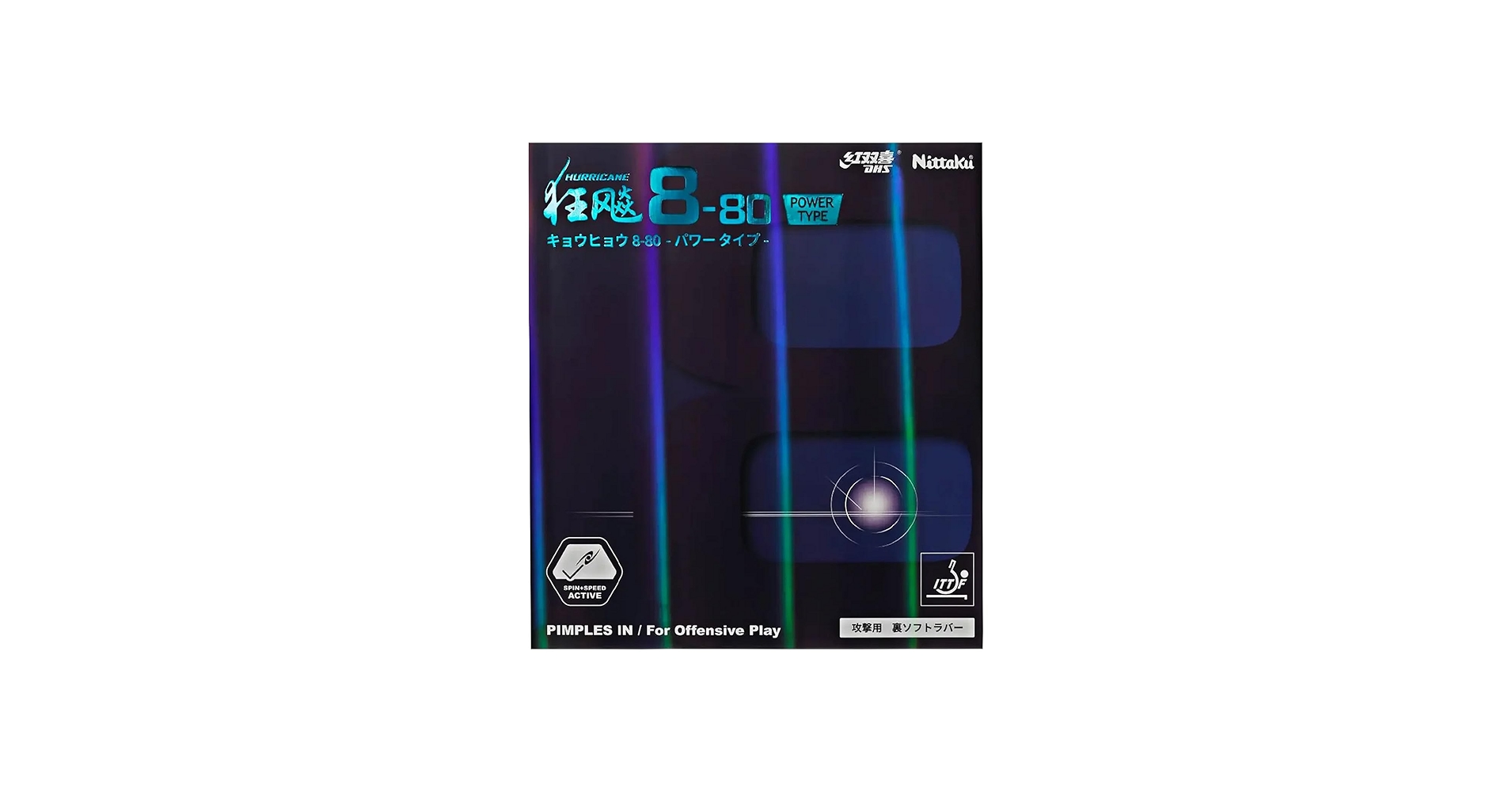
Popular Examples: Hurricane 8-80 Power, Hurricane 3 National Blue Sponge (DHS)
Notable Players: Chinese players, Honoka Hashimoto, a top Japanese defensive player

(2) Easy-to-Use Hybrid Rubbers with Extra Spin
• Easier to control with less “tricky ball” effect. These rubbers feel similar to modern tension rubbers, but with additional spin performance.
To be honest, this category does not produce the strong deceptive ball quality typically associated with traditional tacky rubbers. Instead, you can think of them as slightly slower tension rubbers with improved spin.
This category has recently become popular not only among professional players, but also among intermediate-level players.
Popular Examples: Dignics 09C (Butterfly)
Notable Players: Shunsuke Togami, Dimitrij Ovtcharov


(3) Hybrid Rubbers Designed to Feel Closer to Chinese Tacky Rubbers
• A special type of hybrid rubber designed to recreate the playing feel of Chinese-style tacky rubbers such as Hurricane, while still providing more speed and bounce.
This is still a relatively small category in the current rubber market. You can think of them as a balance between categories (1) and (2).
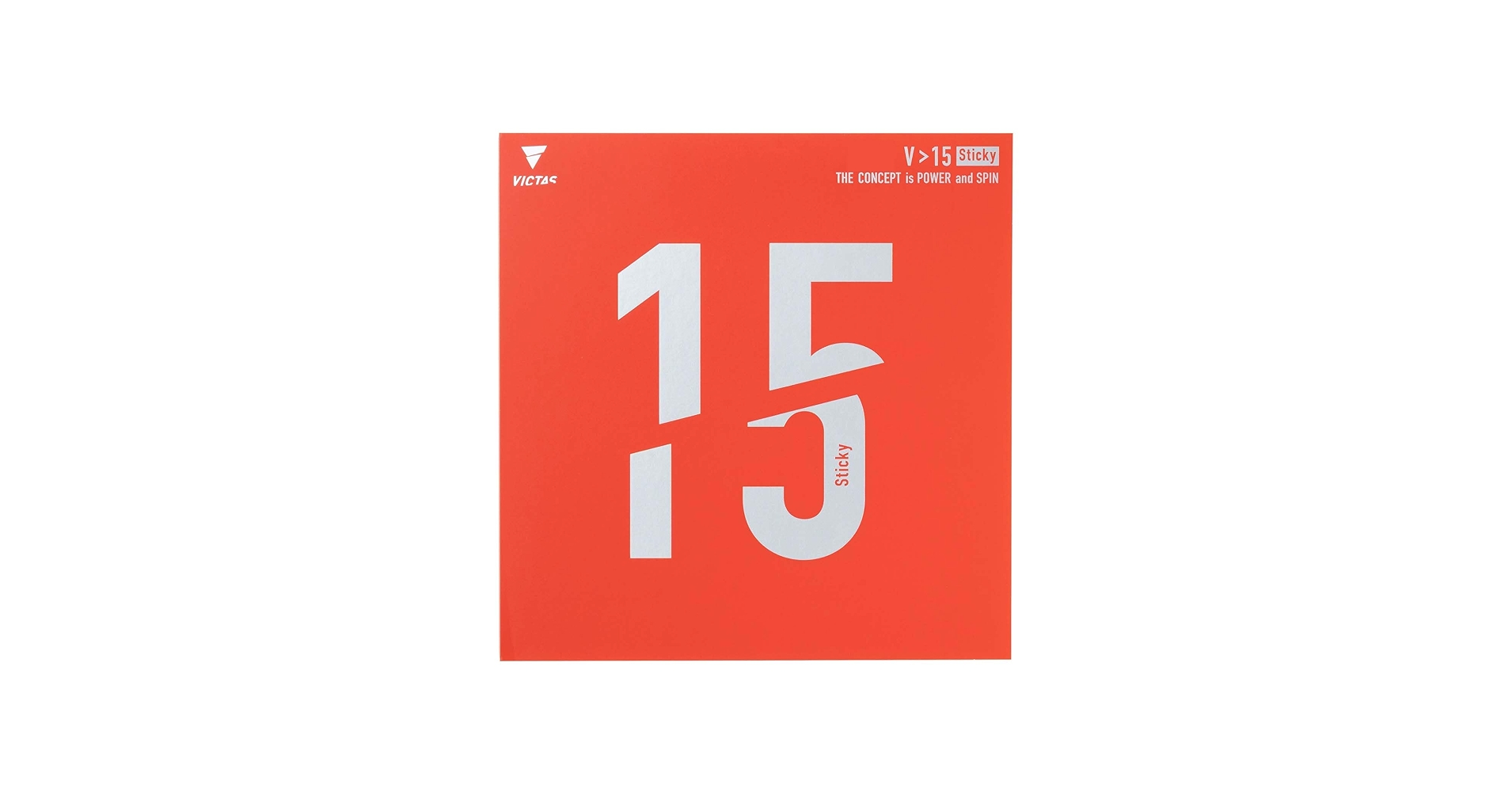
Popular Examples: V>15 Sticky (VICTAS)
Notable Players: Koki Niwa, known for his creative and unique playing style

(4) Classic Tacky Rubbers for Beginners
• Non-tension tacky rubbers with excellent ball contact feel and controlled speed. They offer a good balance between topspin drives and flat hits, making them suitable for beginners and defensive players.
These rubbers are easy to control, generate spin easily, and help keep the ball on the table. They are also recommended for players who prioritize consistency and control.
Popular Examples: Triple Regular (VICTAS)
Recommended For: Beginners, control-oriented players, defensive players


4. Conclusion
In this article, we introduced four different types of tacky rubbers, along with their characteristics and the top players who use them.
As you can see, even world-class players choose different types of tacky rubbers depending on their playing style and preferences.
Some players may still think tacky rubbers are slow and difficult to use. However, modern tacky rubbers have evolved significantly, and manufacturers now offer a wide range of products designed for different needs and skill levels.
Tacky rubbers can put pressure on opponents through their unique “tricky ball” effect, heavy spin, and distinctive playing feel.
Because the performance of tacky rubbers varies greatly from one product to another, choosing a rubber that matches your playing style is very important.

We hope this guide helps you better understand tacky rubbers and find the right option for your game.

-320x180.jpg)

コメント