1. Introduction
Short pips rubber has a wide range of characteristics, offering not only speed and knuckle balls but also spin and control.
Even among short pips rubbers, performance can vary significantly depending on factors such as pip shape, pip size, pip spacing, and pip arrangement. Therefore, the best rubber depends on the player’s playing style and the type of game they want to develop.
Today, many manufacturers offer a wide variety of short pips rubbers, each with its own unique characteristics.
In this article, I will explain the characteristics and properties of short pips rubber in an easy-to-understand way.
Please note that the information presented in this article describes general tendencies. Actual performance may vary depending on factors such as the design of the topsheet and sponge, so there may be exceptions.
2. Pip Shapes (3 Types)
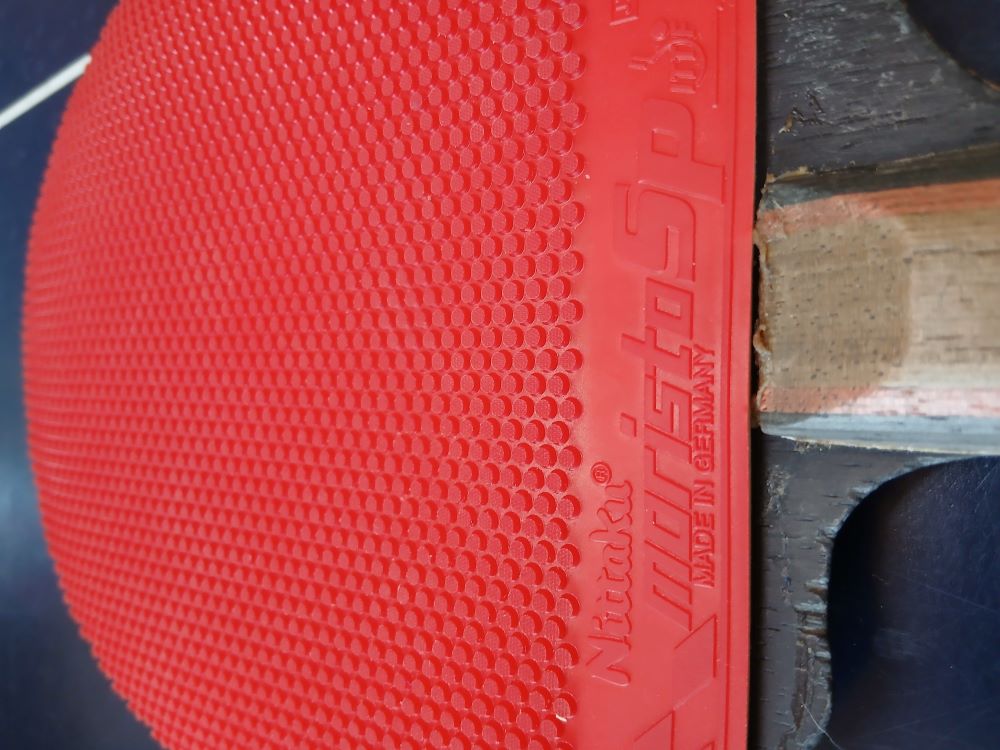
Because the tips of the pips directly contact the ball, differences in pip shape tend to have a greater impact on playing characteristics than with inverted rubber.
As a result, pip shape can affect how easily a rubber produces knuckle balls, as well as its spin and control.
In this section, I will introduce three representative pip shapes and their general characteristics.
However, actual performance also depends on factors such as pip size, pip spacing, and the design of the topsheet and sponge. Therefore, this section focuses on the general tendencies associated with different pip shapes.
1. Cylindrical Pips
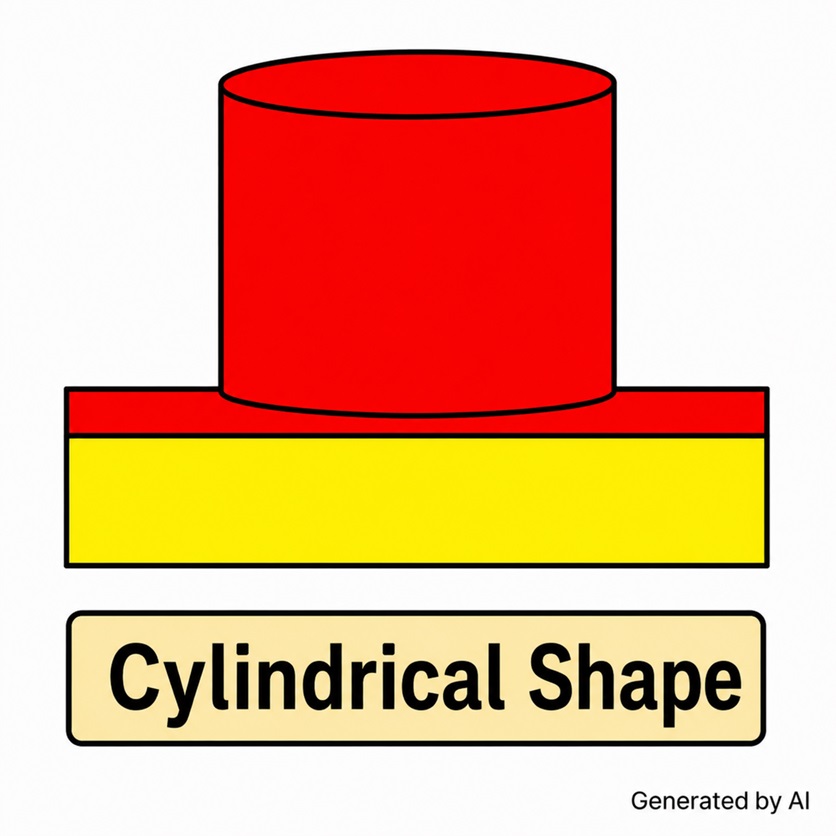
Cylindrical pips are generally considered to have the following characteristics:
- Easy to produce knuckle balls
- More difficult to generate spin
- Require precise control
This pip shape is well suited to players who excel at using knuckle balls and speed-based play.
2. Trapezoidal Pips
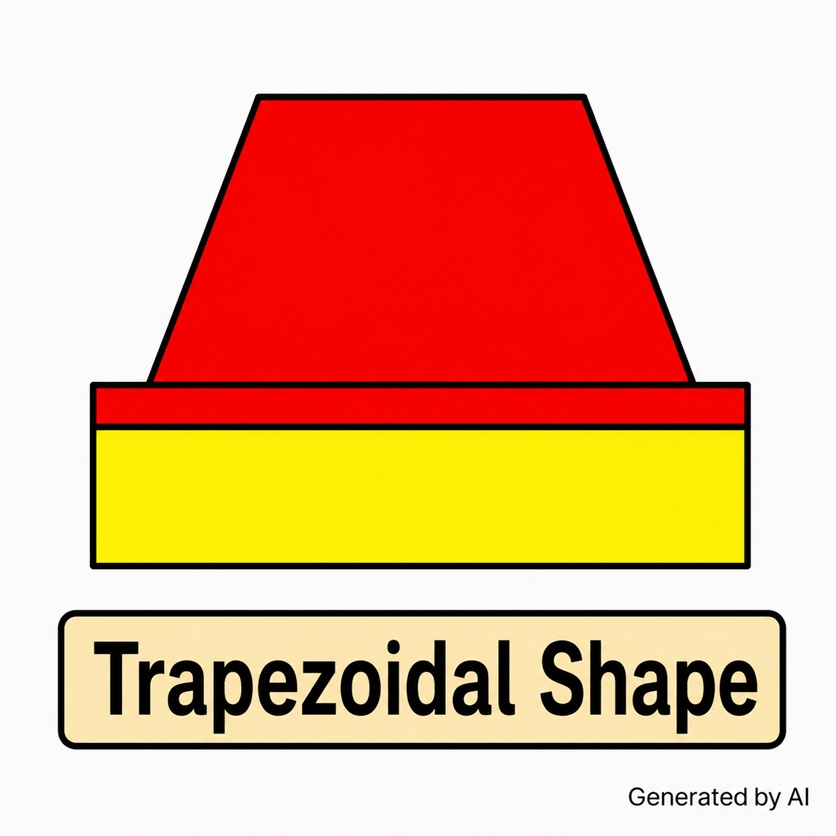
Trapezoidal pips are generally considered to have the following characteristics:
- More difficult to produce knuckle balls
- Easier to generate spin
- Easier to control
This pip shape is well suited to players who prioritize spin-oriented attacking play and consistent rallies.
3. Trapezoidal + Cylindrical Pips
Trapezoidal + cylindrical pips have a trapezoidal base and a cylindrical upper section. Therefore, they generally have characteristics that fall between those of cylindrical and trapezoidal pips.

This pip shape offers a good balance between speed, knuckle performance, and spin, and is often chosen by players who value a balance between attack and defense.
4. Summary
Here is a summary of the general characteristics of each pip shape discussed above.
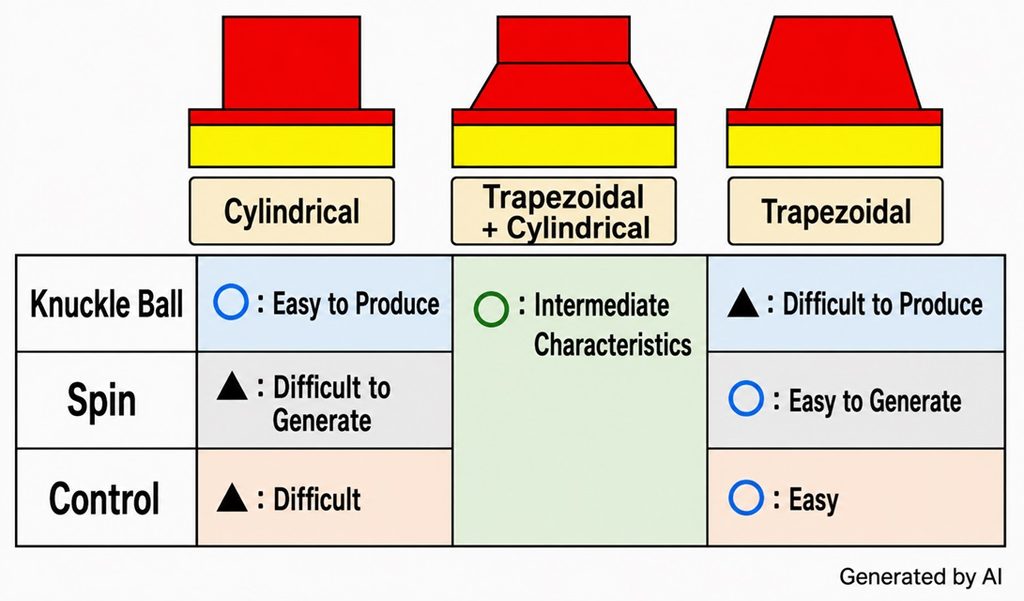
Pip shape has a significant influence on knuckle performance, spin, and control. However, actual playing characteristics also depend on factors such as pip size, pip spacing, and the design of the topsheet and sponge. Therefore, performance is not determined by pip shape alone.
3. Pip Size (Pip Diameter)
Pip size (pip diameter) is also an important factor that affects the performance of short pips rubber.
Generally, the larger the pip diameter, the more solid and stable the pips are, making them less likely to bend during ball contact. This results in the following characteristics:
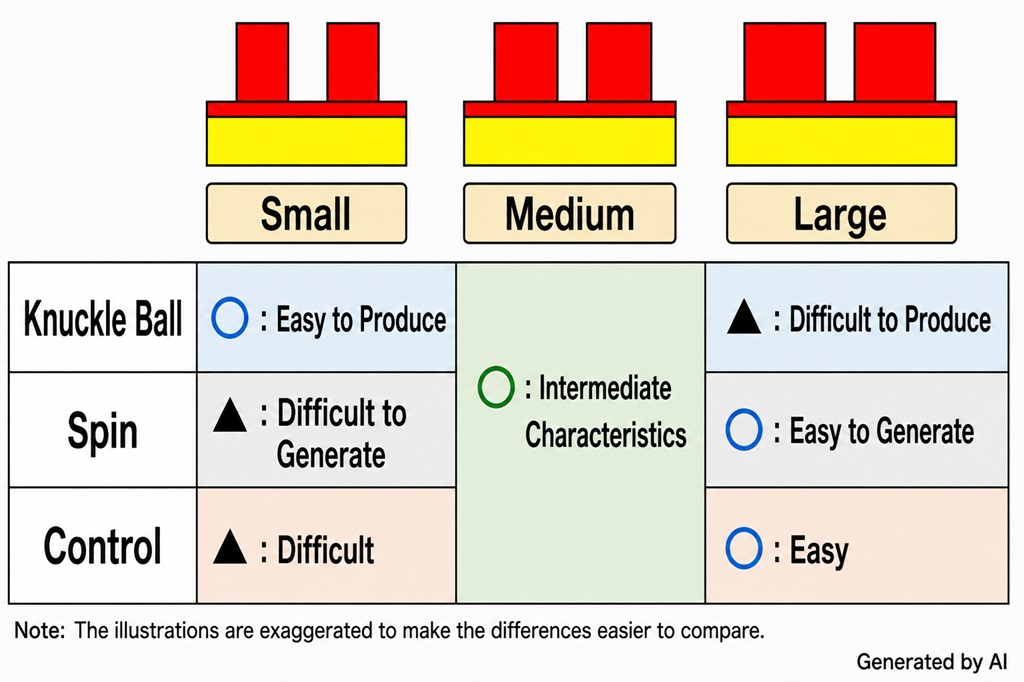
However, actual performance also varies depending on how pip diameter interacts with factors such as pip height, pip shape, and pip spacing.
4. Pip Spacing
Pip spacing (pip density) is also an important factor that affects the performance of short pips rubber.
Generally, the higher the pip density, the more pips come into contact with the ball during impact. This results in the following characteristics:
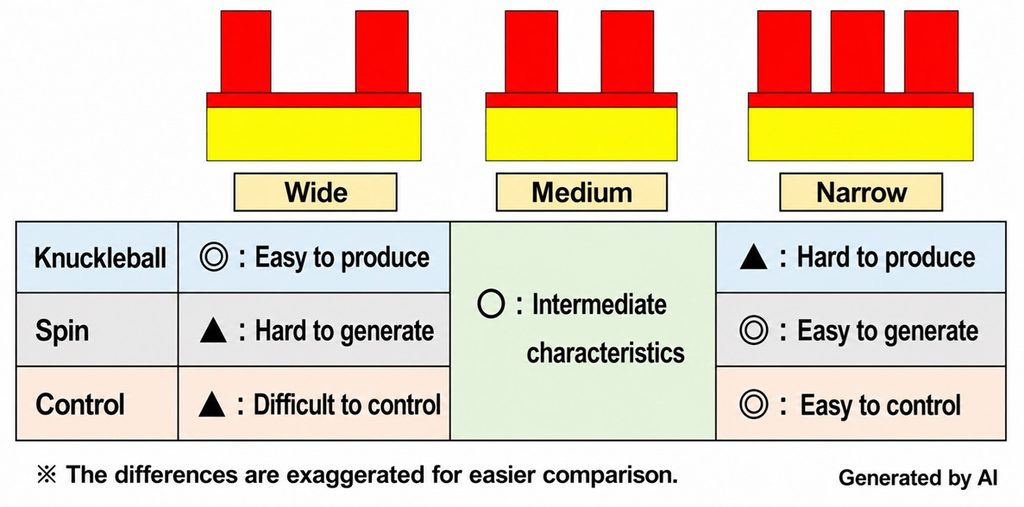
However, actual playing characteristics also vary depending on how pip spacing interacts with factors such as pip shape, pip diameter, and the design of the topsheet and sponge.
The differences between vertical and horizontal pip alignment are explained in detail in the next section.
5. Pip Alignment (Vertical and Horizontal)
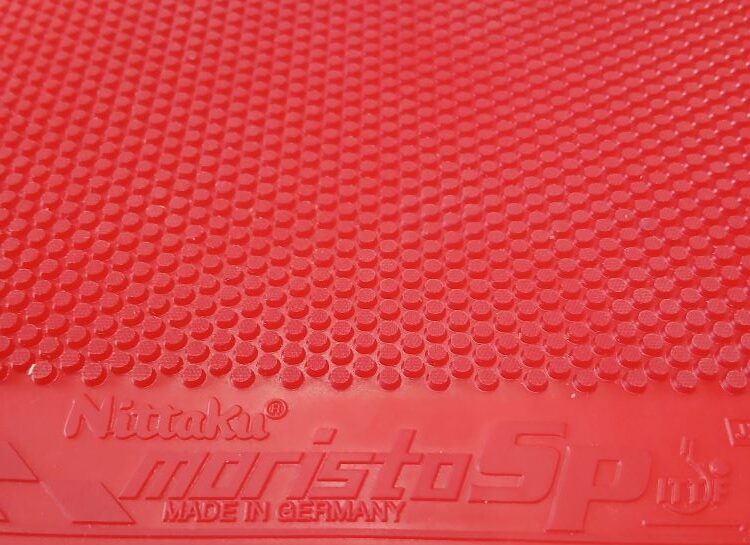
In addition to pip shape and size, short pips rubber is also said to vary in characteristics depending on pip alignment (vertical or horizontal).
Generally, vertical alignment is said to make it easier to produce knuckle balls, while horizontal alignment is said to make it easier to generate spin.
However, sources such as Table Tennis Kingdom present various views on these differences. Within the scope of the research for this article, I could not find scientific or quantitative studies verifying them.
Therefore, current evaluations are based mainly on practical experience.
The angle at which the racket contacts the ball and the direction of the swing also vary slightly from player to player. Therefore, it is difficult to make a definitive statement based on pip alignment alone.
Furthermore, even a rubber with horizontal pip alignment can be rotated by approximately30°when applying it to the racket, allowing it to be used essentially as a vertically aligned rubber.
This also shows that performance is not determined by pip alignment alone. Pip shape, pip size, pip spacing, and sponge properties also affect the characteristics of the rubber.
For this reason, this article presents these generally accepted characteristics as a reference.
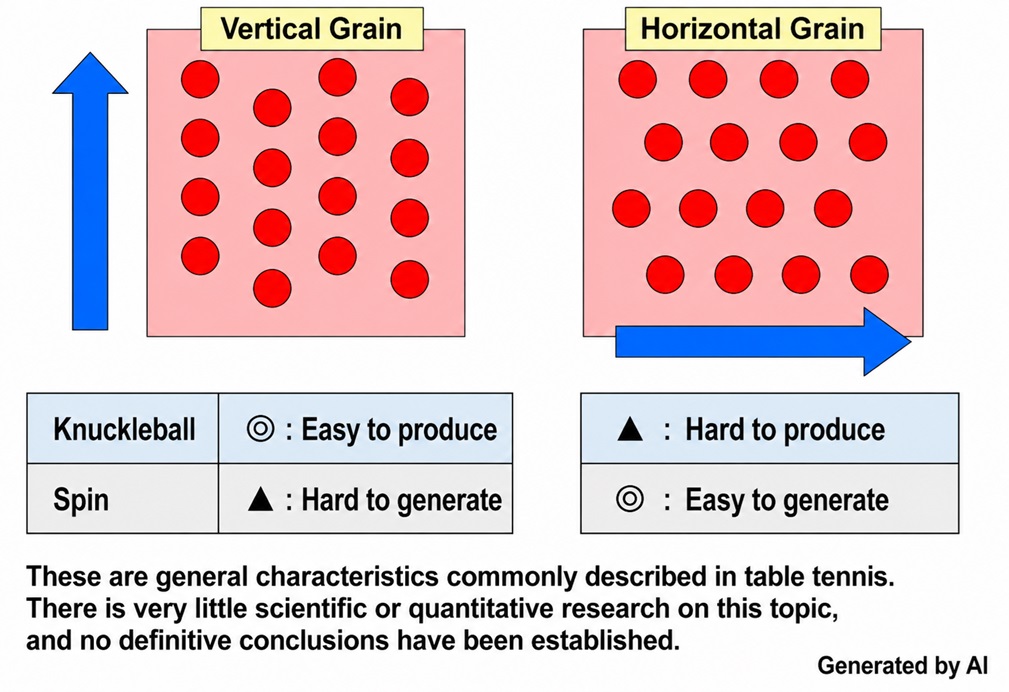
However, actual performance is not determined by pip alignment alone. Playing characteristics can vary significantly depending on the player’s style, swing, and the overall design of the rubber.
Therefore, please use the characteristics introduced in this article as one reference when choosing your equipment.
6. Mima Ito’s Rubber: Moristo SP (Nittaku)
Mima Ito uses short pips rubber on the backhand side of her shakehand racket.
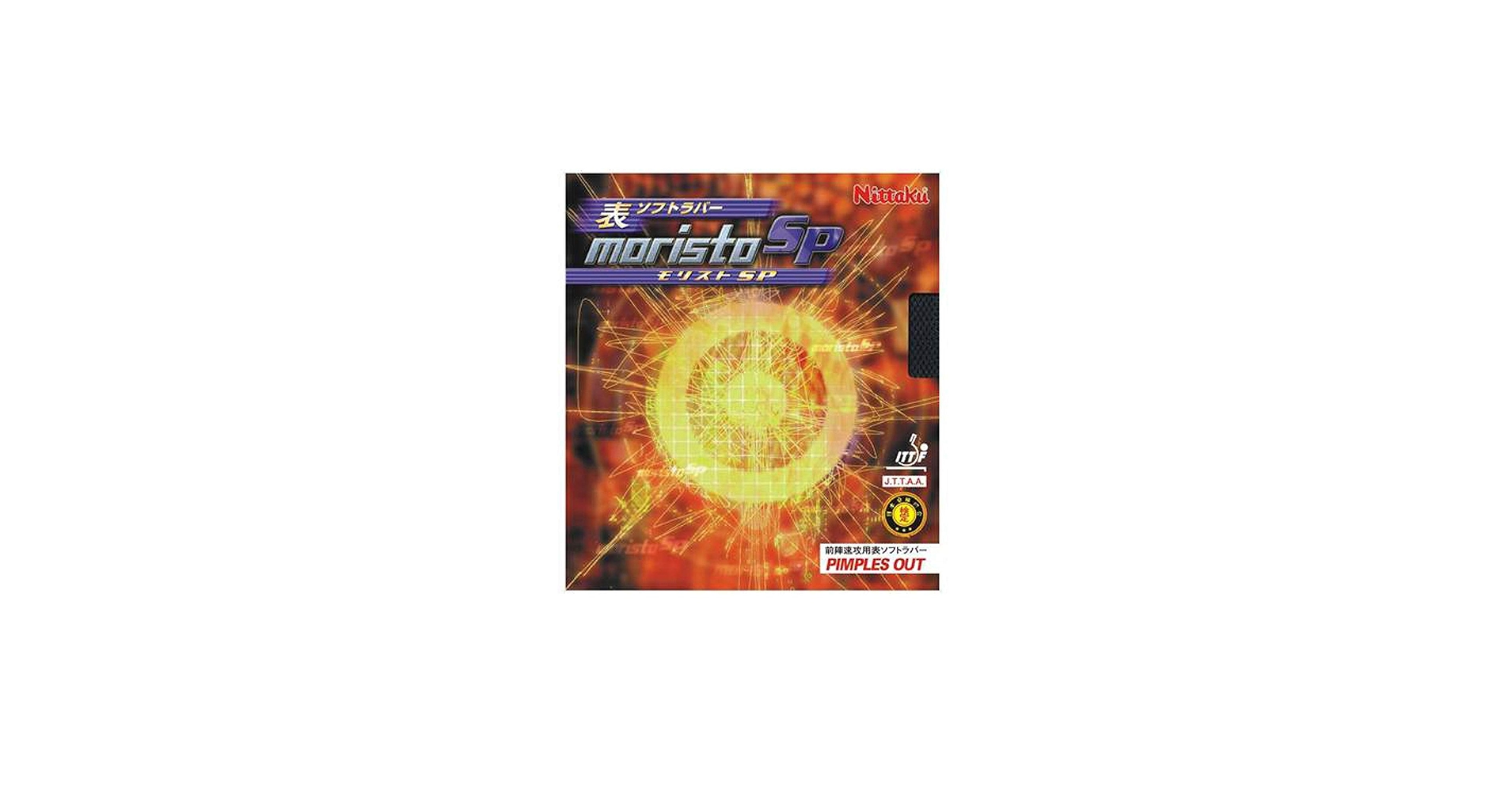
Let’s take a closer look at Moristo SP, the rubber used by Ito, based on the characteristics of short pips rubber discussed above.
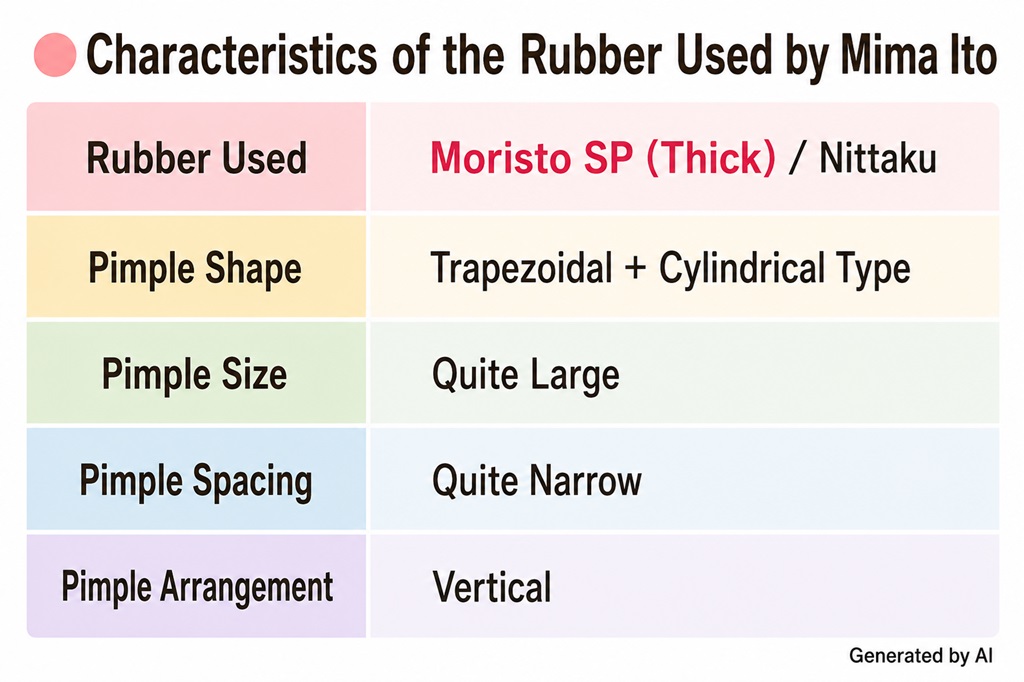
These characteristics show that Moristo SP offers a high level of both spin and knuckle performance.
The combination of trapezoidal + cylindrical pips and vertical alignment makes it easier to generate spin while also producing knuckle balls.
Mima Ito has also described Moristo SP as follows:
[Mima Ito’s comment]
Source: Nittaku official website
Moristo SP can produce tricky balls with unexpected amounts of spin or knuckle. With other short pips rubbers, the ball quality tends to be more one-sided, producing either clean shots or mostly knuckle balls. Moristo SP can produce a wide variety of ball qualities, even without deliberately trying to do so.
Since its release, Moristo SP has remained a popular short pips rubber among top players and recreational players. It has also ranked highly for many years in sales rankings published by Table Tennis Kingdom.
I have also used Moristo SP myself to test its performance for reverse penhold backhand techniques, including drives, Chiquita, and blocks.
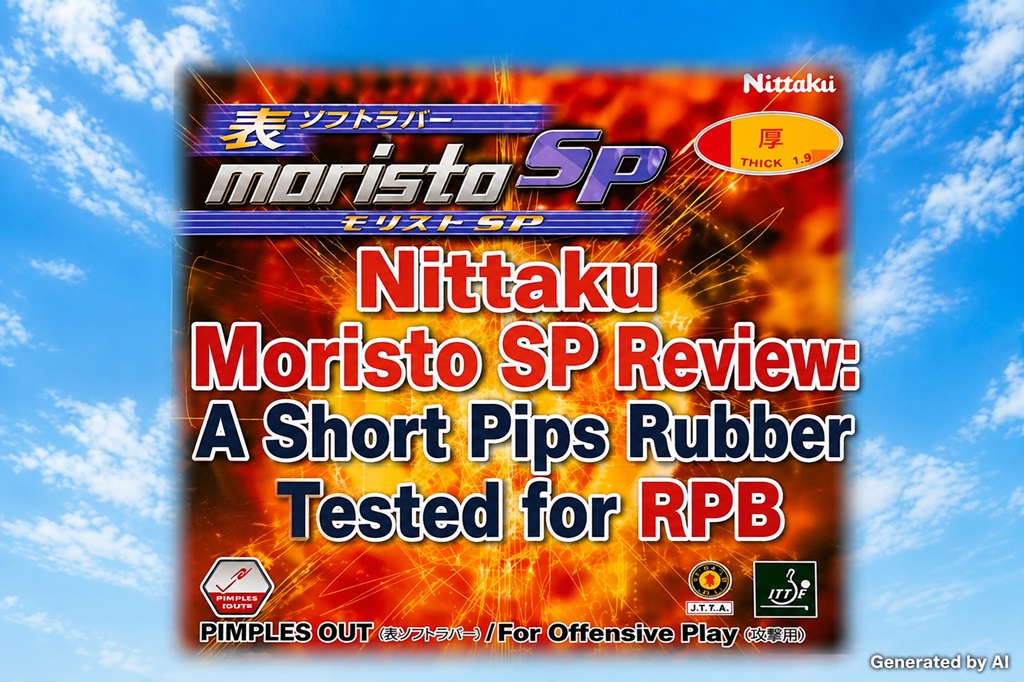
For a detailed review of its actual feel, advantages, and disadvantages, see the review below.

You can check the current retail price of Moristo SP at the following site.

7. Summary
Here is a summary of the key characteristics of short pips rubber discussed in this article.
-1024x589.jpg)
Compared with inverted rubber, short pips rubber produces less spin but is less affected by the opponent’s spin.
Therefore, it is important to choose the pip shape according to your playing style, such as whether you want to use knuckle balls frequently, generate some spin, or prioritize control.
Understanding the characteristics of each pip shape can help you avoid choosing a rubber that does not suit your playing style. I hope this information helps you choose the right equipment.
There is also a measurement called the aspect ratio, which is used to distinguish short pips rubber from long pips rubber. However, this topic is beyond the scope of this article.
That concludes this overview of the differences between short pips rubber based on pip shape. I hope this article helps you choose the right rubber for your game.
Related Articles
● Which Is Better for Reverse Penhold Backhand Play: Inverted or Short Pips Rubber?

● Techniques I Tested Using Short Pips Rubber for Reverse Penhold Backhand Play
● Review: Using Butterfly Rozena for Reverse Penhold Backhand Play



コメント