【新刊】卓球裏面打法の極意、Kindleにて絶賛発売中!(Japanese Edition / English version coming soon?)

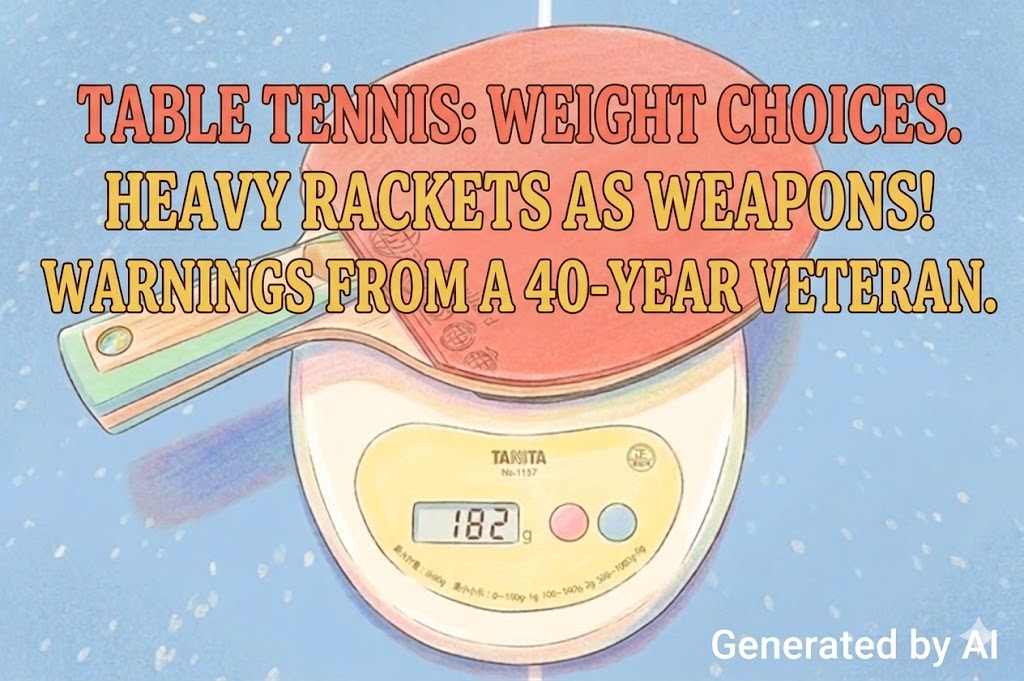
TT Weight Choices: Turn a Heavy Blade into Your Weapon! Crucial Warnings for Mid-to-High Levels from a 40-Year Pro

※This site contains affiliate links. Please note that some visuals are created with the help of AI.

【Basics & Beginner Guides】
About the Author

Experience: 40+ years in Table Tennis (Insightful veteran's perspective).

Style: Penholder Attacker (Currently exploring "Uramen Daho" / RPB).

Focus: Deep analysis of global top players and the latest gear.

Mission: Capturing all aspects of the table tennis scene through a unique lens, providing insights to help you enjoy the game even more.

English Content Policy: Most articles are AI-assisted translations from Japanese. I apologize for any unnatural phrasing and appreciate your patience!

1.Introduction

Many players are deeply concerned about the “total weight” of their racket once the rubber is applied.

You might have a general impression that a light racket is easier to handle, while a heavy one requires significant physical strength.

In this article, I want to explore the actual, practical differences between “light” and “heavy” rackets.

To avoid any misunderstanding, let me state my position clearly: For most amateur players—excluding those at an advanced level—I generally recommend a racket light enough to swing with full speed. In table tennis, the things we must avoid most are a drop in swing speed or, worse, sustaining an injury.

However, I also firmly believe this: “Heavy rackets possess an irresistible charm that only weight can provide.”

A heavy racket is not merely a “burden.” If you handle it correctly and make the weight work for you, it delivers a power behind the ball that a light racket can never reach, along with the stability to remain unshaken by your opponent’s strongest hits.

2.What Defines a “Light Racket”?

There is no strict, universal definition for a “light racket.” Opinions vary depending on a player’s physique and experience, but the following figures generally serve as a good benchmark:

【Total Weight (Blade + Rubbers)】

For Penholder Rackets (Double-sided):

150g or less
(Note: Single-sided penholder styles are inherently lightweight and are excluded from this comparison.)

For Shakehand Rackets (Double-sided):

  • 160g or less: Extremely light
  • 170g or less: Generally lightweight

From my personal perspective, once the weight increases by another 30g (reaching 190g to 200g or more), it clearly enters the territory of a “Heavy Racket.”

However, there is one crucial point to remember: even at the same weight, a penholder racket tends to feel significantly heavier than a shakehand racket due to the difference in how they are gripped. When applying rubber to both sides, this difference in “felt weight” (perceived weight) cannot be ignored.

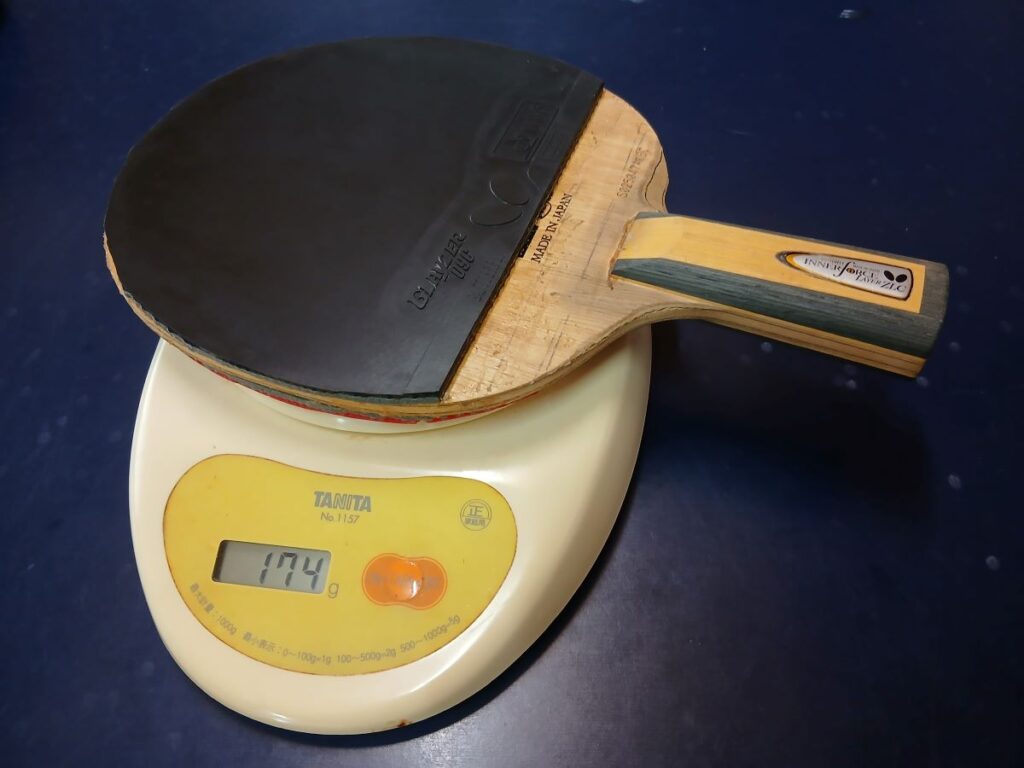
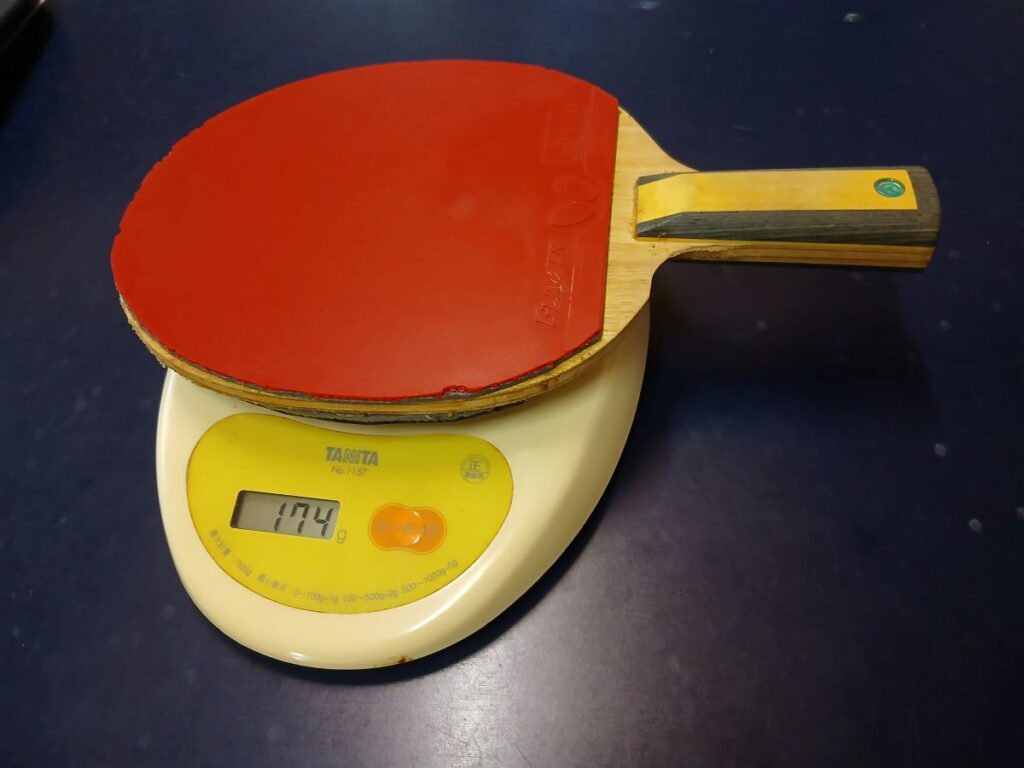
Blade: Innerforce Layer ZLC / Forehand Rubber: Glayzer 09C (Max thickness)
Backhand Rubber: Glayzer / 1.9mm (Butterfly)

For your reference, here is one of the heavier combinations among the rackets I currently own:

  • Style: Chinese Penholder (C-PEN)
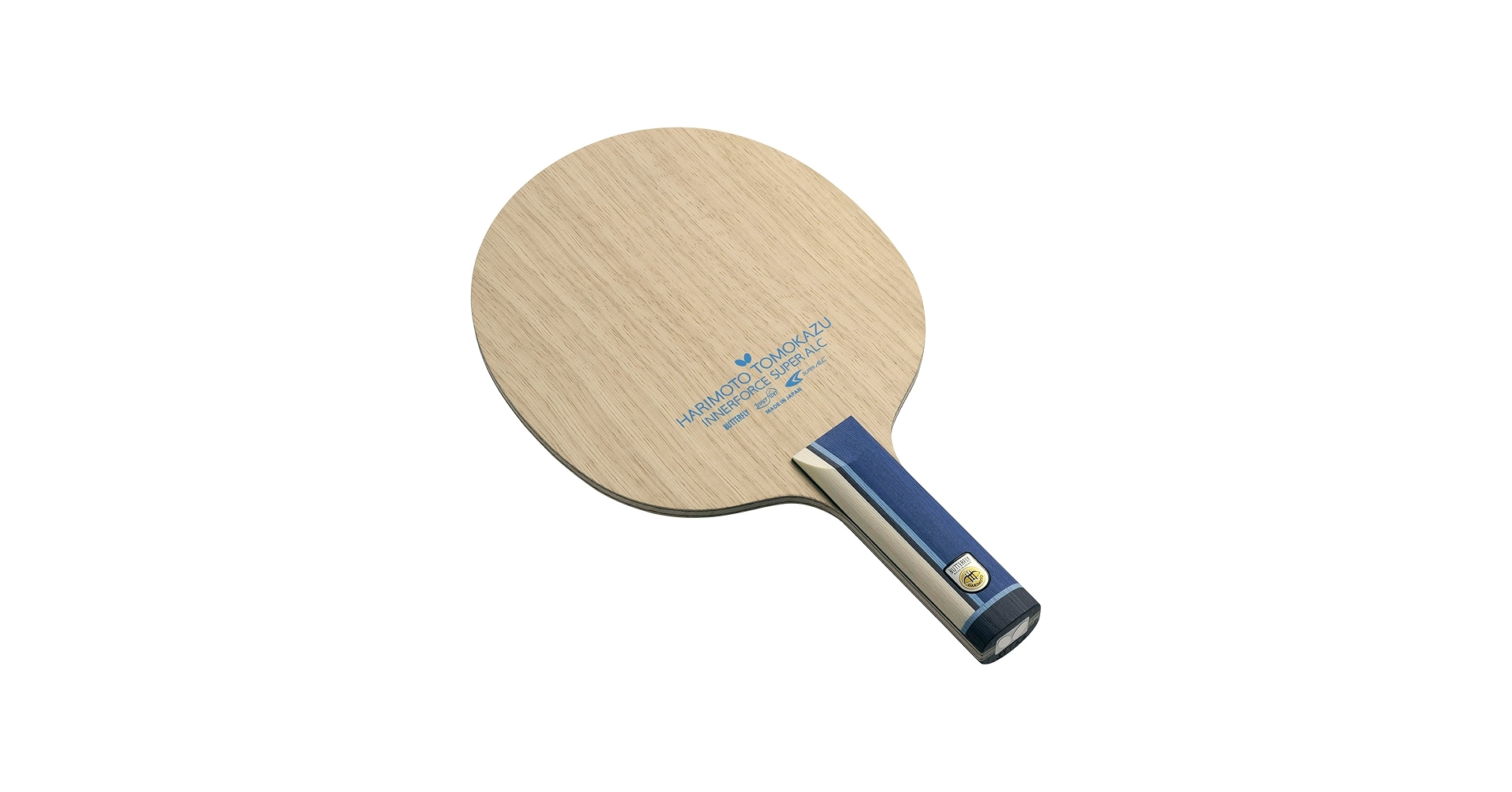
  • Blade: Innerforce Layer ZLC (Butterfly)
  • Forehand Rubber: Glayzer 09C / Max (Butterfly)
  • Backhand Rubber: Glayzer / 1.9mm (Butterfly)
  • Total Weight: 174g

    To be honest, I absolutely love the feel and the bounce of this setup—it’s exactly what I look for. However, if I’m being completely candid, it is simply too heavy for me to perform at my full potential in a real match.

    As a result, it has stepped down from its position as my primary racket. Now, it rests quietly in my racket case as a “reliable backup,” ready to support me whenever I need that extra power.

    Even if you don’t read Japanese, you can check out more detailed photos and specs via the link below!”

    3.Differences Between “Light” and “Heavy” Rackets
    (1)Impact on Swing Speed

    A “heavy racket” inevitably takes more time to reach its top speed from the moment you start your swing. While powerful athletes may be able to master it, for the average player, it is a direct cause of being “late on the ball” (late swing).

    For this 2026 update, I conducted a personal experiment. After using a penholder racket weighing over 180g for several dozen minutes, I immediately switched back to my usual racket, which weighs under 150g.

    The result was striking: my maneuverability close to the table improved dramatically, and I could feel a distinct increase in my swing speed. This confirmed just how much a 30g difference can dictate your split-second decisions and movements during a rally.

    (2)Racket Stability at Impact

    One of the most significant advantages of a “heavy racket” is the dramatic reduction in “blade wobble” (face instability) when receiving an opponent’s shot.

    When facing a ball with high speed or heavy spin, a lighter racket can easily be “pushed back” at the moment of impact. This causes the racket angle to shift slightly, leading directly to unforced errors.

    Personally, I prioritize maneuverability and prefer light rackets. However, when practicing with players who boast powerful drives, I poignantly feel the downside of that lightness. The excessive wobble makes it difficult to keep my returns stable against high-velocity shots.

    Through these experiences, I have come to realize that a light racket is not an unconditional “correct answer.” Depending on your opponent’s level and your own tactics, maintaining a certain amount of mass is essential for consistent play.

    (3)Shot Feeling (Vibration and Feedback)

    This is closely linked to the “blade wobble” mentioned earlier, but the actual quality of the vibrations transmitted to your hand changes significantly depending on the weight.

    • Light Racket: The “impact sensation” is much stronger, providing direct and vivid sensory information the moment you strike the ball.
    • Heavy Racket: The increased mass tends to absorb and dampen the vibrations, resulting in a milder—or sometimes almost “muted”—feeling in the hand.

    Ultimately, this comes down to personal preference in “shot feeling,” and there is no right or wrong answer.

    For instance, I am the type of player who wants to clearly feel that satisfying vibration when the ball hits the “sweet spot” of the blade. This is exactly why I prefer lighter rackets, as they provide much clearer and more distinct feedback.

    4.Beware of the “Weight Gain” in Modern Rubbers
    In the current table tennis scene, “Spin-oriented tension rubbers” and “Sticky (Hybrid) tension rubbers” are dominating the market.

    While these rubbers offer incredible performance, we must be careful about one thing: they tend to be significantly heavier.

    To understand this better, let’s look at a clear example from Butterfly’s famous Tenergy series:

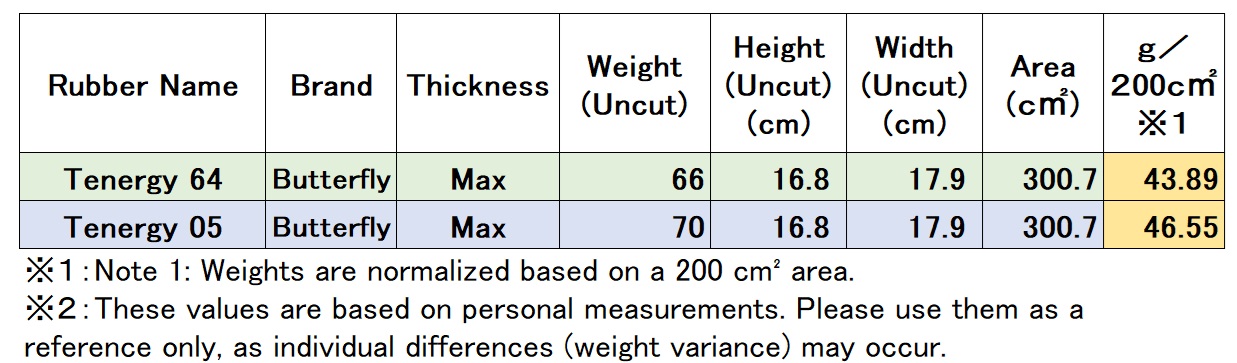
    • Tenergy 05: A spin-oriented tension rubber (Relatively Heavy)
    • Tenergy 64: A speed-oriented tension rubber (Relatively Light)

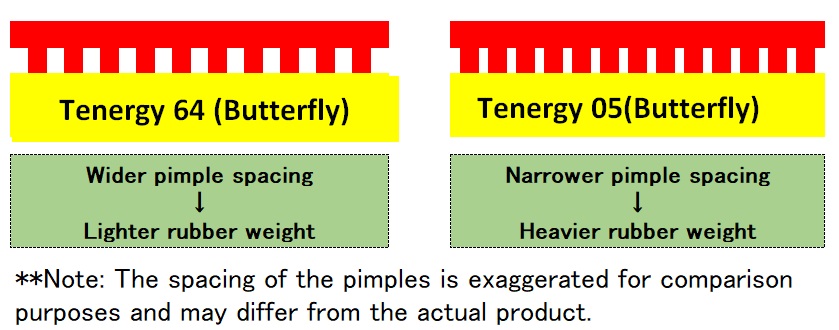
    When comparing the two, Tenergy 05 is consistently heavier. The reason lies in the physical structure of the rubber, specifically the “pimple density.”

    Spin-oriented rubbers are designed with a narrower spacing between the pimples. Because the pimples are packed more densely, there is more rubber material per square inch. This higher density inevitably results in a heavier weight compared to speed-oriented rubbers, which have wider pimple spacing.

    Currently popular “Sticky (Hybrid) tension rubbers” tend to be even heavier. This makes it more crucial than ever to carefully evaluate whether the total weight of your setup remains within your “swingable range.”

    The reason for this weight is that these rubbers often utilize a high-density “hard sponge” to maximize the intense spin characteristic of sticky sheets. Naturally, this added density leads to a significant increase in rubber weight.

    Therefore, when choosing these heavy-duty rubbers, a strategic adjustment is essential—such as deliberately selecting a lighter blade. More than ever, players need a keen sense of balance to ensure the combined weight of the blade and rubbers fits perfectly within their physical strength and swing capacity.

    5.Closing Thoughts

    What did you think?

    The choice of racket weight depends entirely on your playstyle. You might choose “lighter” for better maneuverability and wrist protection, or “heavier” for the stability to withstand powerful incoming shots. There is no single correct answer.

    Even in a weight range generally considered “heavy,” if you can swing through with confidence, that weight becomes a formidable weapon that threatens your opponent. Finding the weight balance that perfectly suits your style will undoubtedly elevate your game.

    For penholder players, who are directly affected by even slight weight changes, this “Weight Choice” is the ultimate key to improvement. I have more detailed articles on this blog specifically about penholder weight, so please check them out!

    【Coming Soon】
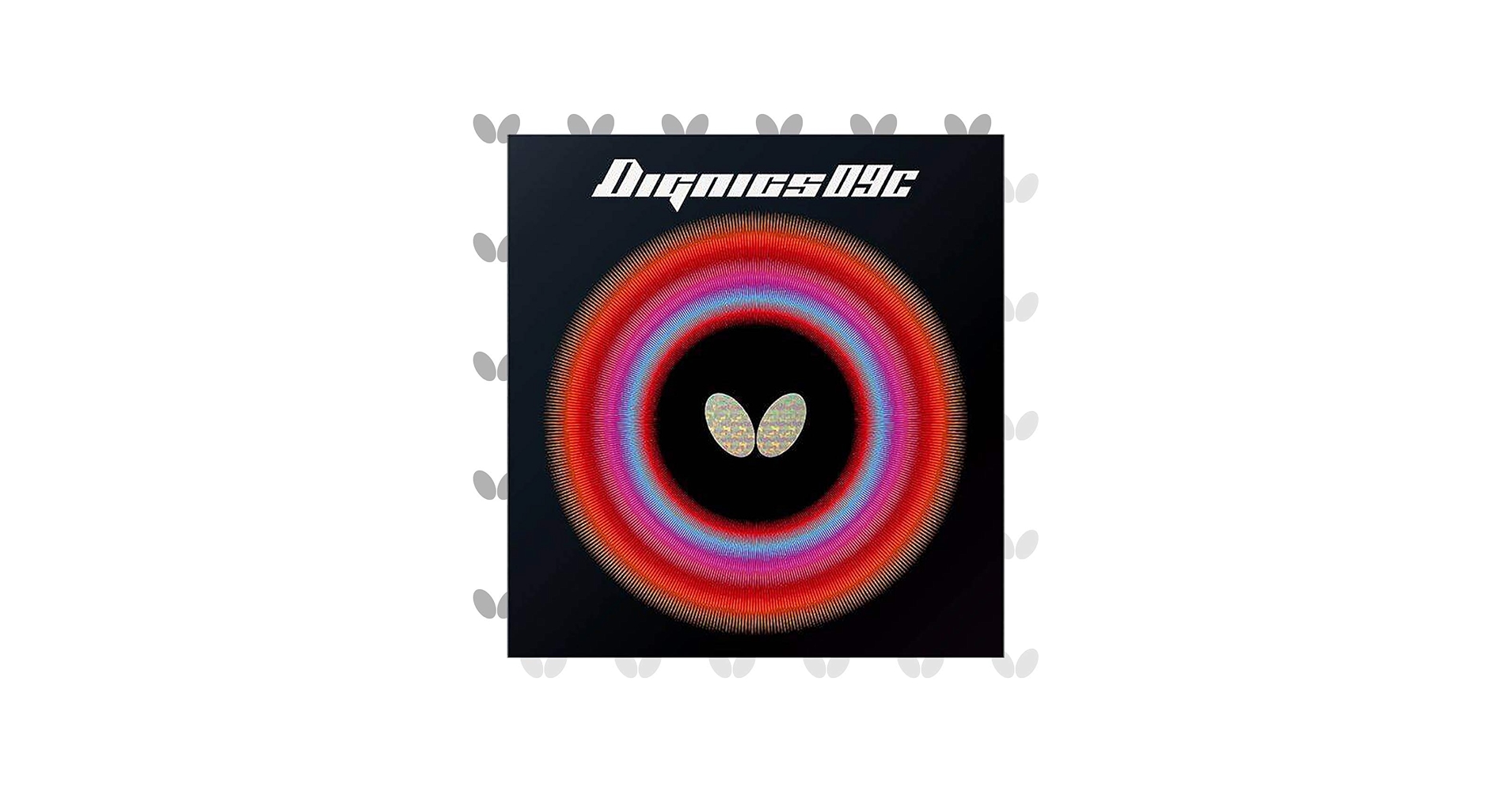
    I have recently started a new challenge: switching to the high-end model of the Glayzer 09C—the Dignics 09C (Max thickness!).

    As a middle-aged player, I’ll soon be sharing an article on the key points to mastering this ultra-high-performance (and heavy) rubber. Stay tuned!

    Even if you don’t read Japanese, you can check out more detailed photos and specs via the link below!”

    That’s all for today. I hope this information helps you in finding your perfect equipment!

    コメント

    PVランキングも参加しています!

    PVアクセスランキング にほんブログ村

    Copied title and URL